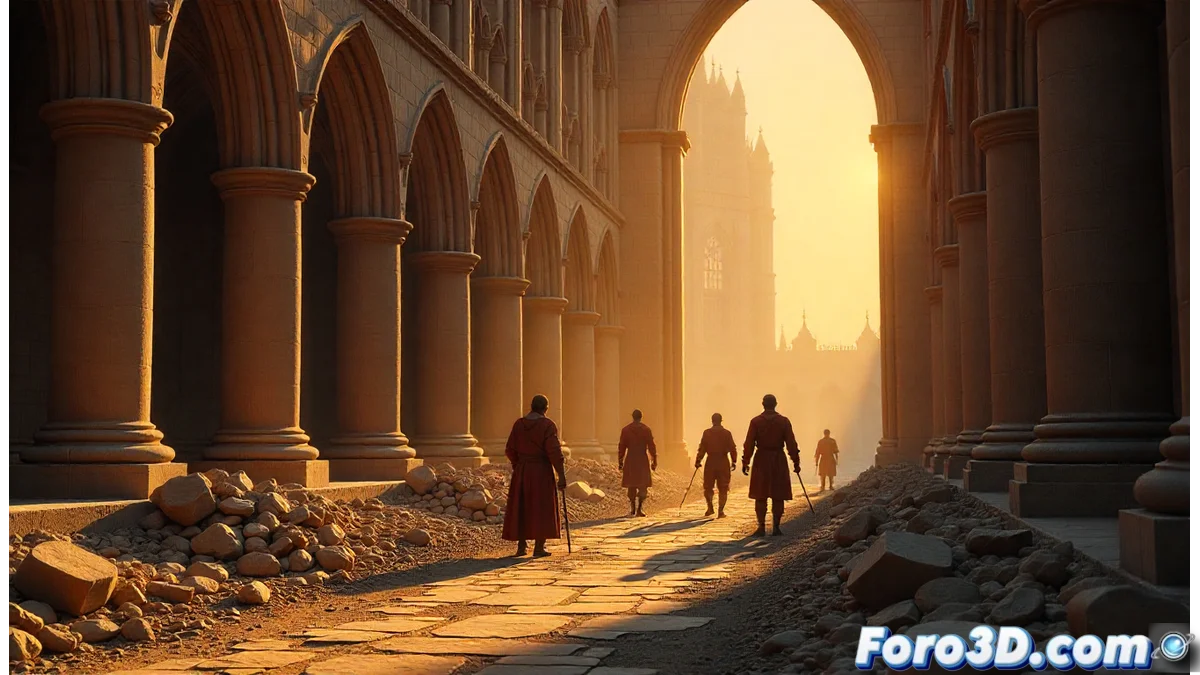
The Pillars of the Earth: analysis of Ken Follett's masterpiece
Ken Follett's epic historical novel immerses us in the fascinating world of 12th-century England, where the ambitious construction of a cathedral in the fictional town of Kingsbridge becomes the narrative engine that drives a plot full of human dramas and power conflicts. Through decades of history, the author masterfully intertwines the lives of unforgettable characters in a literary tapestry that captures the essence of a turbulent era 🏰.
Historical context and medieval setting
Follett sets the action during the turbulent period known as the Anarchy in England, under the controversial reign of Stephen of Blois. The cathedral construction transcends its architectural function to become a living symbol of collective faith and human perseverance. The settings, from rudimentary stone workshops to opulent noble castles, are recreated with such sensory precision that the reader can almost feel the texture of the stone and experience the austerity of monastic life.
Key historical elements:- Detailed representation of the Anarchy period and its political conflicts
- Meticulous recreation of medieval construction techniques without modern technology
- Exploration of the religious and social tensions of 12th-century England
The cathedral is not just a stone building, but the silent testimony of generations who dedicated their lives to a higher ideal
Human architecture: characters and evolution
The multidimensional protagonists undergo profound transformations throughout the years spanned by the narrative. Tom Builder embodies the artisan's struggle to transcend through his work, while Prior Philip represents the complex duality between spiritual devotion and earthly ambition. Female figures like Aliena and Ellen challenge the social paradigms of their time with a determination that makes them literary pioneers.
Key narrative relationships:- The parallel evolution of the main characters through decades
- The conflicts between social classes and religious estates
- The plots of love and betrayal that intertwine personal destinies
Literary legacy and contemporary reflection
It is astonishing to contemplate how those medieval master builders, lacking cranes and design software, erected cathedrals that still stand eight centuries later, while in our technological era we pride ourselves on assembling prefabricated furniture. This monumental work not only entertains, but invites reflection on human perseverance and legacies that transcend time. Follett's narrative demonstrates how great historical literature can illuminate both the past and our present 🕰️.