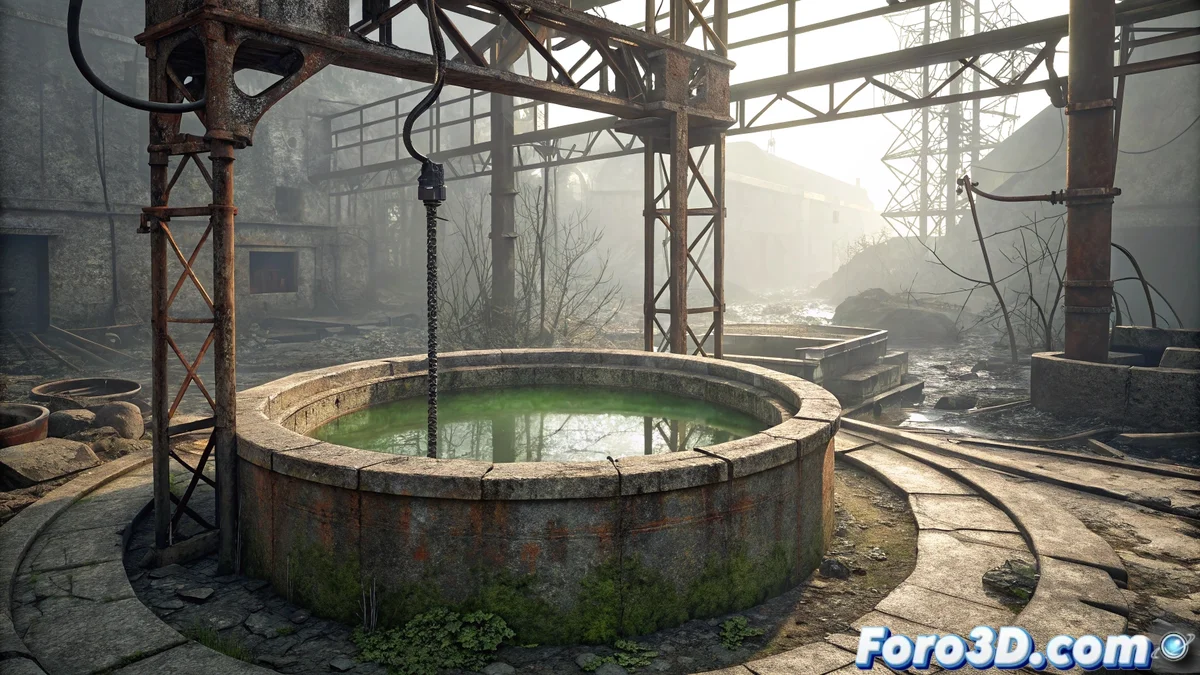
The Acid Rain Pit Phenomenon in 2D Graphic Design
The acid rain pit emerges as a fascinating element within urban industrial folklore, originating in abandoned factory areas during the mass deindustrialization of the late 20th century. These formations accumulate rainwater with chemical compositions altered by decades of atmospheric pollution, creating a liquid with unique properties that have inspired intense visual narratives. Its representation in 2D graphics allows exploring metaphors about the loss of humanity and the toxic legacy of industrial progress. 🌫️
Origin and Evolution of the Concept
The first records of these pits come from regions like the North American Rust Belt and industrial zones in Central Europe, where urban explorers documented waters with anomalous characteristics. The legend grew when people disappeared in these areas and reappeared with profound psychological alterations, showing a total inability to experience emotions. This transformed the phenomenon into a powerful cultural metaphor about collective trauma and the invisible dangers inherited from industrialization. In graphic design, it is used to communicate ideas about emotional disconnection and the corrosion of the human soul.
Key Characteristics of the Phenomenon:- Unique Chemical Composition: Waters with extreme acidity, heavy metals, and unknown industrial compounds that selectively corrode the brain's emotional centers.
- Neurological Transformation: Victims retain basic bodily functions but lose all emotional capacity, entering a state of absolute apathy.
- Cultural Legacy: Serves as a warning about the hidden costs of industrial development and the loss of humanity in abandoned spaces.
The real danger of this pit is not that you drown, but that after touching it, you wouldn't even care if you had.
Representation Techniques in LibreCAD
To capture the ominous essence of the acid rain pit in 2D graphics, it is essential to master vector design tools. In LibreCAD, we start by setting up a new document with metric units and a 1-meter grid, adjusting the snap to 0.5 meters for precision. Organization into separate layers—industrial structure, terrain, water, and details—allows detailed control over each visual element. We use symbolic colors: grays for rusted metals, browns for the terrain, and acid greens for the water, reinforcing the narrative of toxicity and abandonment. 🎨
Basic Modeling Process:- Circular Outline: Draw a circle with a 3-5 meter radius using the corresponding tool, defining the pit's perimeter.
- Metal Structures: Create rusted beams and broken pipes with lines and arcs, showing how industrial waste converges into the pit.
- Corrosion Textures: Apply patterns of dashed lines and irregular dots to simulate deterioration on metal surfaces.
Visual Effects and Material Simulation
Although LibreCAD lacks advanced lighting, it is possible to simulate light effects through variable line widths and strategic shading patterns. Shadowed areas are represented with thicker lines, while illuminated surfaces use thin strokes. For the water, we create concentric circles with decreasing spacing toward the center, mimicking depth and movement. The corrosive nature of the liquid is suggested with irregular ripples and variable density hatches, achieving a viscous and threatening appearance. The incorporation of schematic human figures near the edge, with fading lines, reinforces the theme of emotional dissolution. 💧
Elements for the Final Render:- Bubble Patterns: Group small irregular circles on the water surface to suggest chemical activity.
- Multiple Views: Export the design in high-resolution DXF format from different angles to document all ominous features.
- Technical Annotations: Add explanatory text about the chemical composition and its effects, integrating the narrative into the design.
Narrative Impact and Final Reflections
The acid rain pit transcends its physical origin to become a powerful symbol within 2D graphic design, representing the fear of dehumanization and the psychological consequences of industrial collapse. By employing techniques in LibreCAD, artists can communicate these ideas through carefully crafted visual elements, from rusted structures to corrosive waters. This phenomenon continues to evolve in contemporary culture, inspiring narratives in alternative media and reminding us of the hidden costs of progress. In the end, its representation not only captures an environmental danger but a warning about what we lose when industry advances unchecked. 🏭