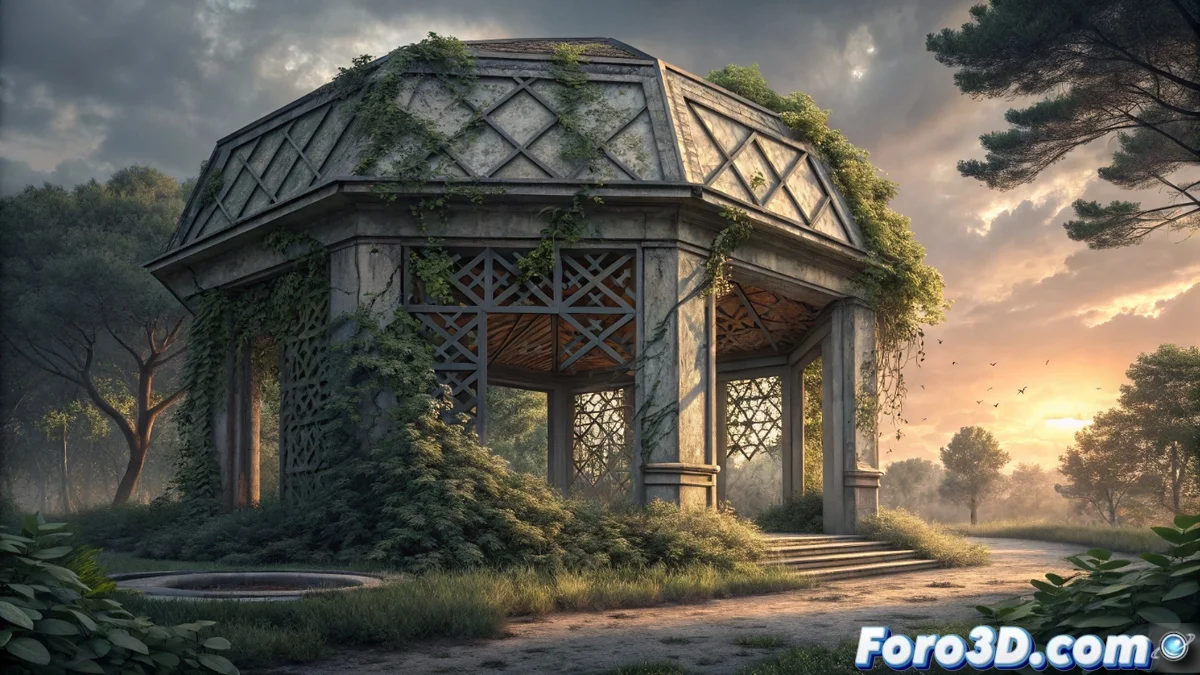
The Hexagons Pavilion: Forgotten Architectural Jewel in Madrid
In the heart of the Madrid's Casa de Campo stands a unique testimony to the architectural creativity of the mid-20th century. This singular building, initially conceived for the 1958 Brussels Universal Exposition, was transported piece by piece to Spain with the ambitious vision of becoming a permanent cultural reference. The decades have taken their toll on its avant-garde forms, but its essence remains as a silent legacy of an era of constructive innovation 🏛️
Geometric Innovation and Modular System
The hexagonal configuration constitutes the defining element of this construction, where each module interlocks forming a harmonious geometric ensemble. This structural solution not only responded to revolutionary aesthetic criteria but also represented a significant technological advancement in the application of prefabricated systems. The industrialized materials allowed for quick assembly which, paradoxically, today shows the consequences of the passage of time with numerous visible cracks and flaking.
Main structural characteristics:- System of interconnected hexagons that create unique spatial patterns
- Use of prefabricated elements that facilitated assembly and disassembly
- Capacity for adaptation to different locations and potential uses
"The modular architecture of the 1950s represents an essential chapter in the evolution of contemporary design"
Institutional Abandonment and Accumulated Deterioration
After its relocation in Spanish territory, the pavilion never achieved the anticipated cultural splendor. The lack of a defined and continued project by the administrations led to a progressive state of institutional abandonment. Vegetation has been colonizing interstitial spaces, while the original structure loses integrity gradually. Although recovery initiatives arise periodically, none have managed to consolidate definitively.
Identified degradation factors:- Absence of preventive maintenance and continuous conservation
- Lack of a stable cultural use program that justifies its preservation
- Prolonged exposure to weather conditions without adequate protection
Uncertain Future of an Architectural Icon
The paradox of this emblematic building lies in its condition as a hidden treasure whose historical relevance contrasts with its visible deterioration. Like a architectural jewel stored in the collective attic, it awaits some initiative to rescue its legacy before time completely consumes its singular constructive identity. Its presence continues to be a tangible reminder of how modern heritage requires continuous attention to avoid falling into definitive oblivion 🕰️