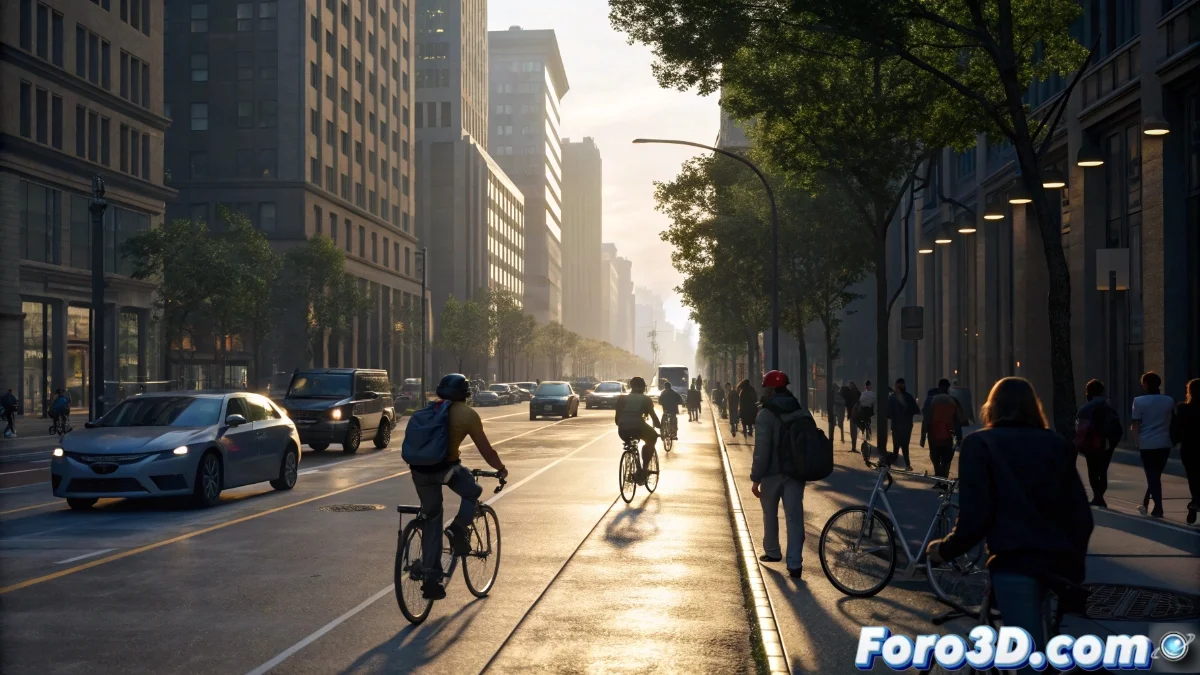
The Paradox of Sustainable Mobility in Urban Environments
Contemporary metropolitan areas are trapped in a fundamental contradiction between ecological discourse and everyday practice. While we verbally support green initiatives, in reality we oppose any modification that alters our immediate comfort zone 🏙️.
The Gap Between Urban Theory and Practice
Sustainable mobility projects frequently generate citizen resistance when they demand personal concessions. We conceptually approve the reduction of vehicles and the promotion of alternative transports, but we rebel if this implies sacrificing sidewalk meters or parking spaces near our homes and businesses.
Manifestations of this contradiction:- Theoretical support for bike lanes versus opposition when they reduce pedestrian space
- Defense of the environment until it affects established mobility habits
- Tension between different users of urban public space
We defend clean air until they ask us to give up a piece of sidewalk, as if that square meter of concrete represented our last frontier of personal freedom while we breathe pollution.
Strategies for Integrative Urban Design
Urban planning specialists are developing creative approaches that expand available space without undermining conveniences. The reconfiguration of roadways, implementation of single platforms, and redistribution of road width allow the incorporation of cycling infrastructure while maintaining wide sidewalks.
Innovative solutions:- Intelligent redesign of roadways to optimize space
- Shared mobility systems that reduce the need for parking
- Technologies that free up meters for multiple modes of transportation
Towards Balanced Urban Coexistence
This urban cognitive dissonance reveals that we yearn for greener cities as long as they do not modify our established patterns. The real challenge lies in developing public spaces where sustainability and comfort coexist, overcoming the paradox that makes us defend the environment until it touches our daily habits 🌱.