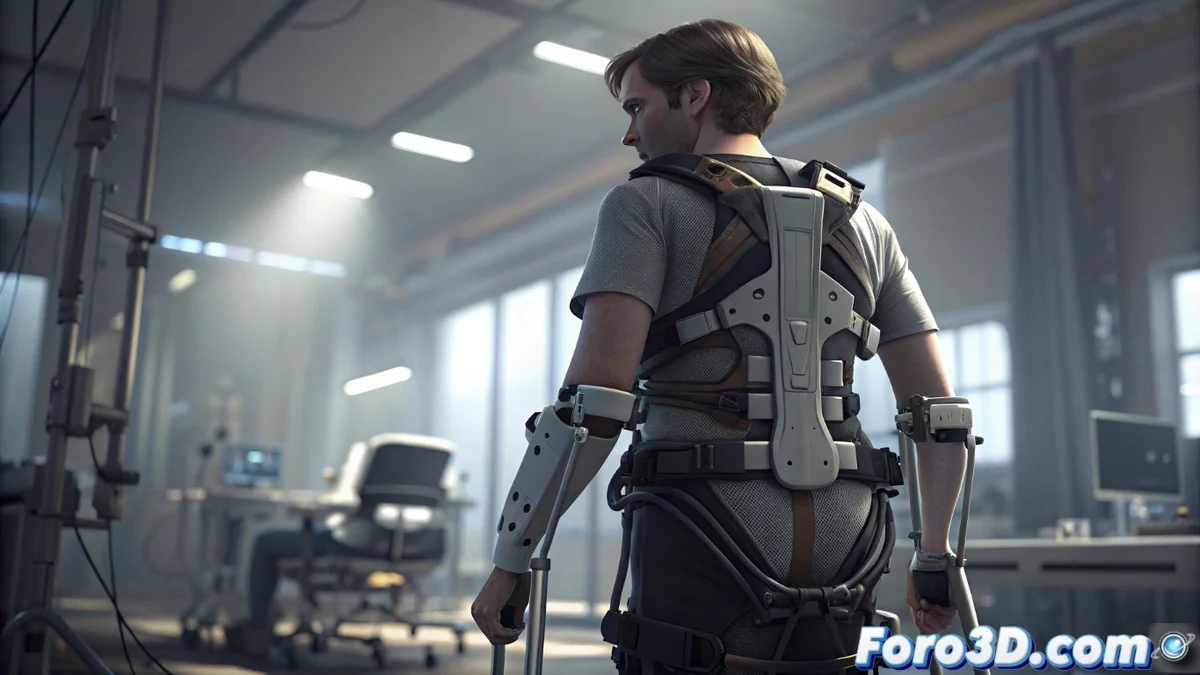
The Para-Bionic Exoskeleton: Mobility through Customized 3D Printing
The alliance between 3D Systems and Ekso Bionics has brought to life the Para-Bionic exoskeleton, a device that is transforming rehabilitation and mobility. This system combines cutting-edge engineering with digital manufacturing to offer a tailored solution, restoring the ability to walk to those who had lost it. 🤖
The Foundation of the Design: Precision 3D Scanning
The process begins with a detailed 3D scan of the user's body. This digital model becomes the basis for manufacturing, through 3D printing, components such as harnesses and structural supports. The result is an ergonomic and unique fit that optimally distributes loads, eliminating pressure points and improving safety during use.
Key Advantages of the Customized Process:- Perfect Anatomical Fit: Each piece is manufactured to adapt to the user's specific morphology.
- Reduction of Discomfort: Friction zones and the risk of skin injuries are minimized.
- Weight Optimization: Use of lightweight yet high-strength composite materials, ideal for prolonged use.
The millimeter precision of 3D printing allows for an almost natural integration between the bionic device and the human body.
Impact on Autonomy and Functionality
Thanks to this personalized approach, the exoskeleton responds more intuitively to the user's movement intention. This facilitates daily activities and promotes a greater degree of independence. The improved stability is a crucial factor for safe and efficient gait.
Benefits in Assisted Mobility:- Intuitive Response: The system synchronizes better with the user's natural movements.
- Increased Stability: The customized design provides greater support and control during walking.
- Guaranteed Durability: The selected materials withstand the demands of daily use in various environments.
A Reflection on the Future of Mobility
This advancement places additive manufacturing at the center of rehabilitative medical technology. The paradox of using machines created by 3D printing to recover something as fundamental as walking evokes a future where the boundaries between human and machine blur with a clear purpose: to improve quality of life. The Para-Bionic is not just a device; it is a bridge to a new way of understanding assisted mobility.