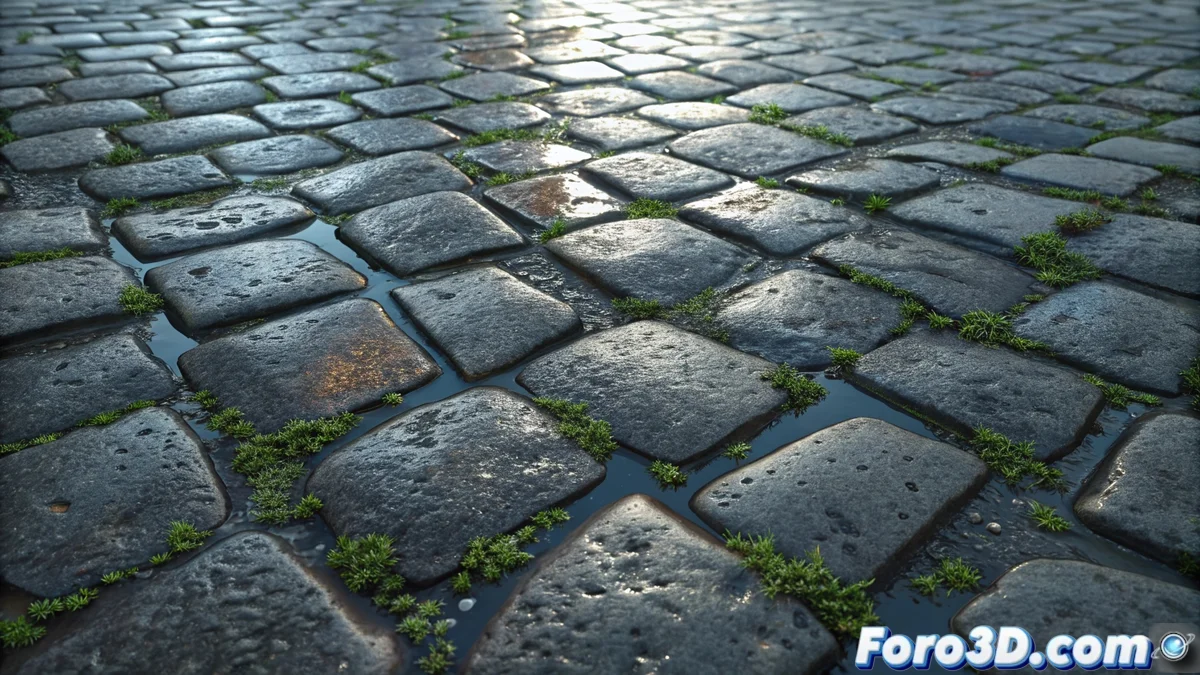
Detail Overhead Photography Explores Surfaces from Above
This photographic technique goes beyond conventional flat lay to isolate textures and patterns with a perfect ninety-degree angle. By eliminating the horizon and any spatial context, mundane objects transform into abstract, two-dimensional landscapes. A floor, a puddle, or a pile of leaves become canvases where light, shadow, and repetition of shapes dominate the scene. It invites us to perceive the details we usually ignore under our feet. 👁️
Equipment and Method for Achieving Maximum Stability
To obtain sharp images with precise framing, it is essential to stabilize the camera right above the subject. A tripod with an invertible center column or an articulated arm to hang the equipment upside down is the best option. Using a remote shutter release or the internal timer avoids introducing vibrations when pressing the button. It is advisable to stop down the aperture to increase depth of field and ensure that the entire surface, especially if it has relief, is in focus. Grazing natural light, such as at dawn or dusk, enhances textures and creates defined volumes.
Essential Technical Keys:- Use a tripod with a reversible column or articulated arm for pure overhead positioning.
- Employ a remote shutter release or timer to avoid any movement.
- Set a stopped-down aperture (f/8 or higher) for maximum depth of field.
Detail overhead photography does not show a place; it reveals a pattern. It transforms the recognizable into something completely new.
Finding and Composing Abstract Motifs in the Ordinary
The creative process lies in finding patterns, contrasts, and visual rhythms in common surfaces. Wear on a cobblestone pavement, a crack in the asphalt, bubbles trapped in a puddle, or the random arrangement of pebbles can become the main subject. When composing, it's about filling the frame with the pattern, seeking symmetries or, conversely, deliberately breaking them. Color can be a starring element, or one can opt for black and white so that form and texture prevail over tone.
Practical Challenges to Overcome:- Identify surfaces with repetition, contrast, or interesting cracks in the everyday environment.
- Compose by filling the frame, deciding between symmetry or asymmetry for visual impact.
- Meticulously ensure that neither your shadow nor the tripod's appears in the shot and reveals the viewpoint.
Conclusion: A New Way of Seeing
Detail overhead photography is more than a technique; it is an exercise in perception. It forces the photographer to observe closely and isolate fragments of the world, creating abstract compositions from the most immediate reality. Mastering equipment stability and sharpening the gaze to find beauty in the trivial are its fundamental pillars. 🎯