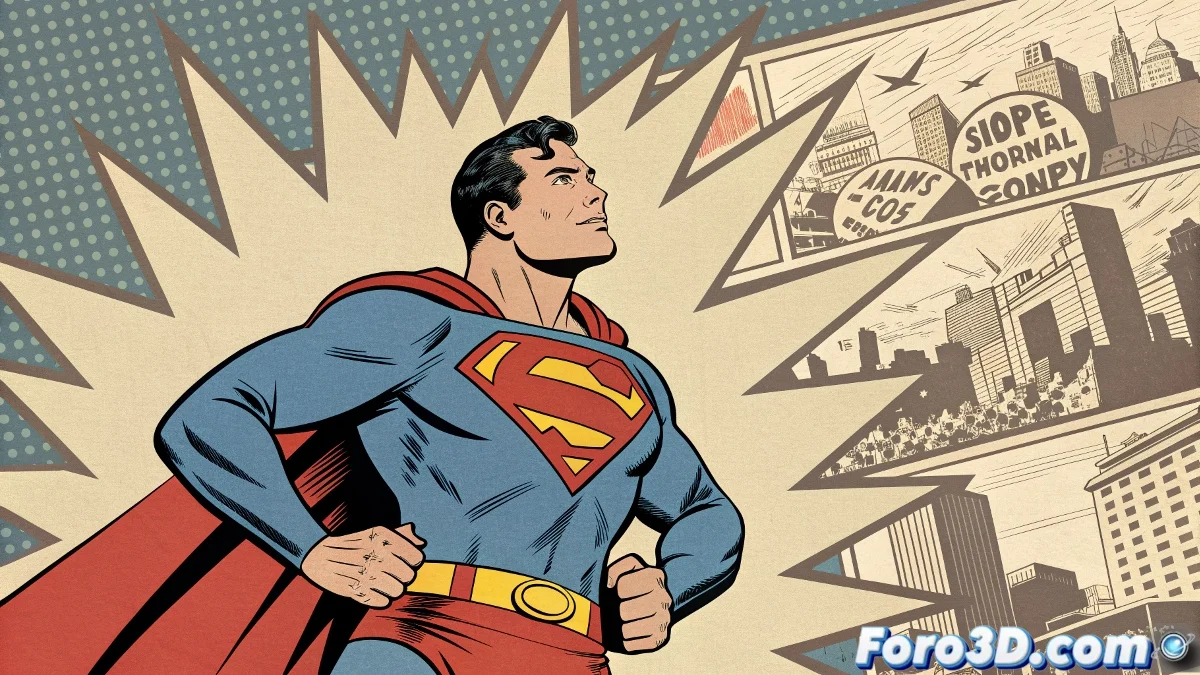
The Birth of an Eternal Icon
In 1938, the world of entertainment changed forever with the appearance of a character that would define the superhero genre: Superman. 🦸♂️ Created by two young Jews from Cleveland, Jerry Siegel and Joe Shuster, the Man of Steel emerged in a historical context marked by the Great Depression and rumors of war in Europe. This collection brings together those first and transcendental issues where an alien with divine powers decided to use his abilities to defend the weak, establishing a moral code that would resonate for generations.
Action Comics #1: the Starting Shot
Everything began with Action Comics #1, an issue that today is an invaluable collector's piece. Inside, Superman couldn't fly yet, but he jumped "higher than a skyscraper," stopped bullets with his chest, and fought against abusive husbands and corrupt politicians with equal determination. 🏙️ This Superman was more of a social fighter than a god, reflecting the anxieties and hopes of America at the time. Joe Shuster's iconic cover, with the hero lifting a car, immediately became a symbol of unstoppable power.
Before saving the world, Superman began by saving ordinary people from everyday injustices.
The Construction of a Modern Myth
The following issues, compiled in this edition, wove the mythology we know today. In Superman #1, Lex Luthor (still with red hair) was introduced for the first time, and the Kryptonian origin was explored further. 📚 The collection includes appearances at world's fairs, where Superman was already consolidating as a massive cultural phenomenon. These comics established the pillars of the entire genre: a secret alter ego (Clark Kent), a romantic interest (Lois Lane), and a city to protect (Metropolis).
- Evolution of powers: It can be seen how abilities like heat vision or flight were added progressively.
- Definitive art: Shuster's style laid the visual foundations of the character for decades.
- Historical context: The stories reflect pre-war patriotism and values.
A Legacy that Endures
More than eighty years later, these initial comics retain an extraordinary energy and narrative purity. 💥 Reading them is traveling to the exact moment when the idea of the superhero took shape, before multiverses and infinite crises. Superman rose not only as the first superhero, but as the moral beacon against which all who followed would be measured. This collection is the essential record of that origin, a treasure for any comic lover.
It's curious that a character created to fight gangsters and local corrupt officials ended up defining 20th-century pop culture. 😉 Proof that even the most powerful heroes have humble and glorious beginnings.