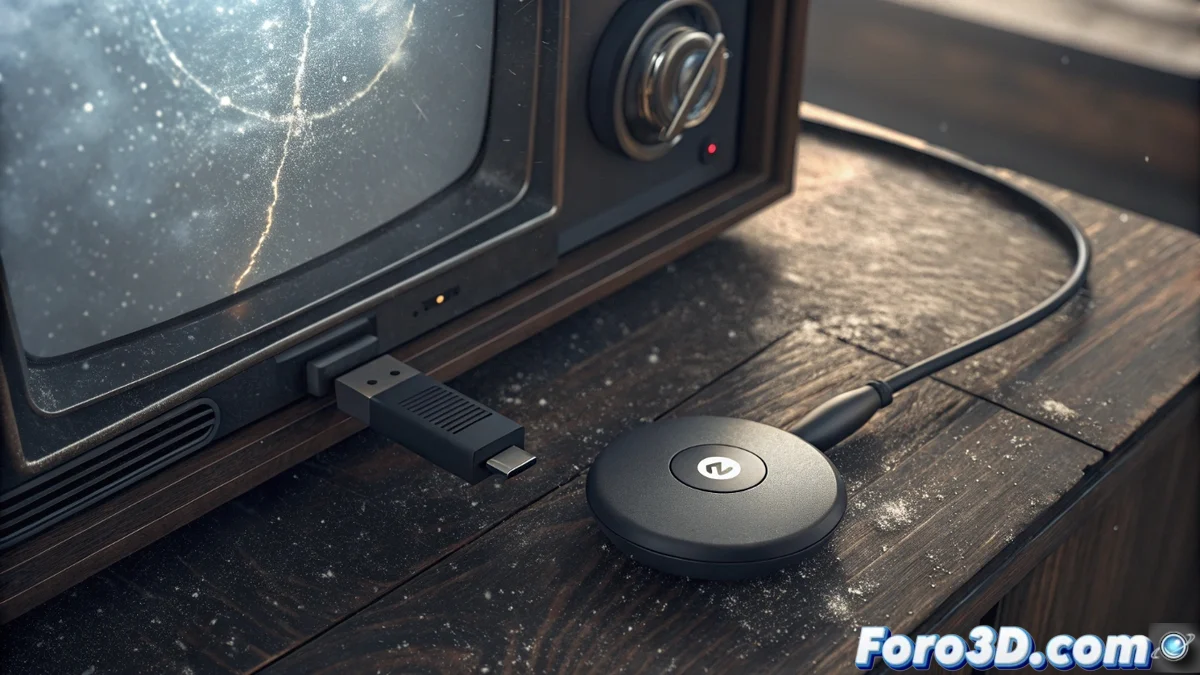
The original 2013 Chromecast becomes obsolete due to lack of Google support
The device that started the revolution of simplified streaming in the living room, the first-generation Chromecast, has officially entered a critical phase of obsolescence. Google has completely ceased software support, condemning this hardware to increasingly limited functionality in the current digital ecosystem. 🚫
Hardware stuck in the past
The absence of firmware updates means the device operates with an outdated operating system version. This technical stagnation has a direct and serious consequence: the inability to decode the protocols and video compression codecs that are standard today. Content services have evolved, but this pioneer is stuck in 2013.
Specific problems users face:- Constant playback errors on platforms like YouTube, Netflix, or Disney+, which no longer optimize their content for this hardware.
- Degraded image quality even with high-speed internet connections, because the device cannot process efficient data streams.
- Incompatibility with modern resolutions, due to lack of support for essential codecs for high-definition and 4K content.
Keeping the first Chromecast running is an uphill battle against technological incompatibility.
The core of the problem: missing codecs
The technological gap is abysmal. This model lacks support for VP9, a fundamental codec for YouTube, and for HEVC/H.265, the absolute standard for high-quality and 4K streaming. Its chipset and software are simply not designed to handle the compression efficiency demanded by contemporary content, forcing the device to attempt to decode streams it is not prepared for. 🔧
Key technical limitations:- Single-core processor and very limited RAM, insufficient for current applications.
- Obsolete video codec set, focused on low-efficiency formats like H.264.
- Lack of updated DRM certifications, necessary to play paid content from many platforms.
Looking to the future: necessary alternatives
The most sensible solution for users is migration to modern hardware. Devices like Chromecast with Google TV offer not only full compatibility with current codecs, but also a dedicated user interface and agile performance. Its utility now is reduced to very niche roles, such as serving as an audio receiver for a speaker, but for primary video consumption, its lifecycle has ended. It is a tangible reminder of the planned obsolescence in consumer technology. 🎯