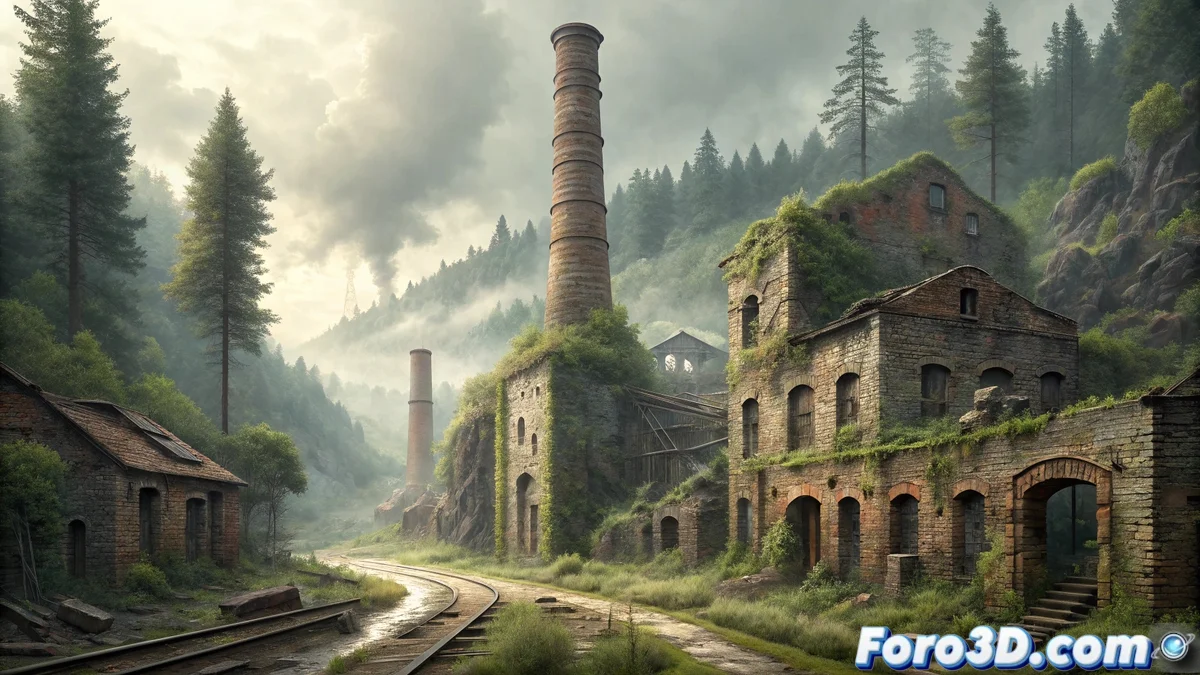
The Orbaiceta Arms Factory: Industrial History in Ruins
In the Navarrese Pyrenees stand the remains of the Royal Orbaiceta Arms and Ammunition Factory, an 18th-century industrial complex that represents the military aspirations of its time. Its stone and brick walls dialogue with the forested surroundings, creating a fascinating contrast between nature and military industry 🏭.
Origin and Strategic Conception
This complex was designed as an advanced production center that leveraged local natural resources, especially water for energy and wood for fuel. Its remote location responded to a dual strategy: ensuring security and keeping production away from battle fronts. The blast furnaces and auxiliary structures were planned with a forward-looking vision, although constant conflicts prevented the completion of the planned expansions.
Main features of the original project:- Intensive exploitation of local natural resources for military production
- Design of infrastructures with advanced industrial efficiency criteria
- Strategic location in a mountainous area for protection and discretion
A site conceived for the clamor of war today offers silence and reflection on the passage of time and truncated projects
Transformation and Contemporary Legacy
Currently, the place has been reclaimed by nature, where vegetation gradually covers what was once an industrial domain. The remains of furnaces and abandoned sheds attract both tourists and researchers interested in industrial archaeology and military history. Despite the abandonment, the factory constitutes a valuable example of 18th-century industrial architecture.
Aspects of the current legacy:- Ruins that show 18th-century construction techniques
- Tourist and educational destination on industrial history
- Example of how nature recovers human spaces
Final Reflection on Historical Contrast
It is paradoxical that a space designed to produce instruments of war is now known for its tranquility and landscape value. The stones that never fulfilled their military destiny now invite contemplative walks, symbolizing how the most ambitious projects can be suspended by historical circumstances 🕰️.