When Your Eyes Play a Trick on You... or a Wonderful One
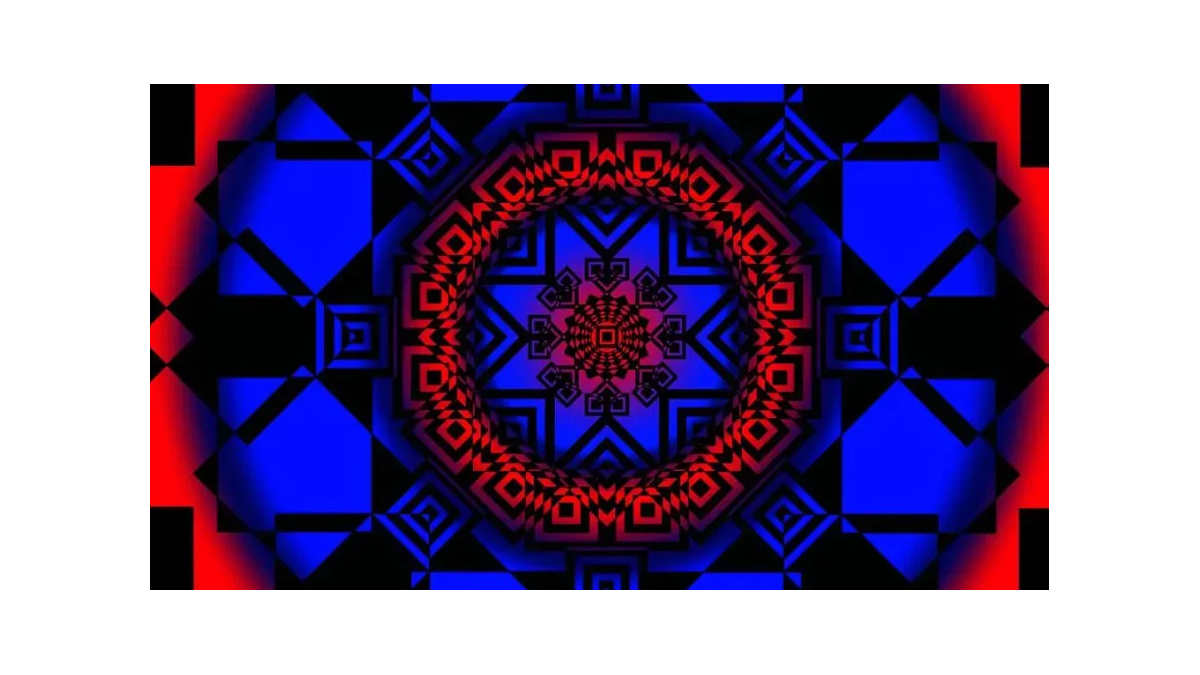
An intriguing image is circulating on the internet: a design of concentric circles in blue and red tones, arranged like a target on a black background. At first glance, it's a completely flat graphic. However, for a large number of people, this image produces a powerful three-dimensional depth illusion, making the pattern appear to float or sink. The fascinating thing is that this experience is not universal, creating an immediate division between those who see the effect and those who don't. 👁️
The Science Behind the Visual Deception
This optical illusion is a master of visual disguise. Its power lies in the interaction between color, contrast, and shape. The blue and red tones, along with the high-contrast black background, deceive our primary visual system, which tries to interpret the signals as indicating depth and volume. Basically, the brain receives ambiguous information and chooses the most "probable" interpretation, which in this case is a three-dimensional shape. It's a brilliant example of how our brain is not a passive camera, but an active interpreter.
Why Don't Everyone See It? The Great Debate
The million-dollar question is: why are some people immune to the effect? The answer is not unique, and several theories attempt to explain it:
- Astigmatism: This visual condition can alter the way curved lines are perceived, potentially nullifying the signal that generates the depth illusion.
- Brain Processing: Small natural variations in how different brains prioritize and process contrast and color can lead to different perceptions.
- Prior Visual Experience: Our personal history of what we've seen can influence how we interpret new images.
It's a reminder that visual reality is, in part, subjective. 🧠
It's a perfect example of how the same visual stimulus can have very different interpretations among observers.
A Classic Illusion with a Modern Twist
This design is an evolution of simpler optical illusions that have puzzled the public for years. The addition of blue and red colors seems to intensify the effect (or the lack thereof) for many people, renewing interest in a classic psychological phenomenon. Studying these variations helps scientists better understand the fundamental mechanisms of human perception.
In the end, this image is more than a simple graphic; it's a real-time social and psychological experiment. And of course, if you don't see the 3D effect, don't worry… your screen hasn't suddenly gone flat, it was that way from the beginning. 😉