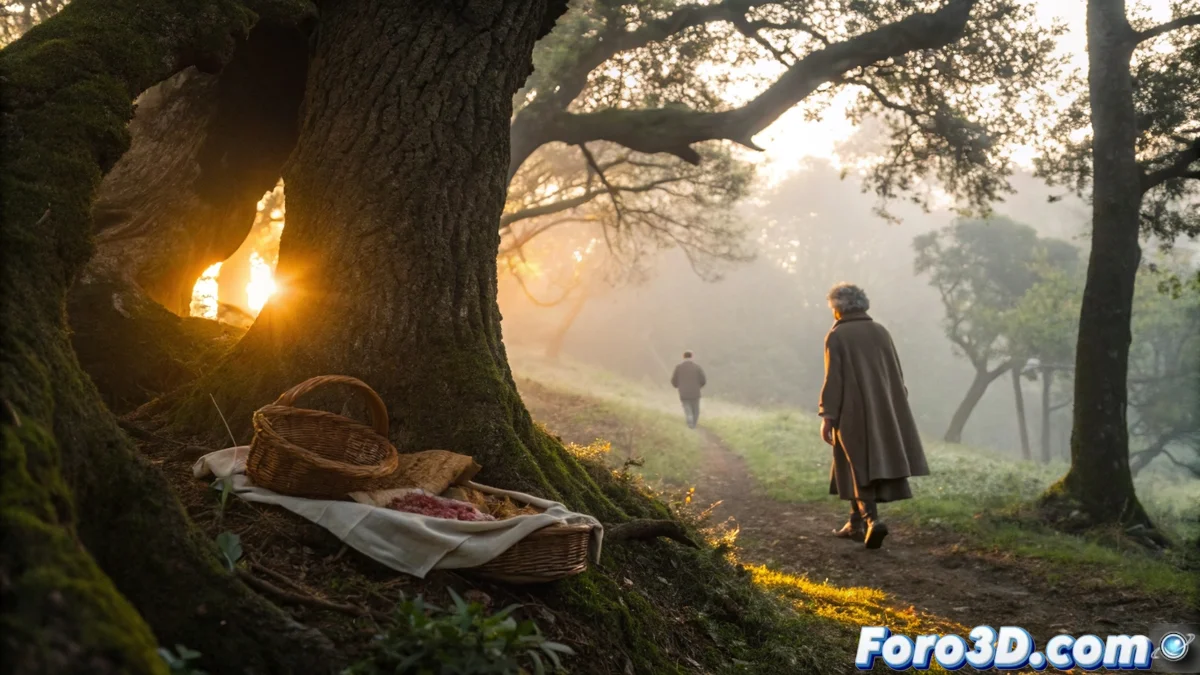
The Old Woman of the Mountain: a Leonese Myth of Protection and Sustenance
In the depths of the mountains of León, in Spain, dwells a legendary figure that contrasts with the terrifying creatures of universal folklore. It is the Old Woman of the Mountain, a female being whose essence is kindness and protection toward the little ones. While parents worked long days in the fields, this entity became the unofficial guardian of the children, weaving a network of magical and comforting security 🍞.
The Ritual of Sustenance: Magic in the Hollow of a Tree
The help of this figure was not just a simple tale, but a tangible reality that arrived with flavor. Leonese oral tradition recounts how the Old Woman of the Mountain deposited her gift in a specific hollow of an ancient tree, near the home. This gift, far from being extravagant, was deeply comforting: a loaf of homemade bread accompanied by a good portion of chorizo or bacon. This act served a dual purpose: it ensured that the children did not go hungry and, more deeply, made them feel that the forest itself cared for them.
Key Characteristics of the Food Myth:- Location of the Gift: Always in the hollow of an old tree, creating a bond between nature and sustenance.
- Nature of the Food: Humble but substantial food, reflecting the diet and resources of the rural area.
- Psychological Function: Transformed anxiety about loneliness into the expectation of a positive discovery.
"The legend transformed the forest, often hostile, into a garden watched over by an ally."
A Cultural Figure: Much More Than a Food Deliverer
The role of the Old Woman of the Mountain goes far beyond the mere provision of sausages. This myth represents an ingenious cultural mechanism developed by peasant communities to manage fear. By personifying protection in a concrete, kind, and close figure, a monumental shift in perception was achieved. The forest ceased to be a place full of unknown dangers and became a territory guarded by a supernatural ally. Thus, it served as comfort for everyone: the children felt accompanied, and the parents could leave for work with greater peace of mind.
Social and Psychological Functions of the Legend:- Fear Management: Mitigated children's fear of loneliness and the wild.
- Community Reaffirmation: It was a shared story that strengthened bonds and local identity.
- Indirect Pedagogy: Taught children to trust certain places in nature (the tree) as safe points.
A Legacy that Evokes Nostalgia
In today's digital era, the simplicity and warmth of this myth provoke a deep nostalgia. It is enviable to imagine a childhood where the biggest concern was checking the trunk of an oak tree for a gift from the local fairy godmother, instead of being glued to notifications on a screen. The Old Woman of the Mountain is not just a folkloric memory; she is a symbol of a more innocent and tangible relationship with the world, where magic and sustenance were found in the hollow of a tree, waiting to be discovered 🌳.