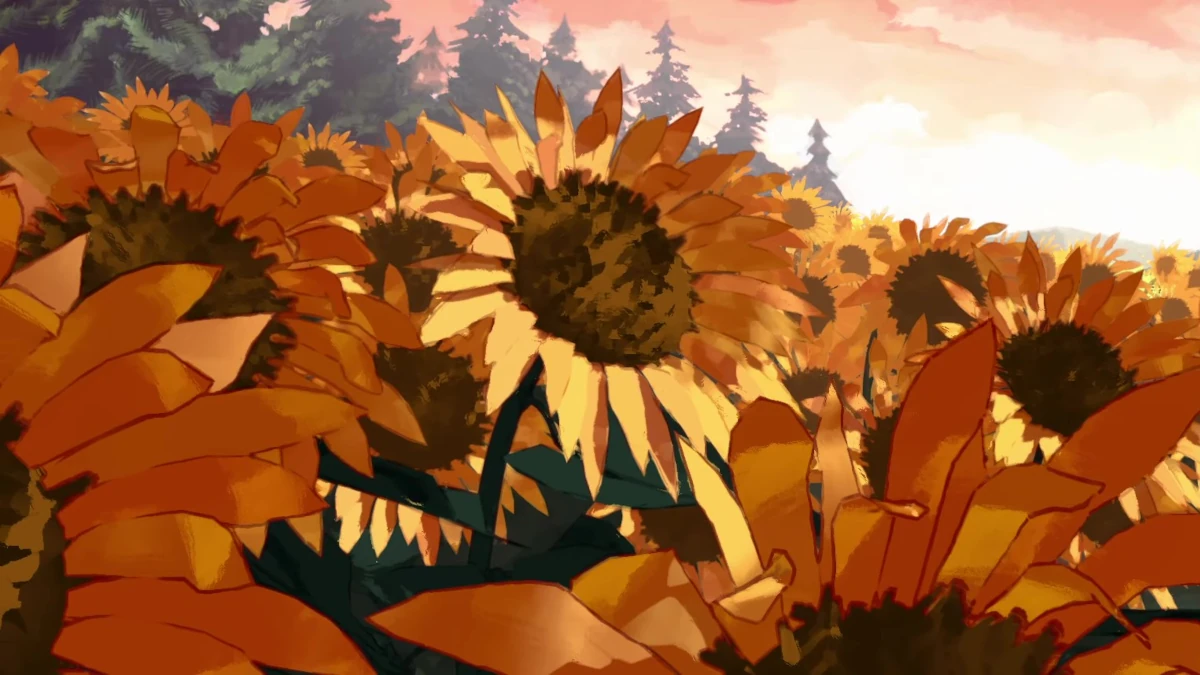
In recent years, students from ESMA have demonstrated a remarkable ability to explore diverse themes in their cinematic productions. From intimate stories to epic tales, their works are characterized by thematic variety and a unique visual treatment. The Ogre of the Danube, a short film recently released by the school, is a perfect example of this evolution. With a bold narrative and a graphic style that evokes the texture of painting, this work leaves no one indifferent who beholds it.
A desperate escape
The story revolves around Yulya, a woman forced into marriage, who decides to escape with her lover, Novak. Together, they embark on a dangerous journey to flee Yugoslavia through the Danube River, guided by an enigmatic character named Matko. However, what begins as a journey toward freedom soon turns into a deadly trap, orchestrated by a figure known as the Ogre. This unexpected twist plunges the protagonists into a struggle for survival, while the viewer witnesses an intense and emotionally charged drama.
A team of talents
The direction of The Ogre of the Danube was handled by a multidisciplinary team consisting of Louise Bernard, Théo Fortin, Pierre Bournigault, Juliette Dupont, Robin Horel, Lina Samylourdes, Margaux Malinge, and Inès Sanchez. The soundtrack, composed by Nicolas Montaigne, was performed by musicians such as Marie Caparros, Marie Bonnetain, and Dorian Spiess, who contributed a disturbing and enveloping sound atmosphere.
The character voices, provided by Tatjana Opalic, Aleksandra Opalic, Marko Gojkovic, David Jakovlevic, Anouchka Toutain, Léa Crueize, and Robin Mezières M’ribah, added depth and authenticity to the story. Finally, the sound design, carried out by José Vicente and Yoann Poncet at Studio des Aviateurs, completed the auditory experience, creating a sound world that perfectly complements the visual narrative.
A work that invites reflection
The Ogre of the Danube is not just a short film; it is an artistic experience that combines visual, sound, and narrative elements to tell a deeply human story. Through its pictorial style and focus on themes such as oppression, freedom, and betrayal, the work invites the viewer to reflect on the complexities of the human condition.
Undoubtedly, this short film is a testament to the talent and creativity of ESMA students, and proof that cinema can be both a form of entertainment and a tool to explore the deepest emotions of the human being.
The Ogre of the Danube is a work that combines art and narrative to explore universal themes such as freedom and betrayal.