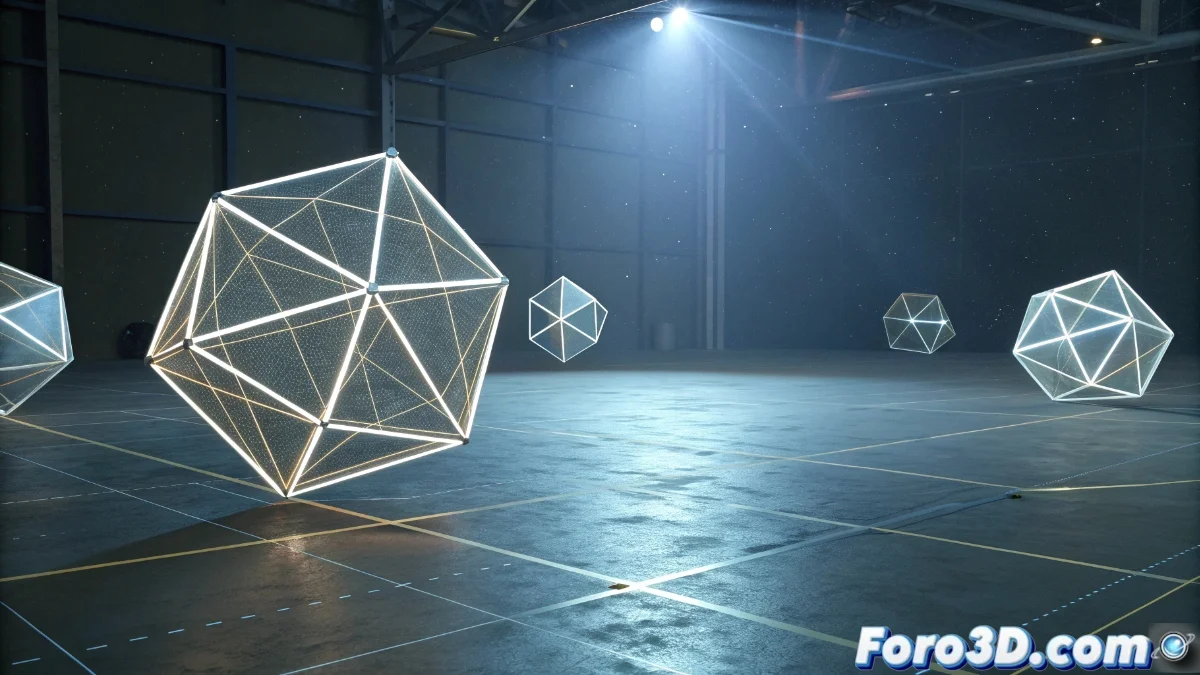
Offset in Unreal Engine: Complete Guide to Displacements and Applications
The concept of offset in Unreal Engine represents one of the fundamental pillars for developing immersive 3D experiences. It is the controlled displacement that we apply to elements such as objects, materials, or coordinate systems within the graphics engine. This technique allows for extremely precise positioning in three-dimensional space, perfect textural adjustments, and the creation of animated movements with professional subtlety. 🎯
Practical Applications in Development
Developers implement offsets in multiple ways within the Unreal Engine ecosystem. In the realm of materials and textures, specialized nodes allow modifying UV coordinates to avoid evident repetitive patterns or adapt the mapping to complex geometries. For actor positioning, the offset functions as a local adjustment that alters its relative location without compromising the object's base transformations.
Main Use Cases:- Material System: Texture Coordinate and Panner nodes for dynamic UV displacements connectable to blueprints
- Actor Positioning: Local adjustments that modify relative location while maintaining original transformations
- Animation and Timing: Time and position offsets to create natural variations in repetitive movements
Small offset adjustments can make the difference between a mediocre scene and a visually impressive experience.
Configuration and Advanced Control
Offset handling is done through three-dimensional vectors where each component (X, Y, Z) defines the specific displacement on its corresponding axis. In the material editor, dynamic parameters allow connecting these values directly to blueprint systems or native C++ code. For objects within the level, the details panel exposes location values that act as offsets from the defined origin point.
Implementation Methods:- 3D Vectors: Precise control via X, Y, Z components for spatial displacements
- Programmatic Functions: SetActorLocation and AddActorWorldOffset for runtime manipulations
- Visual Editor: Details panel with location values that function as offsets from the origin
The Obsession with Spatial Perfection
In professional development, it is common to spend more time adjusting millimeter offsets than designing the game's main mechanics. This apparent paradox has a logical explanation: the player's visual perception is extremely sensitive to minimal misalignments. What happens when that barrel is displaced by five centimeters? Immersion breaks, the magic disappears. This meticulous attention to detail turns us into true architects of the apparently insignificant, but visually crucial. ✨