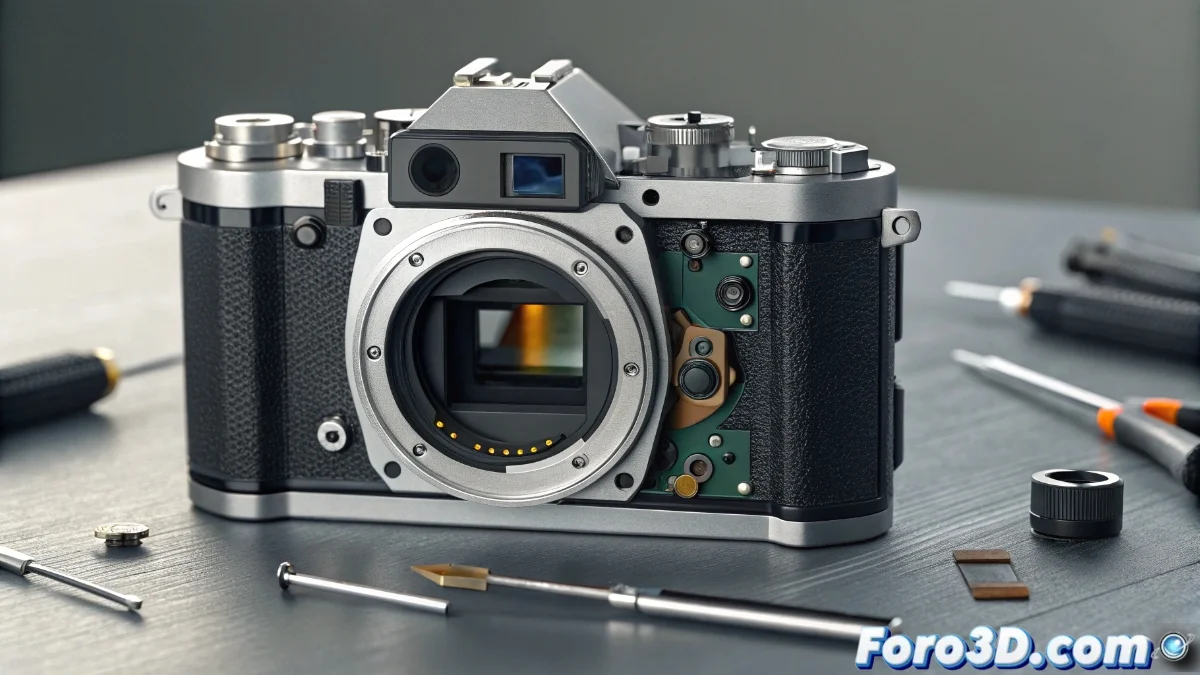
The Obsolescence Problem in Compact Cameras from 2010 to 2018
Compact digital cameras manufactured by leading brands such as Canon, Nikon, and Sony during the 2010-2018 period feature a problematic design with internal components impossible to replace by average users. This technical configuration creates serious limitations on the durability of photographic equipment 📸.
Problematic Technical Architecture
The internal design of these devices incorporates permanently integrated lithium batteries and CMOS sensors directly soldered to the main motherboards. This construction arrangement completely prevents replacement or basic maintenance by owners, creating a scenario of accelerated obsolescence.
Critical Non-Replaceable Components:- Lithium batteries fused with the device's internal structure
- CMOS sensors permanently soldered to the main motherboard
- Integrated power circuits without standard connectors
"Sometimes it seems that modern cameras are designed to last exactly as long as the manufacturer's warranty, as if they had an internal timer counting down to their own technological funeral."
Consequences for Users
Owners of these devices face economically complex decisions when technical failures occur. The natural degradation of batteries progressively reduces operational autonomy, while sensors develop premature problems due to continuous exposure to adverse environmental factors 🌡️.
Commonly Reported Problems:- Drastic reduction in autonomy due to degradation of integrated batteries
- Sensor failures from prolonged exposure to heat, humidity, and particles
- Specialized repair costs exceeding the equipment's residual value
Partial Solutions and Persistent Limitations
Manufacturers have implemented technical improvements in more recent models, including removable batteries in certain ranges and firmware optimizations for energy management. However, these solutions do not address the fundamental problem for the vast majority of older compact cameras, whose components remain non-replaceable without accessible maintenance options 🔧.
Insufficient Technical Advances:- Removable batteries only available in recent high-end models
- Firmware optimizations that do not resolve hardware problems
- Absence of maintenance programs for older equipment
Impact on Technological Sustainability
This situation generates programmed functional obsolescence, where equipment that could still be useful becomes unusable due to failures in specific components that do not allow simple substitution. Users are forced to completely replace their functional cameras, contributing to the global problem of electronic waste ♻️.