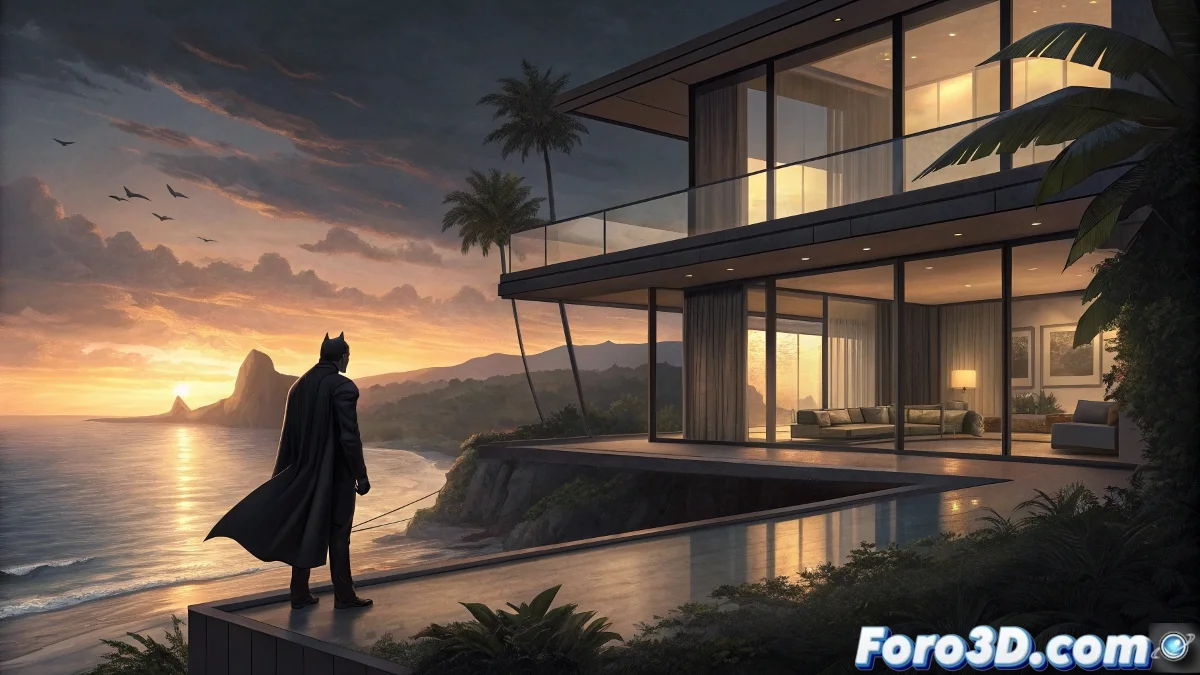
The Nice House by the Sea: when paradise hides hell
DC Comics has just released The Nice House by the Sea, the highly anticipated sequel to the acclaimed series The Nice House on the Lake by James Tynion IV and Álvaro Martínez Bueno. The new installment transplants the cosmic horror premise to an apparently idyllic coastal setting, where another group of selected characters faces terrifying realities behind the facade of perfection. While the first series explored confinement in a paradisiacal lake house, this sequel plays with the immensity of the ocean and the even greater sense of isolation that an open yet equally controlled landscape can generate. 🌊
The evolution of a disturbing concept
What makes this sequel fascinating is not simply repeating the successful formula, but expanding it into new narrative and thematic dimensions. Where the lake house functioned as a closed microcosm, the sea house introduces the paradox of illusory freedom: the characters have the immensity of the ocean before them, but they are just as trapped as their predecessors. Tynion IV once again demonstrates his mastery in creating horror through the everyday, transforming seemingly normal elements—a beach house, a group of friends, a vacation—into the prelude to existential nightmares.
Narrative and visual analysis
The Nice House by the Sea maintains the structure that made its predecessor unique, but introduces significant variations that refresh the concept and avoid a sense of déjà vu. The combination of intelligent writing and evocative art creates a reading experience that is both intellectually and viscerally disturbing.
Continuity and connections with the original series
Although it works as a standalone story, the sequel contains elements that will enrich the experience for those who read the first series. References to the Host Walter and the lake events appear subtly, suggesting that both houses are part of a larger pattern. The new house shares the same impeccable architectural design but with adaptations to the marine environment, creating an unsettling sense of familiarity within the unknown.
Elements shared with the first series:- careful selection of characters
- modern and disturbing architecture
- slow-building cosmic horror
- host with hidden motivations
Art that builds atmosphere
Álvaro Martínez Bueno once again proves why he is one of the most interesting comic artists today. His style combines detailed realism in characters and settings with surreal elements that gradually seep into the narrative. The use of color—especially the blues and greens of the marine environment—creates a palette that is both beautiful and unsettling. The page compositions reinforce the sense of isolation and cosmic scale, with panels alternating between claustrophobic intimacy and overwhelming immensity.
In Tynion IV's horror, the true monster is not a creature, but the gradual realization that the universe is indifferent to our existence.
Characters and group dynamics
The new cast reflects a diversity of personalities and backgrounds reminiscent of the first series, but with distinct interpersonal conflicts. Where the lake group was bound by prior friendships, the sea house inhabitants are mostly strangers to each other, creating dynamics of distrust and fragile alliances. The characterization follows Tynion's signature: intelligent characters who gradually lose their mental stability when faced with the impossible.
New narrative elements:- marine environment as a character
- different group dynamics
- new game rules
- expansion of cosmic lore
Themes and contemporary relevance
Like its predecessor, The Nice House by the Sea serves as a metaphor for contemporary anxieties: climate change (represented through the ocean that can be both beautiful and destructive), human relationships in the digital age, and the search for meaning in an apparently absurd universe. The series explores what happens when the securities of modern life fade and we face realities larger and more terrifying than we could have imagined. 📚
Layers of interpretation:- allegory of climate change
- exploration of friendship under pressure
- critique of modern lifestyle
- reflection on free will
In the end, The Nice House by the Sea proves that some houses have their doors too securely locked, though readers will keep knocking to be let into their perfectly designed nightmares. 🏠