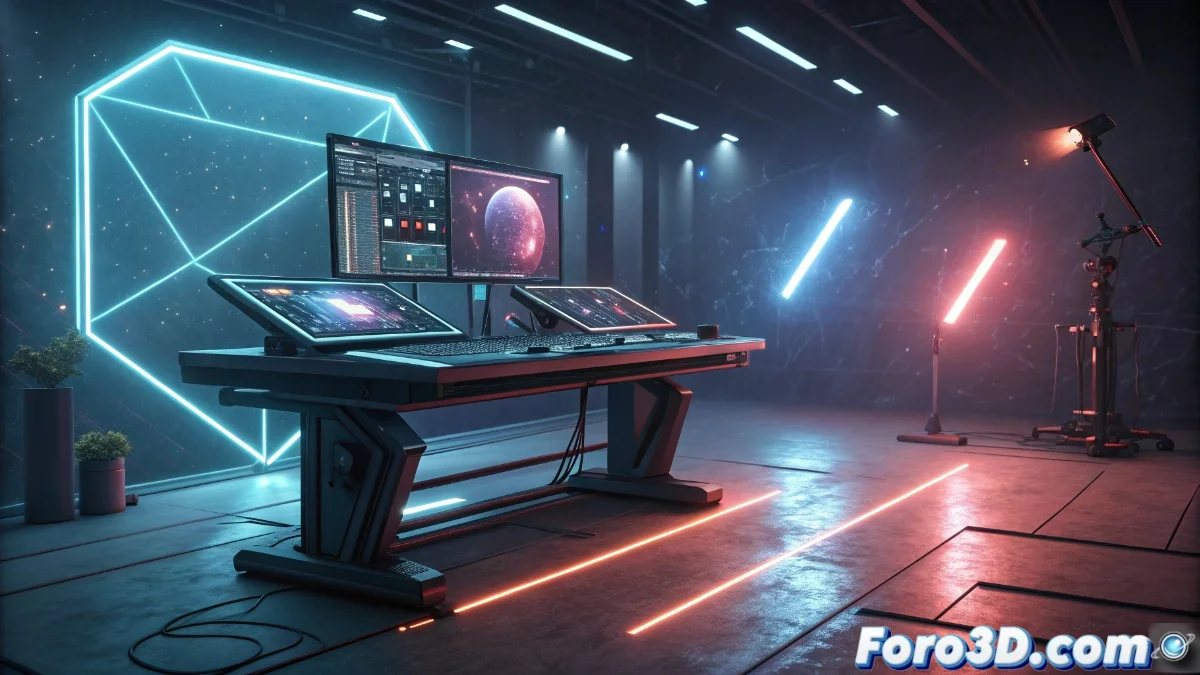
Blender's New Version Transforms Post-Production with Real-Time Compositing
The latest Blender update marks a turning point in post-production workflows by integrating a compositing system directly into the viewport. This allows artists to visualize adjustments and effects instantly, without relying on endless test renders 🚀.
GPU Acceleration for Maximum Efficiency
The core of this innovation lies in the full utilization of modern graphics cards, distributing compositing tasks across technologies like CUDA, OptiX, or HIP depending on the available hardware. Operations that previously relied on the CPU are now executed on the GPU, maintaining fluidity even in complex scenes.
Key Advantages of GPU Acceleration:- Execution of compositions with dozens of nodes at interactive speed
- Maintenance of interface responsiveness in high-demand projects
- Automatic optimization based on the user's hardware configuration
The synchronization between the render engine and the compositor redefines agility in visual creation.
Seamless Integration with the Viewport
Any modification in the 3D scene—lighting, materials, or animations—is reflected immediately in the composition, offering a unified experience. The viewport becomes a final preview window, enabling informed creative decisions without interruptions 🎨.
Features of the Viewport-Compositor Integration:- Automatic synchronization between scene changes and applied effects
- Ability to create complex masks and color corrections in real time
- Elimination of the need for test renders to validate compositions
Impact on the Creative Workflow
This evolution not only technically speeds up the process but also frees artists from repetitive tasks. Less time waiting for renders means more time dedicated to experimentation and refinement, optimizing every phase of the project ✨.