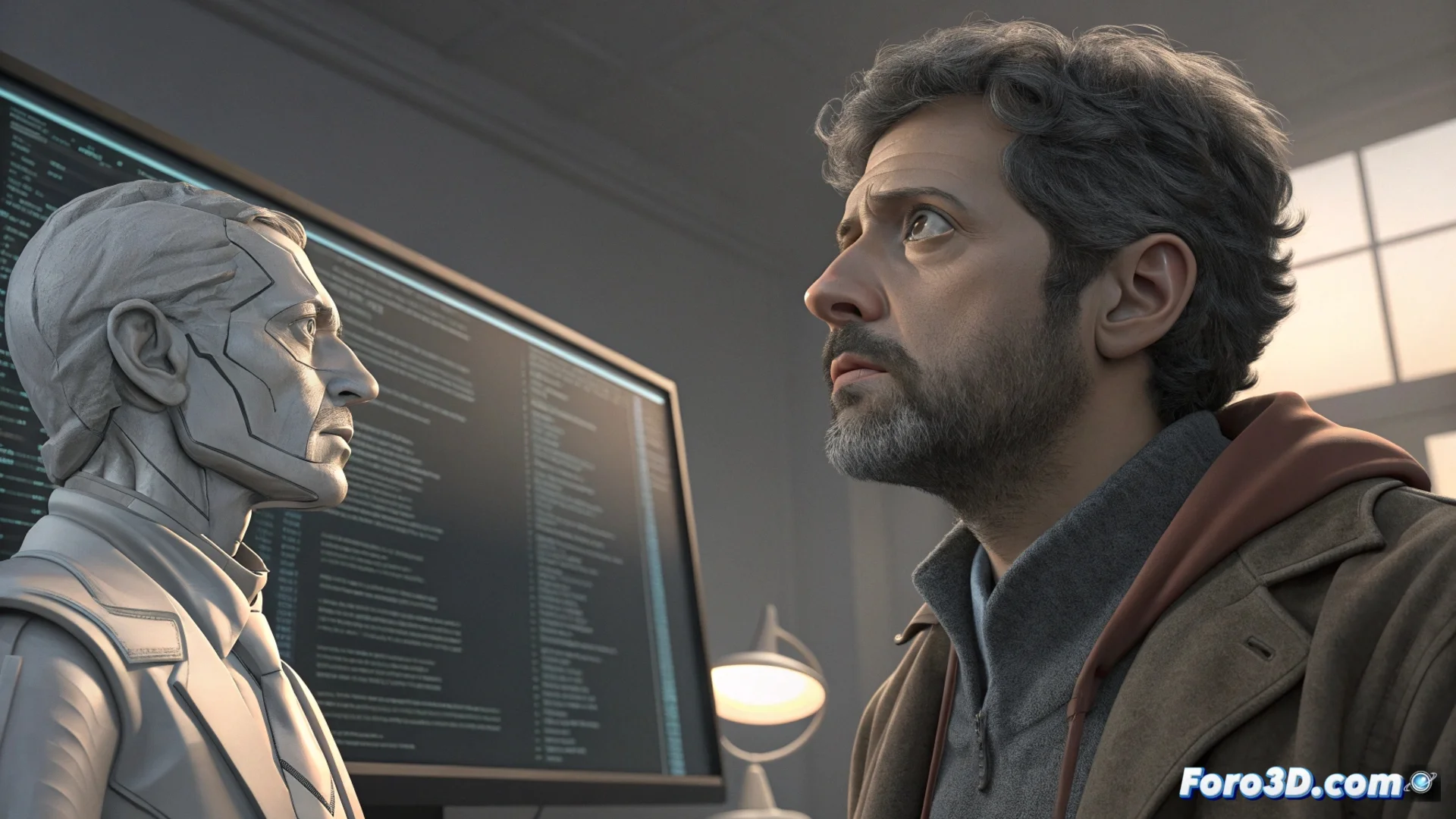
The new copyright law and its impact on 3D asset creators
A recent legal regulation is at the center of the debate in the digital artists community, as it explicitly addresses the use of massive datasets to train artificial intelligence systems. This situation places creators of original 3D assets in a complex scenario, where their work may be included in these datasets without clear consent, reigniting essential questions about ownership in the digital environment. 🤖⚖️
Digital artists mobilize defenses for their work
Numerous modelers and texturizers express concern considering that their creations may serve to feed algorithms that then produce analogous content. Although the law aims to draw boundaries, applying it in practice presents difficulties. Some studios are already adopting digital watermarks or specialized metadata to track their assets. The community is evaluating whether these tools are sufficient or if more powerful protection systems are required.
Protection measures discussed:- Implement undetectable digital watermarks to track usage.
- Use embedded metadata with licensing and authorship information.
- Develop technical mechanisms that prevent AIs from processing files without permission.
The balance between innovating with technology and respecting artists' right to control their work defines this crucial moment.
Building a legal future for creation with AI
The advancement of artificial intelligence in the artistic field is progressing at great speed, and the legal framework is trying to keep pace. Legal experts and sector professionals are negotiating to delineate what constitutes fair use and what qualifies as infringement. This process seeks to harmonize technological development with creators' right to benefit from their own production. The outcome of these conversations will determine how digital content is produced in the near future.
Key aspects in negotiation:- Define the limits of "fair use" in the context of AI training.
- Establish clear requirements for obtaining consent and compensation.
- Create protocols that allow artists to opt out of having their work included in datasets.
A horizon of permissions and recognition
The landscape suggests that formal authorizations may soon be needed even for basic uses, posing a scenario where even the automated recognition of a work by an AI would require written permission. This underscores the urgent need for a clear legal framework that protects creators without hindering innovation, ensuring that the value of original work