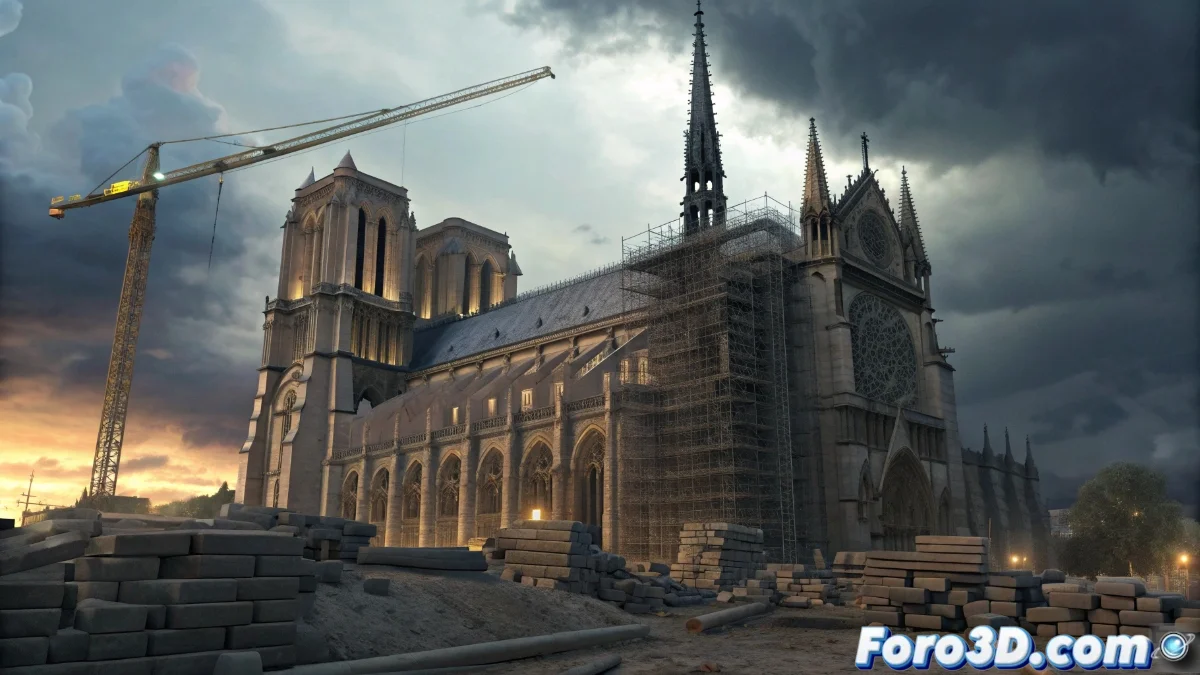
The New Cathedral of Vitoria: Architectural Ambition versus Construction Reality
The New Cathedral of Vitoria constitutes one of the most significant architectural undertakings of the 20th century in Spanish territory, initially conceived to rival the majestic European Gothic cathedrals. Its original conception envisioned an exuberant display of Neo-Gothic elements designed to project a monumental image, although the construction development faced fundamental impediments that completely altered its trajectory 🏛️.
From the Ideal Design to Practical Limitations
Begun in 1907, the building process extended for more than five decades, confronting persistent financial complications that demanded successive reformulations of the initial project. The scarcity of economic resources combined with transformations in aesthetic paradigms and ecclesiastical guidelines, leading to the gradual elimination of essential components of the original proposal. The upper ambulatory was removed from the planning, the pinnacles underwent radical simplification until they almost vanished, and the ornamentation was reduced to its most elemental expression 📉.
Elements sacrificed in the process:- Complete disappearance of the initially projected upper ambulatory
- Extreme simplification of the pinnacles until their near disappearance
- Drastic reduction of the planned ornamental elements
"Architecture is the unbribable witness of history, because one cannot speak of a great building without recognizing in it the witness of an era, its culture, its society, its intentions." - Octavio Paz
The Visible Architectural Legacy
The final product materializes as an imposing structure that, nevertheless, exhibits evident marks of the restrictions applied. The profile we currently observe lacks the exaggerated verticality and the distinctive sculptural complexity of traditional Gothic, preserving only a moderate interpretation of the conceived style. The interior spaces manifest this same duality, presenting spacious areas but devoid of the decorative richness contemplated in the original plans. This imposed simplification generates a fascinating counterpoint between the foundational aspiration and the effective capacities of its historical context 🕍.
Characteristics of the final result:- Silhouette lacking the extreme verticality of classical Gothic
- Spacious interiors but with minimalist decoration
- Architectural dialogue between initial ambition and construction reality
Reflections on Historical Alternatives
It is particularly intriguing to speculate on how the financial problems, had they arisen a century earlier, would have given rise to picturesque ruins instead of an operational cathedral burdened with a complex of grandeur. This circumstance invites consideration of how temporal and economic factors can determine the ultimate fate of monumental architectural projects, transforming ambitious visions into material testimonies of the limitations of their era 🤔.