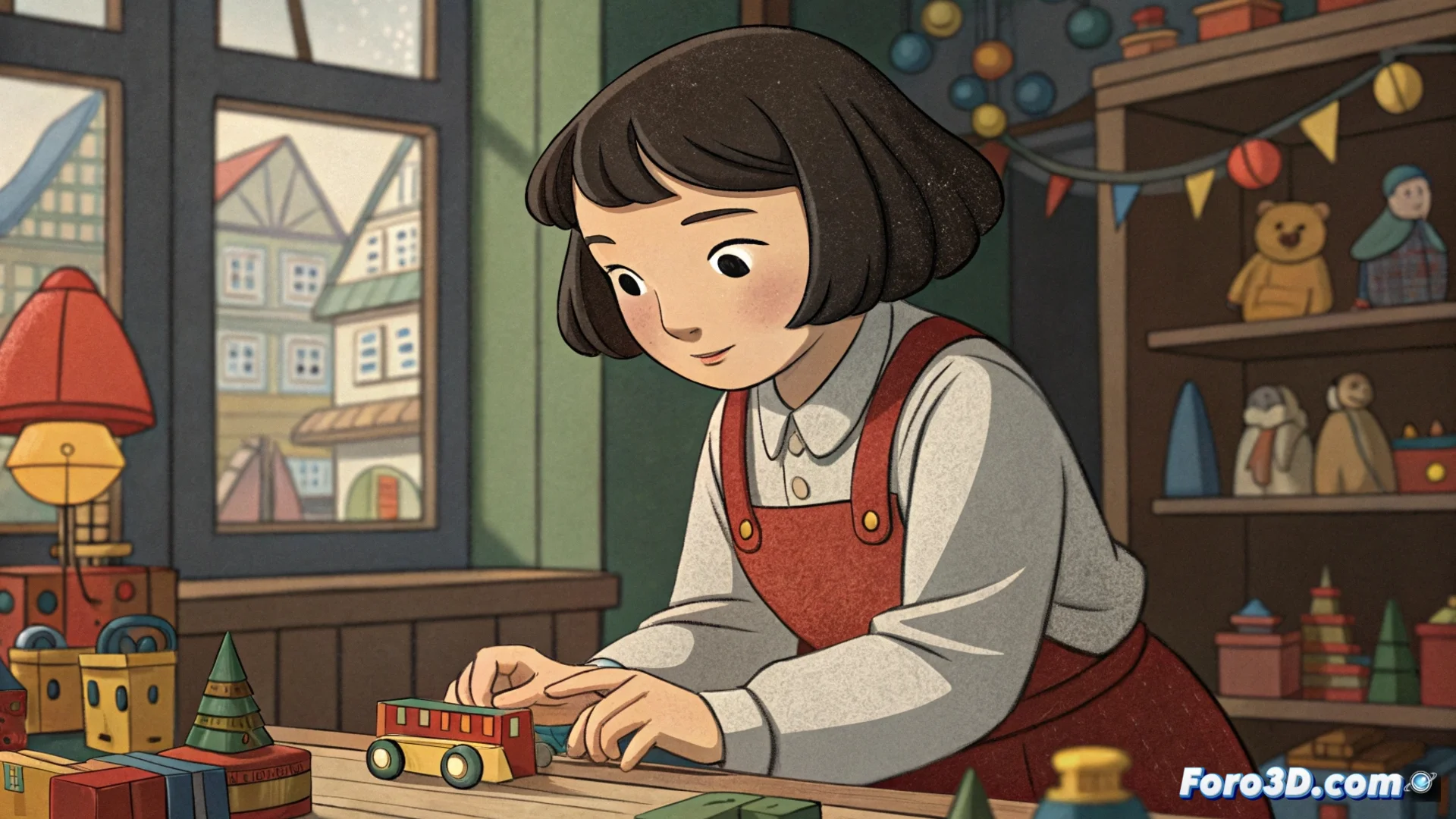
The Nao of Brown: exploring the mind of a young hafu
Glyn Dillon introduces readers to the world of Nao Brown, a young woman with Japanese and English heritage who spends her days working in an exclusive design toy shop in London. Her routine is constantly interrupted by the need to manage her Obsessive-Compulsive Disorder, which manifests through disturbing mental impulses. In her search to calm this internal storm, Nao clings to Buddhist practices, establishing a continuous dialogue between her longing for serenity and the thoughts that besiege her. 🧠
Art as the language of the mind
Dillon's graphic work stands out for its delicate line and a very restricted color palette. The author assigns the color red exclusively to depict the protagonist's intrusive and violent thoughts. This structural decision allows the reader to immediately differentiate between what Nao perceives as reality and the contents of her obsessive fantasy. Integrating these dreamlike and psychological tension elements into the visual flow of the story requires masterful precision. 🎨
Narrative pillars of the work:- Symbolic color palette: Red acts as a visual switch, marking the irruption of mental anguish into everyday life.
- Expressive drawing: Dillon's style communicates the fragility and emotional intensity of the main character with great sensitivity.
- Visual rhythm: The alternation between calm sequences and moments of intense red generates the anxious pulse of the reading.
"The next time you see someone staring fixedly at a design toy, think that perhaps they are fighting an epic battle against the impulse to throw it out the window."
Navigating between two worlds
The plot delves into Nao's effort to find a balance point between her two cultural legacies and the management of her mental health. The comic does not limit itself to describing her symptoms; it seeks to make the reader experience the fragmentation of her perception. The London setting and the mundane details of her work in the shop create a deliberate contrast with the whirlwind of her inner world, thus building a complex and multidimensional portrait.
Dimensions of the inner conflict:- Cultural identity: Nao's hafu (half) condition adds another layer to her sense of not fully belonging to a single place.
- Environment vs. psyche: The apparent normality of London and the toy shop amplifies the anomaly of her intrusive thoughts.
- Spiritual search: Buddhism is presented not as a magical solution, but as a path of constant practice in the face of chaos.
A story beyond the comic
The Nao of Brown transcends the graphic novel format to offer an honest immersion in a mental health journey. Dillon achieves, through the power of sequential art, to generate empathy and understanding toward an often misunderstood experience. The work stands as a visual testimony to the struggle to find peace when one's own mind becomes the battlefield. Upon closing the book, the perception of what happens behind a person's absorbed gaze in a shop window may change forever. 📖