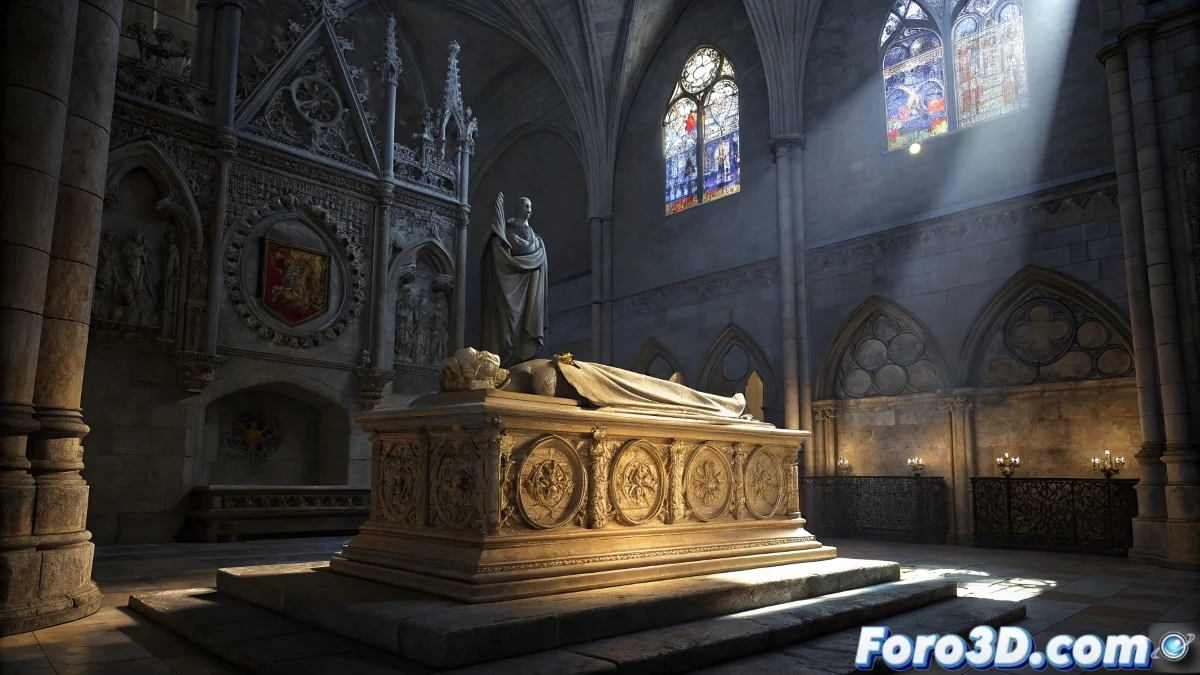
A Traitor with a Privileged Tomb
In the heart of the Burgos Cathedral, right next to the main altar, lies a tomb that arouses curiosity and intrigue: the tomb of Infante Juan de Castilla, son of Alfonso X the Wise. The extraordinary aspect of its location is that this space of honor was traditionally reserved for bishops and monarchs, not for infantes accused of treason. The presence of Juan, known as "the one of Tarifa" for his controversial alliances, raises a fascinating historical mystery about posthumous forgiveness and symbols of dynastic power. ⚔️
Blender: Unveiling the Secrets of the Stone
To explore this enigma, Blender becomes an invaluable tool. It allows recreating the Gothic tomb with astonishing fidelity, capturing every sculptural and architectural detail. Through 3D modeling and the use of PBR textures, the texture of the limestone and the effects of the passage of time can be simulated. But the most magical aspect is the ability to recreate the presbytery lighting, simulating how the light passing through the stained glass windows bathes the tomb, highlighting it in the cathedral's gloom.
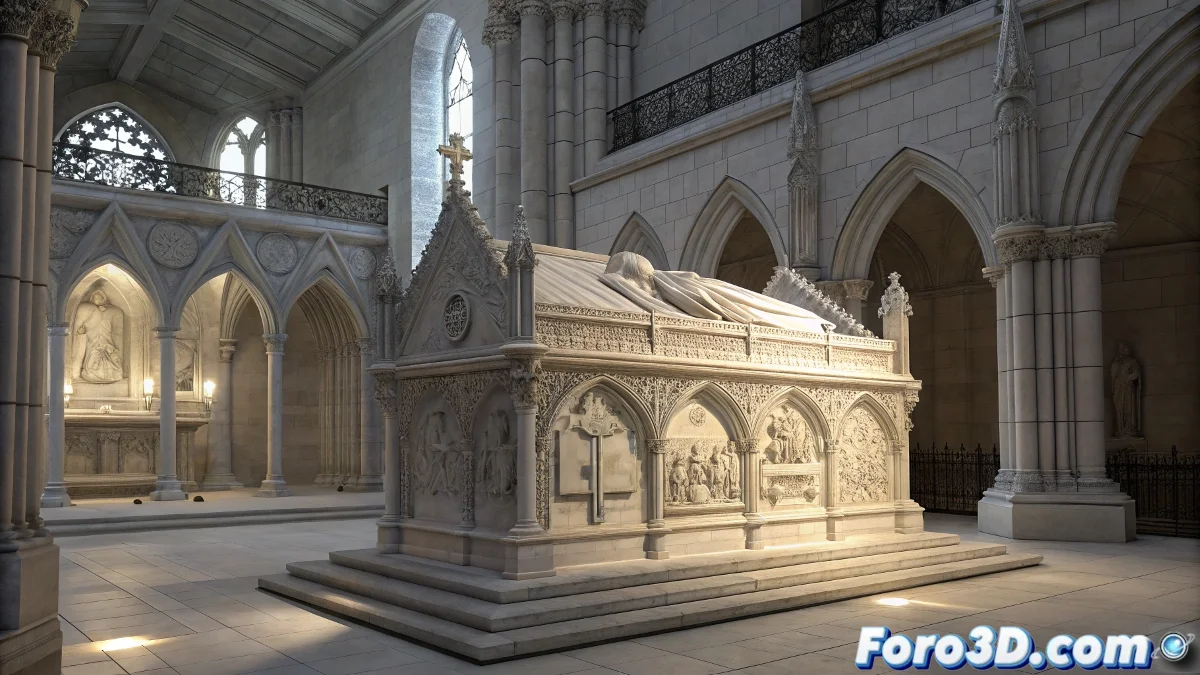
Recreating a Symbol of Medieval Power
The modeling process in Blender requires attention to historical and artistic detail.
- Structure Modeling: Create the architectural base of the tomb, with its Gothic arches and gables.
- Digital Sculpting: Use sculpting tools to recreate the figurative reliefs and heraldic elements that decorate the tomb.
- Realistic Texturing: Apply materials that mimic stone and show centuries of wear.
- Dramatic Lighting: Set up area and volumetric lights that replicate the sacred atmosphere of the presbytery.
The goal is not only to show the tomb, but to convey its meaning.
His tomb might reflect a posthumous forgiveness or a display of his lineage's power despite his controversial actions.
The Hidden Message in the Location
The privileged location of the tomb is not coincidental. In the Middle Ages, the placement of a tomb was an act loaded with political and religious significance. For the royal lineage, burying Juan so close to the main altar might have been a way to reclaim his status and clear his name posthumously, or a demonstration of power to show that, despite his actions, royal blood prevailed. It is a silent reminder that history is written, in part, by those who control memory.
In the end, this tomb tells a story of redemption, power, and contradictions. Infante Juan was a traitor, but his tomb is next to the main altar. It is a fascinating reminder that, in the Middle Ages, you could be known for your darkest acts and still end up with the best real estate in the entire Cathedral. 😉