When Art Weeps: The Mystery That Defies Logic
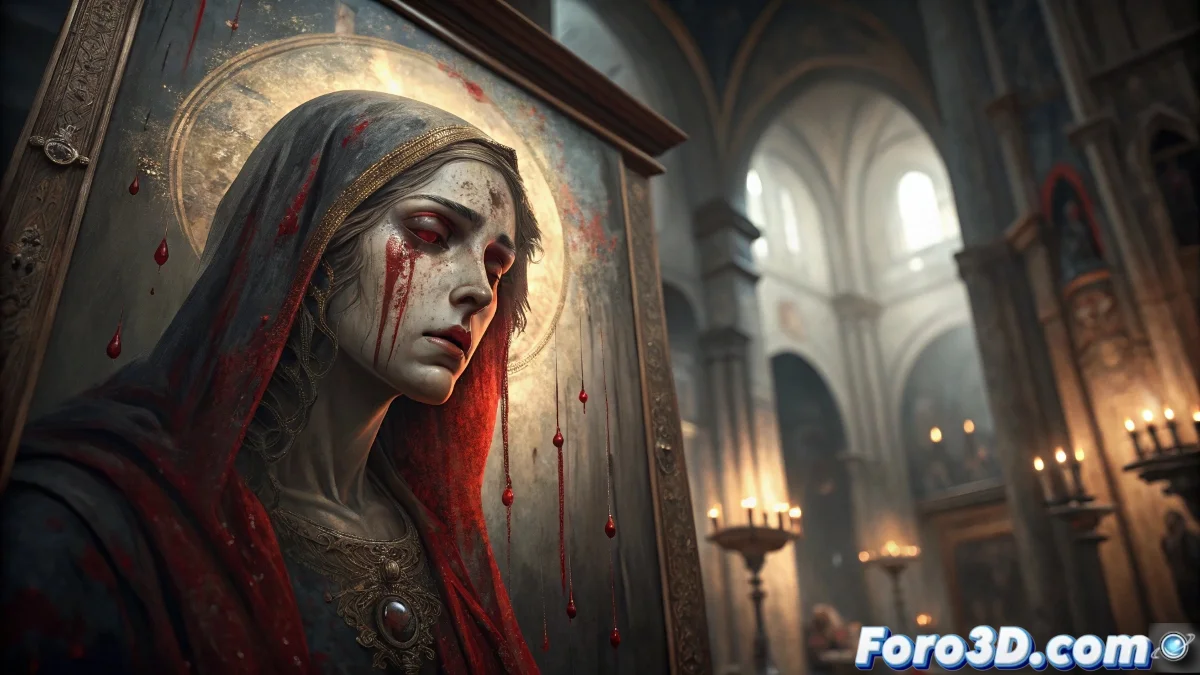
In the dark stillness of Cuenca Cathedral, an extraordinary phenomenon has captured the imagination of generations: a religious painting that, according to numerous testimonies, sheds tears of intense red color. This enigma, documented since the 19th century, represents one of those cases where the boundary between the divine and the inexplicable blurs until it disappears. 🎨 The image, which shows the Virgin Mary with an expression of deep pain, seems to come to life at specific moments, especially during historical crises or significant liturgical dates. For digital artists, this mystery offers a unique opportunity to explore advanced techniques in Blender that combine supernatural elements with visual realism.
Between Devotion and Science: Historical Testimonies
Historical records mention episodes of this reddish weeping coinciding with wars, epidemics, and other traumatic moments for the city of Cuenca. Witnesses describe red threads slowly descending from the figure's eyes, creating a spectacle as fascinating as it is unsettling. 🔍 While believers see this phenomenon as a divine message or miracle, skeptics point to scientific explanations like pigments reacting to changes in humidity or temperature. The curious thing is that no investigation has managed to determine the origin of these tears with certainty, keeping the legend alive century after century.
Key Elements of the Phenomenon:- Red tears that appear periodically
- Episodes associated with historical crises and religious dates
- Testimonies documented since the 19th century
- Absence of a conclusive scientific explanation
Blender Recreation: Bringing the Mystery to Digital Life
Recreating this phenomenon in Blender requires an approach that balances historical realism with a supernatural atmosphere. The key is to treat the painting not as a static object, but as an almost living entity that expresses emotions through inexplicable weeping. 👻 The technical challenge involves simulating believable fluids that interact with a textured surface, all while maintaining the emotional charge that has fascinated so many witnesses over the years. It's not just about replicating a visual effect, but capturing the mysterious essence of the original phenomenon.
Practical Guide: From Blank Canvas to Weeping Painting
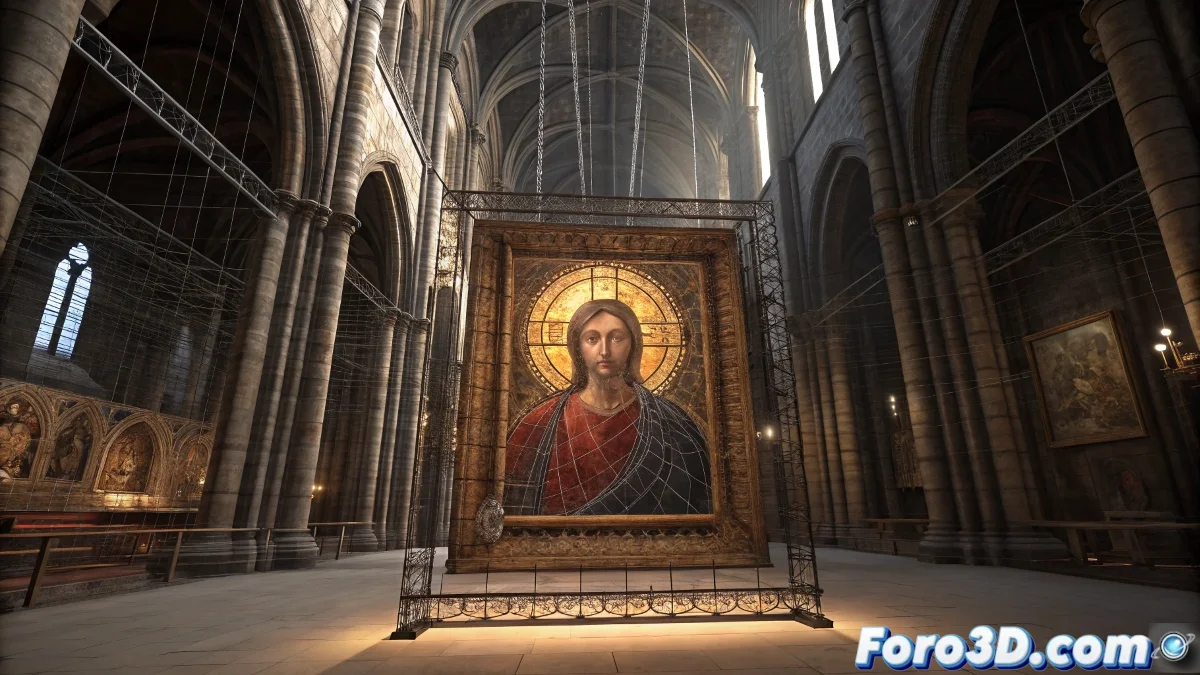
The process begins with the creation of the cathedral environment, where lighting plays a fundamental role in establishing the appropriate atmosphere. The modeling of the frame and wall must reflect the historical architectural style, while the canvas requires aged textures that show the passage of time. 🖼️ The application of materials with craquelure and wear is not just an aesthetic detail; it is essential to convey historical authenticity and prepare the scene for the supernatural element to come.
Essential Workflow in Blender:- Modeling of the historical architectural environment
- Setup of aged materials with PBR
- Preparation of the fluid simulation system
- Atmospheric lighting and camera setup
Tear Simulation: Where Technique Meets Magic
The most technically challenging part is simulating the reddish tears descending down the canvas. Blender offers multiple approaches, from particle systems to full fluid simulations. 💧 The choice depends on the desired level of realism: particles are computationally lighter, while fluids provide more believable interactions with the painting's surface. The dark red color and a certain degree of translucency are crucial to achieve the unsettling effect described by witnesses.
Lighting and Atmosphere: Creating the Perfect Environment
Lighting does not just make the scene visible; it builds the emotional narrative. Warm and directional lights create that sacred and mysterious atmosphere characteristic of ancient religious spaces. 🌅 The strategic use of volumetrics adds that extra touch of mystery, making visible the air charged with history and spirituality surrounding the phenomenon. The camera, with subtle movements and selective depth of field, guides the viewer's attention to the most significant details of the weeping.
Advanced Techniques for the Tear Effect:- Viscosity and surface tension setup in fluids
- Path control using force fields
- Flow textures for color and opacity variation
- Interaction between fluids and canvas geometry
Animation and Rendering: Capturing the Supernatural
The animation of the phenomenon requires careful timing to convey the ceremonial slowness described by witnesses. The tears must appear progressively, flowing with that almost ritual cadence that so impresses observers. ⏳ The render setup must prioritize the quality of transparencies and reflections in the fluids, while maintaining reasonable processing times. Post-processing can add that final touch that elevates the realism and emotional charge of the scene.
Recreating inexplicable phenomena in 3D allows us to explore the mystery from a creative perspective, without ever losing respect for the original beliefs and testimonies
The Mystery Continues, Now in Digital
While the real origin of the red tears in Cuenca Cathedral remains an enigma, the Blender recreation offers a fascinating window into this phenomenon. This guide not only provides specific techniques for simulating fluids and creating atmospheres, but invites reflection on how 3D software can become a tool to explore the boundaries between the real and the inexplicable. 🎭 After all, what better way to honor a centuries-old mystery than by recreating it with such detail that we can almost, almost, feel the goosebumps described by the witnesses. And who knows, perhaps after animating these digital tears, we will understand a little better why some phenomena resist explanation so stubbornly. 😉