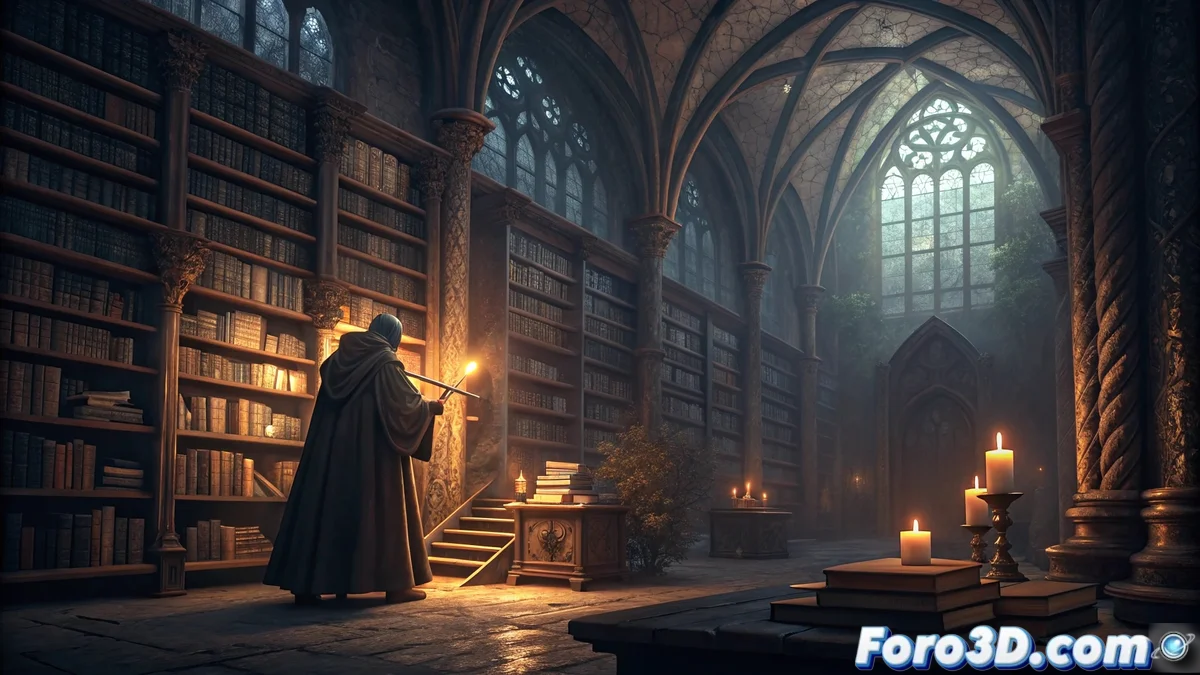
The Mystery of the Benedictine Abbey in Umberto Eco's Work
In the setting of a Benedictine monastery in the 14th century, the Franciscan William of Baskerville unleashes his sharp insight to solve a chain of deaths that threaten the stability of the religious community. Accompanied by the young Adso of Melk, the wise monk combines philosophy and deduction while navigating the complex relationships between religious belief and rational thought in an era marked by superstition and dogmatism 🔍.
The Secrets of the Labyrinthine Library
The criminal investigation inexorably leads to the monastic library, a true labyrinth of wisdom that guards banned texts and writings considered threatening to ecclesiastical doctrine. Each victim appears linked in some way to the mysteries hidden among its corridors, demonstrating how restricted knowledge becomes a tool that can both preserve lives and destroy them completely.
Key Elements of the Investigation:- The labyrinthine structure as a metaphor for hidden knowledge
- The forbidden manuscripts that challenge religious orthodoxy
- The cryptic codes that protect access to information
Power fears truth more than sin itself
Censorship as a Mechanism of Control
Umberto Eco weaves a profound reflection on systems of intellectual domination through a medieval detective plot. The narrative exposes how the repression of thought, justified as spiritual protection, can engender violence and systematic ignorance, while exalting the courage of questioning and the pursuit of knowledge.
Fundamental Aspects of Social Criticism:- Censorship disguised as spiritual protection
- The conflict between medieval scholasticism and emerging humanism
- The abbey as a microcosm of European ideological struggles
Contemporary Reflections on Knowledge
The work raises enduring questions about access to information and the mechanisms of its control. The dialogues between William and the other characters reveal the fundamental tensions between different approaches to knowledge, transforming the monastic enclosure into a universal stage where intellectual and moral battles are fought that transcend its historical era 📚.