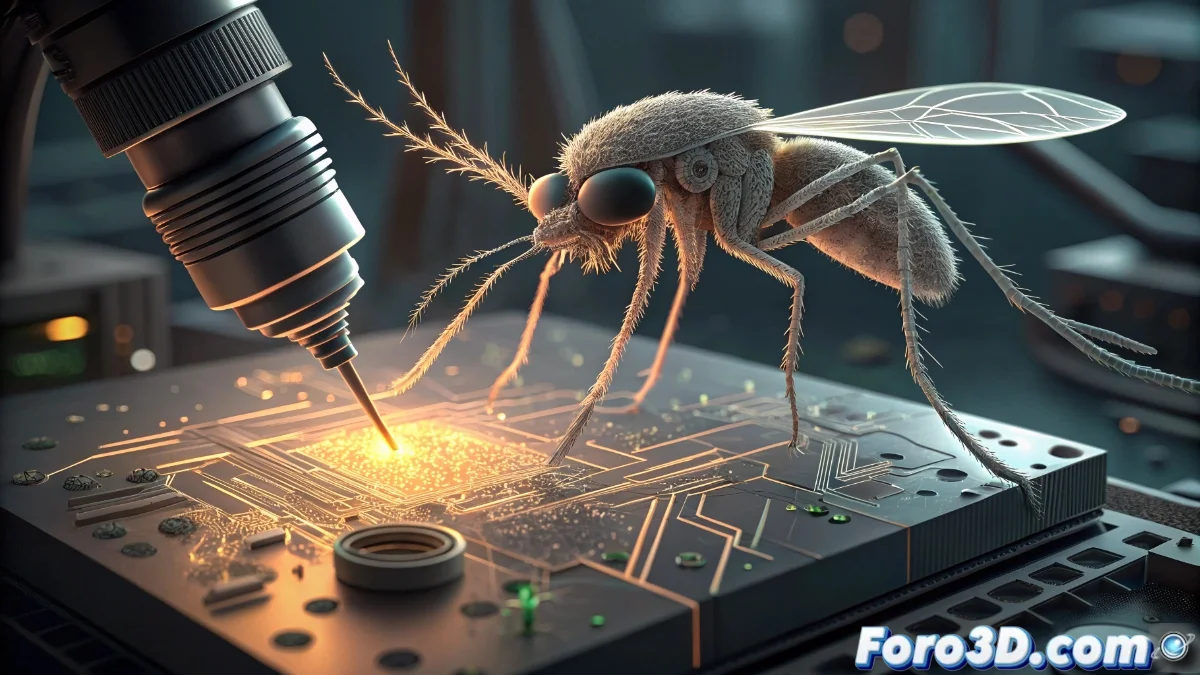
The Mosquito Proboscis as Inspiration for Microprinting Nozzles
Biomimicry continues to reveal extraordinary solutions in the field of additive manufacturing, where the mosquito's oral system has emerged as a revolutionary model for the development of microprinting nozzles. This natural organ, composed of hollow chitinous structures with nanometric thickness, demonstrates exceptional mechanical capabilities for the controlled deposition of materials at microscopic scales 🦟.
Natural Architecture of Extreme Precision
The mosquito proboscis represents a liquid dispensing system evolved over millions of years, capable of manipulating volumes below the picoliter with an accuracy that far surpasses conventional industrial nozzles. Its integrated multichannel design allows simultaneous operations that engineers have managed to replicate in synthetic prototypes.
Key Structural Features:- Chitinous composition that provides flexible rigidity and resistance to deformation under pressure
- Tubular geometry with multiple lumens that allows independent and simultaneous flows
- Natural hydrophobic surface that prevents material buildup around the outlet orifice
Nature has perfected this microfluidics system over 100 million years of evolution, offering us solutions that our technology is only beginning to understand
Transformative Applications in Advanced Manufacturing
The most significant implementations of this bio-inspired technology are manifested in areas where dimensional precision is critical. Bioprinting of tissues with ultrafine vascularization and the manufacture of microelectronic components represent the most promising fields of application.
Fields of Implementation:- Tissue biofabrication requiring vascular structures with submicrometric diameters
- Production of microelectronic circuits with micrometric-width conductive traces
- Manufacture of implantable medical devices that demand extreme resolution
Technological Paradox: From Pest to Solution
It is ironic that the most annoying insect during summer nights harbors in its anatomy the key to such significant technological advances. This paradox underscores the hidden potential in the most unexpected biological systems, demonstrating that even the most irritating creatures can inspire elegant and highly efficient engineering solutions 🌿.