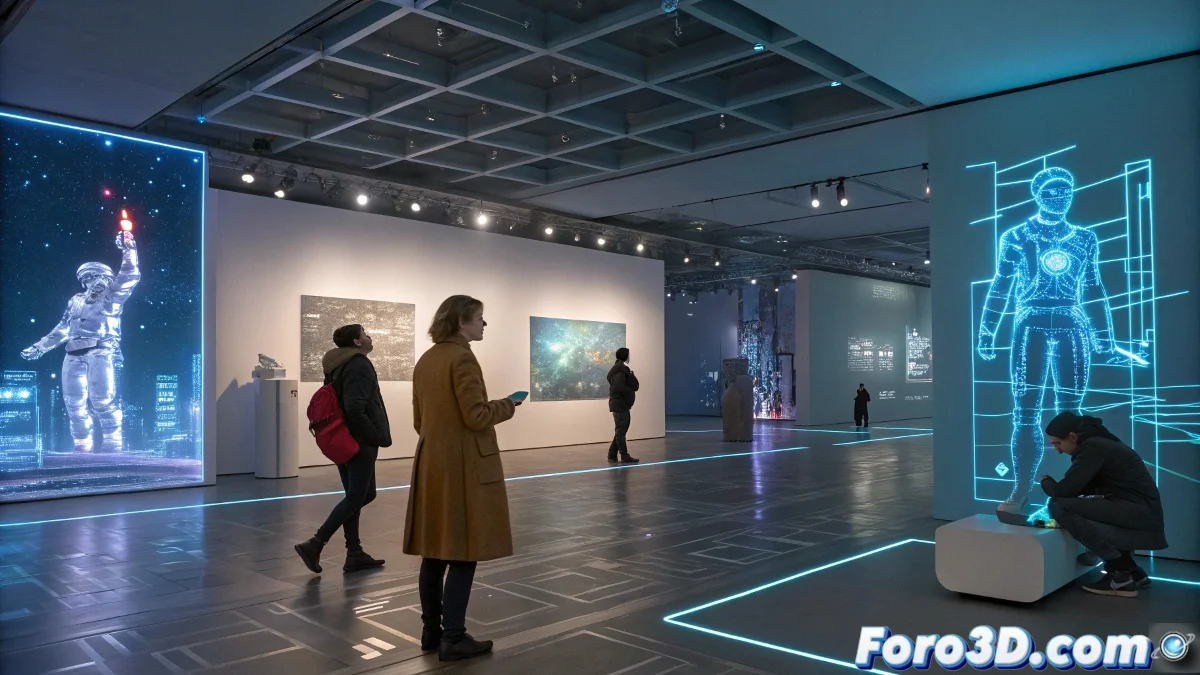
When the MoMA Updates Its Ctrl+S 🎨💻
The temple of modern art has just installed its latest update: an exhibition where brushes are algorithms and canvases are interactive screens. In this show, the source code is worth as much as the artist's signature, and that render that crashed on you yesterday could be considered process art. The MoMA shows us that the future of art is not in oils, but in polygons.
"Art is no longer what you create, but what you program to create for you" - A visitor while their shadow generated digital sculptures
The Software That Became an Artist
The stars of this exhibition:
- Processing for generative visualizations
- TouchDesigner creating immersive experiences
- Blender as a digital sculpture tool
And of course, Python and JavaScript signing as guest artists. Who would have thought that your automation scripts could end up in a museum.
Interactivity: The Spectator as Co-Creator
Installations that break the digital fourth wall:
- Motion sensors that transform gestures into art
- Augmented reality that paints over physical space
- Game engines rendering works in real time
Finally, that Unreal Engine expertise you developed for video games can serve for... gallery art? The world is crazy.
The New Language of 3D Design
What this exhibition teaches digital creators:
- Shaders are the new watercolor
- Rigging can be performance art
- A Python script is worth more than a brush
And most importantly: that abstract project that didn't fit any commercial brief might have a place here.
Questions Floating in the Air (Like Rendered Particles)
This exhibition raises:
- Who is the author when AI generates the art?
- Can a beautiful rendering error be considered art?
- How much is an NFT of this worth? (joke... maybe)
The truth is that when technology advances, art not only follows, but sometimes leads the way.
Your Portfolio Could Be the MoMA's Next Acquisition
This exhibition demonstrates that:
- 3D skills have a place in contemporary art
- Generative design is the new abstract expressionism
- Digital artists are the new vanguardists
So the next time someone asks you "is that art?" about your Blender work, you can confidently reply: "The MoMA says yes".
Now, if you'll excuse me, I'm going to upload my latest renders to Instagram with the hashtag #MOMANext. You never know. 🖼️✨