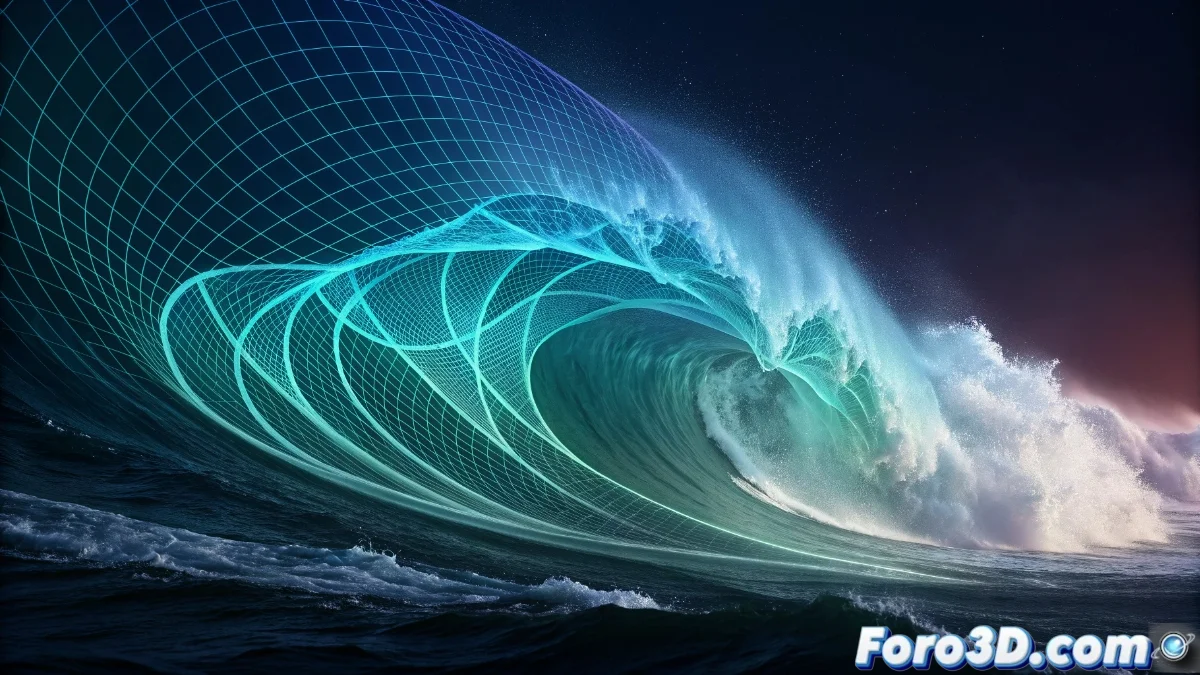
The Moiré Effect in Digital Graphics: Visual Interferences and Creative Applications
When two repetitive geometric patterns overlap with slightly different spatial frequencies or orientations, a third wave pattern emerges that appears to vibrate or shift before our eyes. This intriguing optical phenomenon, known as the moiré effect, frequently manifests in digital images, textile fabrics, and display screens, where pixel grids interact with regular elements in the scene. For designers and digital artists, it represents a fascinating duality: while it can be annoying in interfaces and renders, it also opens doors to creative possibilities for generating dynamic optical illusions 🌀.
Technical Origins of the Interference Pattern
In the field of computer graphics, this effect is primarily produced due to spatial aliasing when the frequency of a textured pattern exceeds the sampling resolution of the capture or display device. Parallel lines in grids, blinds, or fabrics create interferences with the pixel matrix, originating those characteristic undulating bands that simulate fluid motion. Contemporary rendering engines implement smoothing filters and increase sampling density to mitigate it, although in real-time applications it remains a persistent challenge for video game developers and visualization software.
Main Triggering Factors:- Overlay of grids or patterns with nearly identical but not perfectly aligned angles
- Insufficient sampling when the spatial frequency of the pattern exceeds the sensor or screen resolution
- Interaction between the pixel structure of digital displays and repetitive elements in the captured scene
The same physical principle that exasperates graphic perfectionists is what makes certain striped shirts seem to come alive with psychedelic effects on television.
Practical Implementations and Control Methods
Although traditionally considered an unwanted artifact, numerous creators deliberately use the moiré effect to produce hypnotic animations or simulate materials with dynamic properties. In professional environments, it is controlled through systematic variation of pattern angles, application of selective blur, or implementation of advanced dithering techniques. Modern shaders integrate automatic detection algorithms that intelligently adjust texture sampling in conflict areas, balancing computational performance and visual quality in design and multimedia production projects.
Mitigation and Exploitation Strategies:- Controlled angular variation between overlapping patterns to minimize interferences
- Implementation of smoothing and antialiasing filters in rendering pipelines
- Creative exploitation in artistic installations and motion graphics to generate motion illusions
Balance Between Technical Challenge and Creative Opportunity
The moiré effect represents that meeting point where technical limits transform into artistic opportunities. While developers perfect methods to suppress it in contexts where visual precision is crucial, artists explore its unique properties to create innovative visual experiences. This duality turns this interfering phenomenon into an element deeply rooted in contemporary digital graphics practice, reminding us that even the most problematic artifacts can become expressive tools when properly understood and mastered ✨.