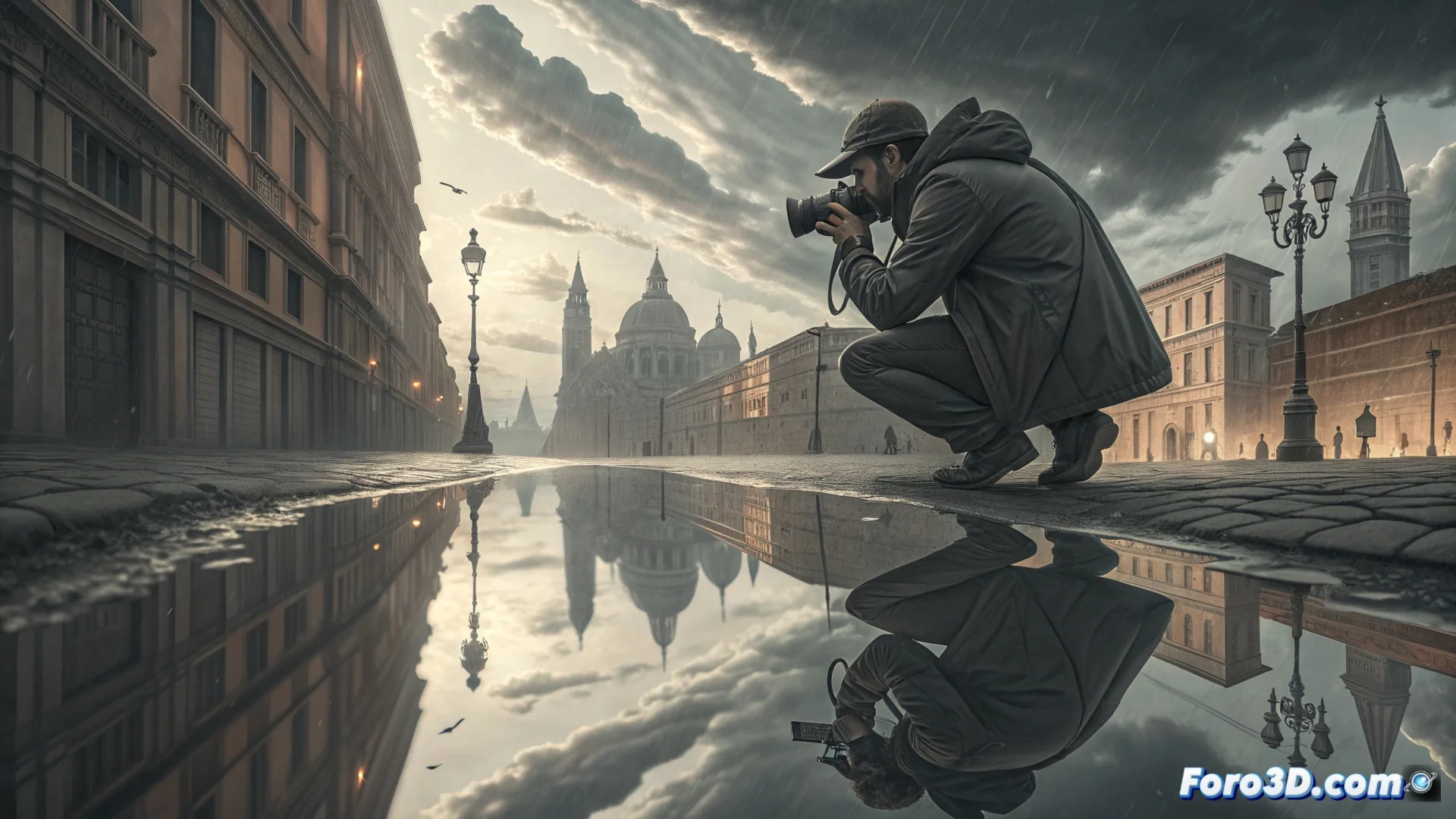
The Mirage Technique: Capturing Distorted Reflections
This photographic practice moves away from literally representing reality. Instead, it seeks altered reflections that fragment and transform the original subject, generating dreamlike scenes. The photographer explores how light is modified when bouncing off imperfect mediums, producing abstract compositions that invite perceiving beyond the obvious. 🌀
Select and Use Reflective Surfaces
The core of the technique lies in choosing surfaces with perturbations. A shallow, rippled puddle creates dynamic reflections with texture, perfect for landscapes. Distorting mirrors from fairs offer controlled geometric distortions, ideal for surreal portraits. It is crucial to get very close, often with a wide-angle lens, to saturate the frame with the reflection and reduce the real context.
Practical Tips for Using Surfaces:- Use a low tripod and shoot in burst mode to freeze the most interesting moment of distortion.
- Aligning the reflection may require forced postures or getting wet, a small sacrifice for the shot.
- Minimize the real environment by focusing solely on the perturbed reflective surface.
Capturing a fragment of altered reality involves seeking beauty in the imperfection of the reflection.
Adjust the Camera to Achieve the Effect
To handle depth of field and isolate the reflection, work with apertures like f/8 or f/11. A fast shutter speed, from 1/500s, freezes water movement or avoids shake. Keeping ISO sensitivity low preserves image quality.
Key Technical Settings:- Manual focus is almost mandatory, as autofocus gets confused with abstract textures.
- Check the histogram to correctly expose the reflection, which is usually darker than the direct scene.
- Prioritize sharpness at the most expressive point of distortion within the reflection.
The Final Goal: A Transformed Reality
This technique does not document, but reinterprets. The purpose is to produce a pictorial image where the original subject fades to give way to a new abstract composition. The photographer acts more like a painter, carefully selecting how the imperfect surface alters the light and form. The result is a photograph that evokes and suggests, challenging the direct perception of reality. 🌊