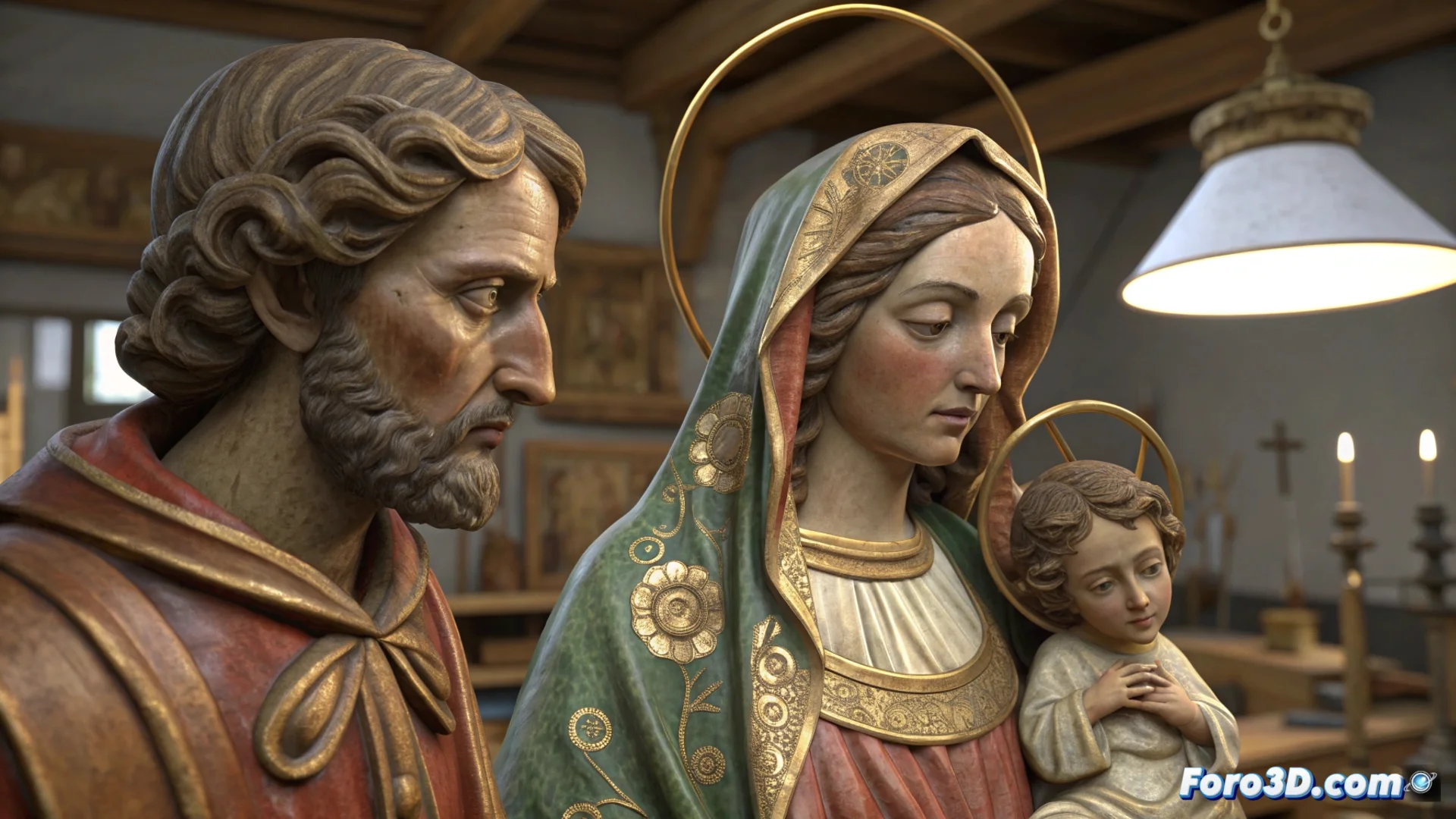
The Ministry of Culture adds two sculptures by Luisa Roldán to the National Museum of Sculpture
The Ministry of Culture adds two exceptional pieces from Spanish Baroque to the public collections. These are the sculptures Saint Joachim and Saint Anne with the Virgin Child, created by Luisa Roldán, known as La Roldana. Coming from a private collection, their final destination is the National Museum of Sculpture in Valladolid. This action is part of the strategy to enrich the heritage of state museums with works of high value. The Prado Museum, which manages the collection, collaborates to integrate the pieces into their ideal exhibition context. 🏛️
Two sculptures that narrate a family story
Both works are polychrome wooden carvings that represent the parents of the Virgin Mary. Together, they allow visualizing a complete episode of the Holy Family. The figure of Saint Joachim shows an elderly man in a contemplative attitude. The sculptural group of Saint Anne presents her teaching the Virgin to read in her childhood. The details in the faces and the meticulous treatment of the garments are distinctive features of Roldán's narrative and emotive style. Her technique stands out for imprinting deep expressiveness to the religious figures. ✨
Technical and symbolic characteristics:- Material and technique: Carved and polychrome wood, a method characteristic of Spanish Baroque sculpture.
- Theme: Devotional representation of Saint Joachim and Saint Anne, completing the family cycle.
- Style: Detail in facial expressions and realistic treatment of fabrics and folds.
The work of Luisa Roldán is fundamental to understanding the evolution of Spanish sculpture in the 17th century.
Highlighting the legacy of a pioneer
This acquisition allows the museum to show a broader ensemble of the production of one of the few recognized female sculptors of the Baroque. Luisa Roldán achieved the position of court sculptor for kings Charles II and Philip V, an exceptional position for a woman in her time. By including these pieces, the institution not only preserves heritage but also values the role of female artists in history. 👩🎨
Historical relevance of the acquisition:- Recognition: Reinforces the presence of a female artist in the state collections of ancient art.
- Context: Luisa Roldán worked for the court, which endorses the quality and relevance of her work.
- Education: Offers a more complete view of the sculptural production of the Baroque period.
The upcoming exhibition challenge
With the new pieces in its collections, the National Museum of Sculpture now faces the challenge of deciding their definitive location. One option being considered is to place them near works by other great Baroque masters. This approach seeks to create a coherent artistic dialogue and avoid the sculptures being perceived as isolated in the vastness of the rooms. The integration aims to enhance the visitor's experience and contextualize La Roldana's contribution. 🖼️