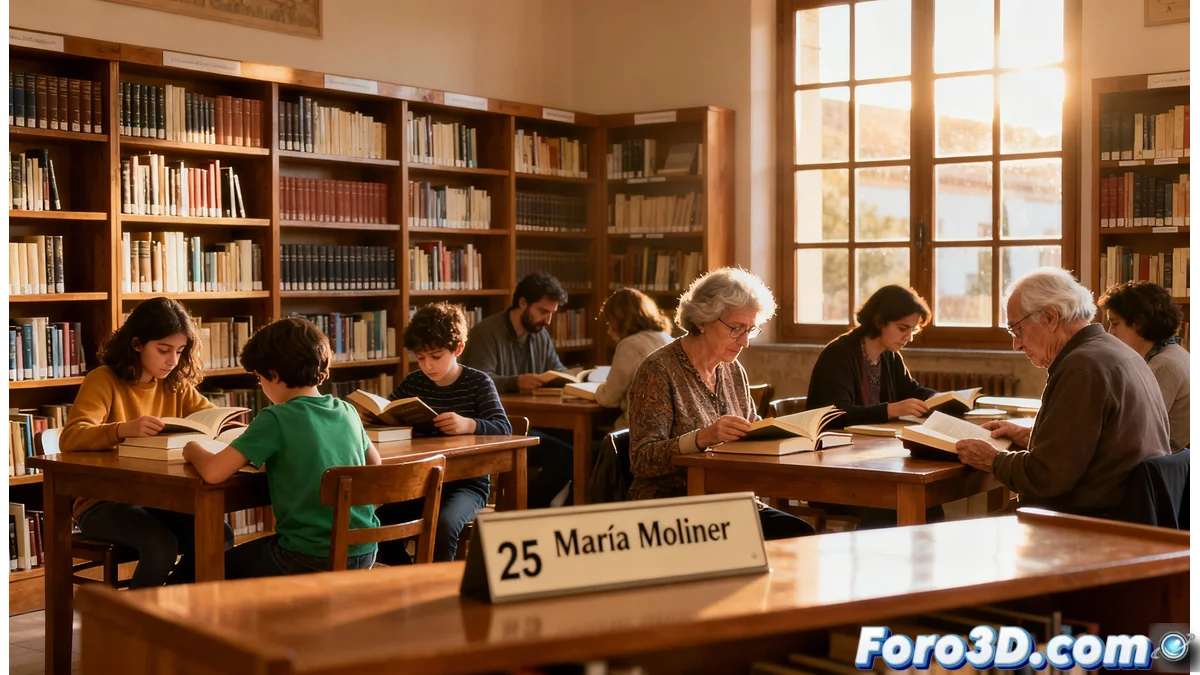
The Ministry of Culture and the FEMP recognize 331 libraries in small municipalities in the María Moliner campaign
An important cultural initiative has been announced recently. The Ministry of Culture and Sport, in conjunction with the Spanish Federation of Municipalities and Provinces (FEMP), has made public the awarding of 331 awards to public libraries located in localities with a population of less than fifty thousand inhabitants. This recognition is part of the twenty-fifth edition of the María Moliner Reading Promotion Campaign, a long-standing program whose main objective is to financially support the most innovative projects to encourage reading in smaller communities. Its goal is clear: to ensure that written culture reaches all territories, addressing possible resource shortages and using reading as a tool for social cohesion and community development. 📚✨
Characteristics of the awards and the selection process
The awards granted include a direct financial endowment for each of the winning libraries. This financial support is specifically intended for the acquisition of new books and subscriptions to periodicals, in order to update and enrich their collections. The call is exclusively aimed at small municipalities, a category that represents a very significant part of Spain's geography. The selection of the winning projects has not been random; it has been carried out through a competitive contest where the quality, creativity, feasibility, and clarity of the submitted proposals have been meticulously evaluated. These projects must effectively integrate activities to promote reading and demonstrate efficient management of available resources.
Key details of the call:- Geographical focus: Exclusive to municipalities with fewer than 50,000 inhabitants.
- Purpose of the award: Funding for the purchase of bibliographic material (books and magazines).
- Evaluation criteria: Originality, quality, project clarity, and management efficiency.
The María Moliner Campaign consolidates itself as a fundamental pillar for the sustenance and revitalization of the network of public libraries in non-urban areas.
The social impact and the program's consolidated trajectory
With a quarter of a century of history, the María Moliner Campaign has established itself as a reference instrument for cultural support in rural areas and medium-sized cities. Its impact goes beyond mere recognition; it acts as a vital stimulus that encourages the ongoing work of these centers. By awarding work already done, the program also drives their improvement and future evolution. This long trajectory, which now celebrates its 25th anniversary, is a testament to the institutions' commitment to the democratization of access to culture. It unequivocally underscores the irreplaceable role of libraries as meeting spaces, learning points, and hubs of community life outside the major capitals.
Achievements and benefits of the program:- Continued support: 25 years of uninterrupted calls supporting libraries.
- Community promotion: Libraries consolidate as key social and cultural centers.
- Equal opportunities: Compensates for resource limitations in less populated areas.
A final reflection on the value of the local
The continuity of this program is a guarantee for hundreds of localities throughout Spain to maintain a vibrant, accessible, and quality cultural offer. Beyond the data and financial endowments, initiatives like this recognize the daily effort of librarians and communities to keep these beacons of knowledge alive. In an environment where everyone knows each other, lending a book takes on a unique social dimension. The campaign awards reading promotion projects, but also, in a way, celebrates that network of trust and proximity that makes village libraries something extraordinary. The real challenge, as popular humor aptly points out, might also be to recognize the feat of returning a book on time and in perfect condition in a place where its journey is well known to all. 😉