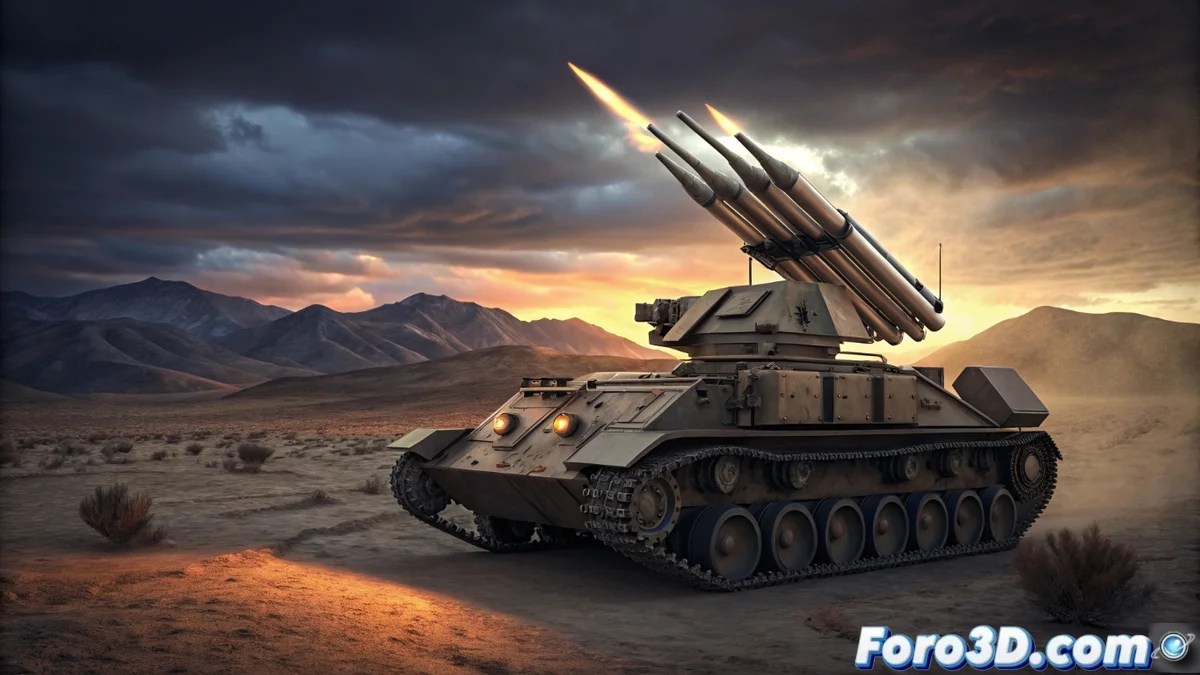
The MIM-72 Chaparral: a self-propelled surface-to-air missile system
Developed in the United States, the MIM-72 Chaparral represented an innovative solution for tactical air defense. Conceived as a mobile shield for ground units, its primary purpose was to neutralize aerial threats such as attack aircraft and helicopters, keeping pace with armored formations. Its design was based on the adaptation of proven aerial technology for a ground role, marking a milestone in the evolution of surface-to-air systems. 🛡️
Design and technical capabilities
Mobility was its hallmark. The M548 tracked chassis was chosen, giving it exceptional capability to operate in complex terrain and keep up with military maneuvers. Its dimensions, approximately 5.7 x 2.6 x 2.6 meters, favored camouflage and rapid deployment. The main armament consisted of MIM-72 missiles, derived directly from the famous AIM-9 Sidewinder used by fighters, but modified for launch from ground platforms.
Key features of the weapon system:- Launcher and ammunition: The turret mounted a quadruple launcher with combat-ready missiles, while the vehicle's interior stored eight additional missiles for reloading, ensuring persistence on the battlefield.
- Infrared guidance: Each missile, about 2.9 meters long, employed a passive heat-seeking guidance system. This allowed "fire-and-forget" mode, where the projectile automatically sought the target's engine thermal signature without the need for subsequent manual guidance.
- Operational autonomy: The combination of all-terrain mobility and a relatively autonomous weapon system made it a highly valuable point defense asset for the units it protected.
"Its concept of a mobile platform with infrared-guided missiles set an important precedent in tactical air defense."
Operational history and evolution
The Chaparral entered active service with the United States Army in the late 1960s, replacing more static and less versatile surface-to-air systems. Throughout its service life, the system did not remain static; it received multiple upgrades and improvements aimed at maintaining its effectiveness against new threats.
Highlights of its trajectory:- Modernizations: Continuous improvements were implemented in the infrared seekers to counter enemy electronic countermeasures and give the system greater capability to operate in various weather conditions (all-weather capability).
- Export and deployment: It was a widely distributed and exported system to several allied nations, demonstrating confidence in its conceptual design for short-range air defense.
- Limitations and retirement: Over time, its vulnerabilities in environments of intense electronic warfare and against aircraft with reduced thermal signatures became evident. These limitations, along with technological advances, led to its gradual replacement by more modern and sophisticated systems.
Legacy and perception in the field
The legacy of the MIM-72 Chaparral transcends its retirement from service. It demonstrated the viability and utility of integrating air-to-air missiles into mobile ground platforms, a concept that influenced subsequent developments. For the crews, operating this system generated a particular sensation: they trusted a weapon designed to shoot down aircraft, although its "heart" was a missile that, ironically, preferred to chase the heat of enemy engines rather than remain in the cold and dusty reality of an armored vehicle. Its history is a fascinating chapter at the intersection of technological innovation, tactical needs, and the operational realities of modern combat. ⚙️