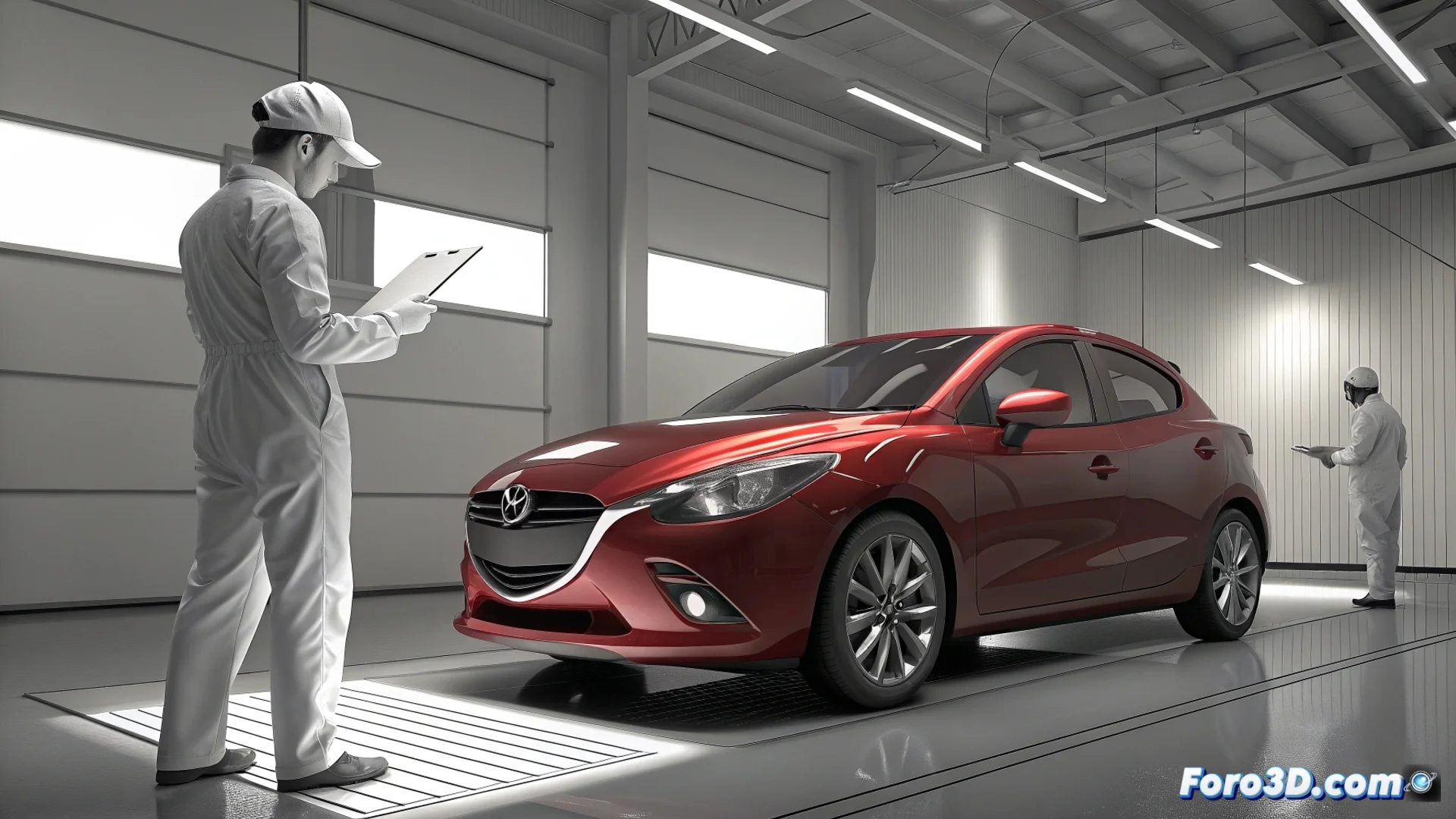
The Mazda 2 leads the TÜV 2026 report with the lowest defect rate
The Japanese compact car positions itself as the most reliable vehicle in the rigorous German technical inspections. Data from the TÜV Report 2026, which processes millions of inspections, shows that this model has a defect rate of 2.9% in units between two and three years old. This result is not only well below the average for its segment but also confirms its ability to pass the ITV more easily than its rivals. 🏆
A metric based on real failures, not perceptions
This report does not rely on owner surveys or controlled tests. It is based on real failures that certified technicians find during the mandatory inspection. Defects that prevent passing are those considered critical for road safety or environmental impact. Therefore, the Mazda 2's data directly reflects a low level of breakdowns or abnormal wear that could limit its operation. It achieves this recognition without being one of the best-sellers in markets like the Spanish one.
Factors explaining the Mazda 2's success in the TÜV:- Manufacturing quality: Components and assembly that withstand daily use and the passage of time.
- Robust design: Engineering focused on durability and fewer failure points.
- Predictable maintenance: The vehicle's systems show uniform wear within expected limits.
The TÜV report establishes itself as the objective reference for measuring real reliability, because it analyzes massive data from an active vehicle fleet.
Tangible reliability influences purchasing decisions
Results like this change how potential buyers perceive a model. Low maintenance costs and a long service life are increasingly valued. For manufacturers, achieving a low percentage in these inspections means validating the effectiveness of their production processes and part designs. This achievement for the Mazda 2 can positively affect its value in the used market.
Consequences of leading the reliability ranking:- Consumer confidence: Buyers associate the model with lower risk of costly repairs.
- Competitive advantage: It differentiates itself from other compacts in a key and measurable attribute.
- Brand endorsement: It reinforces Mazda's image as a manufacturer of well-built cars.
Proven reliability: the best strategy
The Mazda 2 case illustrates that, sometimes, the best strategy is not to be the flashiest, but the most consistent and trouble-free. Going unnoticed for not failing allows it to sneak into the top position when evaluating real and long-term performance. This report provides solid evidence that transcends marketing, showing which cars really deliver on the road. 🚗💨