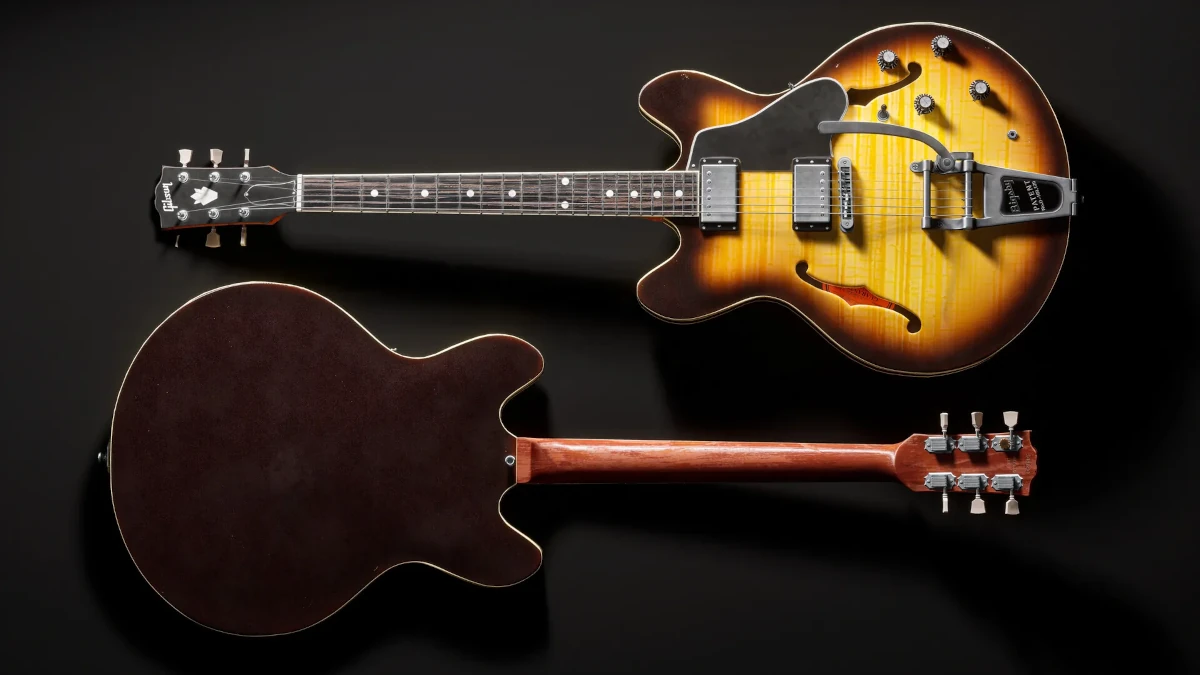
3D modeling has revolutionized the way real-world objects are represented with an impressive level of realism. An example of this is the digital recreation of a Gibson ES-335 guitar, a legendary instrument that has left its mark on music history. Through the use of advanced tools like Blender, Unreal Engine, and Substance 3D Painter, it's possible to capture every detail and give it its own identity.
A Process That Goes Beyond Design
Modeling a guitar in 3D isn't just about replicating its shape, but about capturing its essence. From the curvature of the body to the small wear marks in the varnish, every element contributes to the model's authenticity. The goal isn't just to generate an attractive image, but to create a digital piece that conveys history and use.
The Tools Behind the Realism
To achieve a result faithful to reality, specialized programs are used to refine every aspect of the design:
- Blender: used to structure the base form of the instrument and define the initial details.
- Substance 3D Painter: key in applying realistic textures, simulating the wear and reflections of the wood and metal.
- Unreal Engine: used to generate an advanced lighting environment that reinforces the model's credibility.
The Impact of Detail on Authenticity
One of the most important aspects in creating realistic models is attention to detail. For a digital guitar to appear real, it's essential to include small elements that add veracity:
- Wear marks: slight scratches and paint wear that simulate the passage of time.
- Shine and reflections: lighting adjustments to mimic how light falls on the wood and metal.
- String texture: application of realistic materials that convey a sense of tension and metal.
"A 3D model shouldn't just look real, it should feel like an object with history and personality."
A Digital Object with a Life of Its Own
Thanks to the combination of technology and creativity, a classic instrument can come to life in a digital environment. It's not just a visual replica, but a digital work that evokes the essence of the original. Whether for animations, video games, or presentations, 3D modeling allows iconic pieces like the Gibson ES-335 to continue being admired in any format.