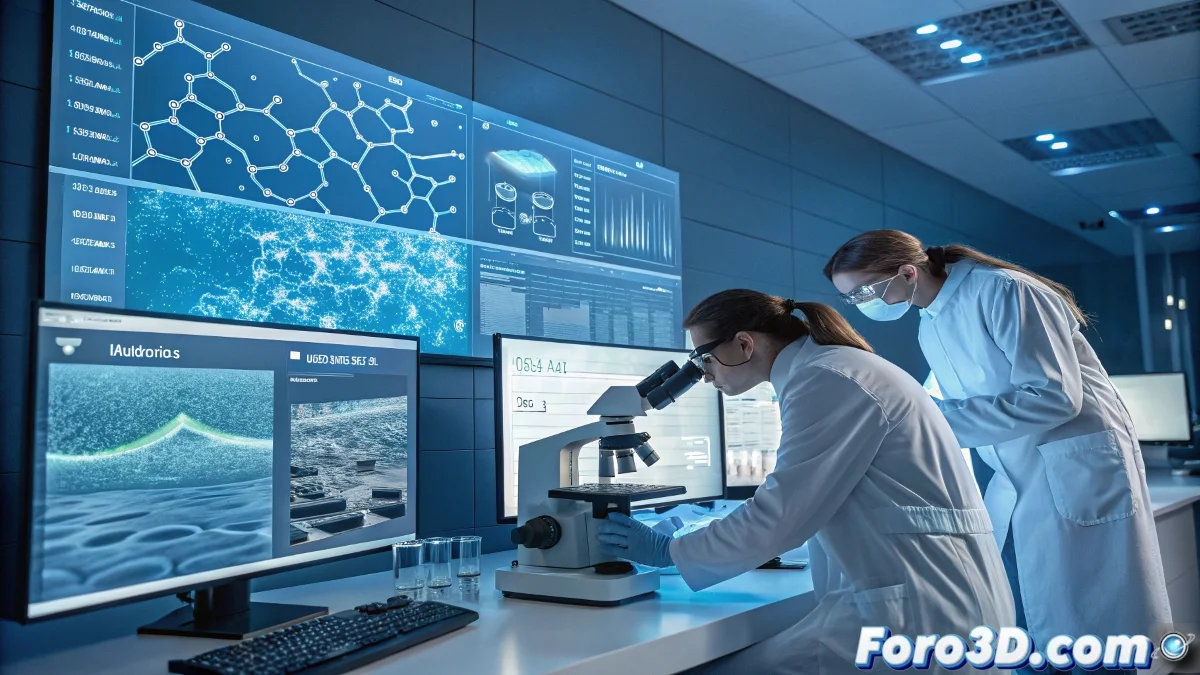
When the Energy Solution Measures Less Than a Nanometer
This vermiculite membrane not only challenges traditional mining - it's rewriting the rules of energy geopolitics with pores finer than a virus and selectivity that would make the best chemists cry. And the most ironic part: it's basically made from enhanced clay. 🧪⚡
Deconstructing the Molecular Miracle
1. Atomic Engineering with Clay
The process transforms common vermiculite into a high-tech filter:
- Exfoliation: Separation into 2D layers only 1nm thick
- Scaffolding: Aluminum oxide pillars keep the channels open
- Positive Charge: Sodium cations repel unwanted minerals
Fun fact: 1 gram has a surface area equivalent to a tennis court
2. Selectivity That Seems Like Magic
The membrane acts as a molecular bouncer:
- Rejects Mg+2: Due to charge and size (too big and positive)
- Captures Li+1: Small and with less electrostatic repulsion
- Allows Na+/K+: Monovalent ions pass freely
Efficiency: 100x better than traditional methods
3. Visualizing the Invisible
For 3D artists, recreating this process requires:
- Molecular dynamics simulation in Houdini
- Custom shaders for ions in Blender
- Animation of electrostatic fields
Challenge: Show ionic forces without saturating the render
Impact Beyond Batteries
Geopolitics: Coastal countries could become lithium producers
Environment: Eliminates destructive mining and uses existing water
Technology: Could be applied to rare earths and critical metals
Economy: 70% cost reduction compared to current methods
Global Technology Race
Solar Energy: The Chinese approach uses solar evaporation
Filtration: The American method prioritizes selectivity
Visualization: Both need 3D tools to explain their advances
For the 3D Community: "Nanofilters" Challenge
Create on foro3d.com a visualization that explains:
1. How ionic selectivity works
2. The 2D layer structure
3. The flow of saltwater through the system
Suggested techniques: Particles with physics, volumetric shaders, scientific animation
Prizes:
- "Best Visual Explanation"
- "Most Accurate Representation"
- "Most Innovative Design"
The Future is Thin (and Very Selective)
While the mining industry uses explosives and heavy machinery, the next energy revolution is being cooked up in labs that manipulate atoms like Lego pieces. And although your workstation can render an entire universe, it would probably crash trying to show the perfection of these nanometric pores. 😅
So the next time you charge your phone, remember: that battery might soon come from the sea, filtered by a membrane so thin that it makes your low-poly models look like Minecraft blocks. 🌊✨