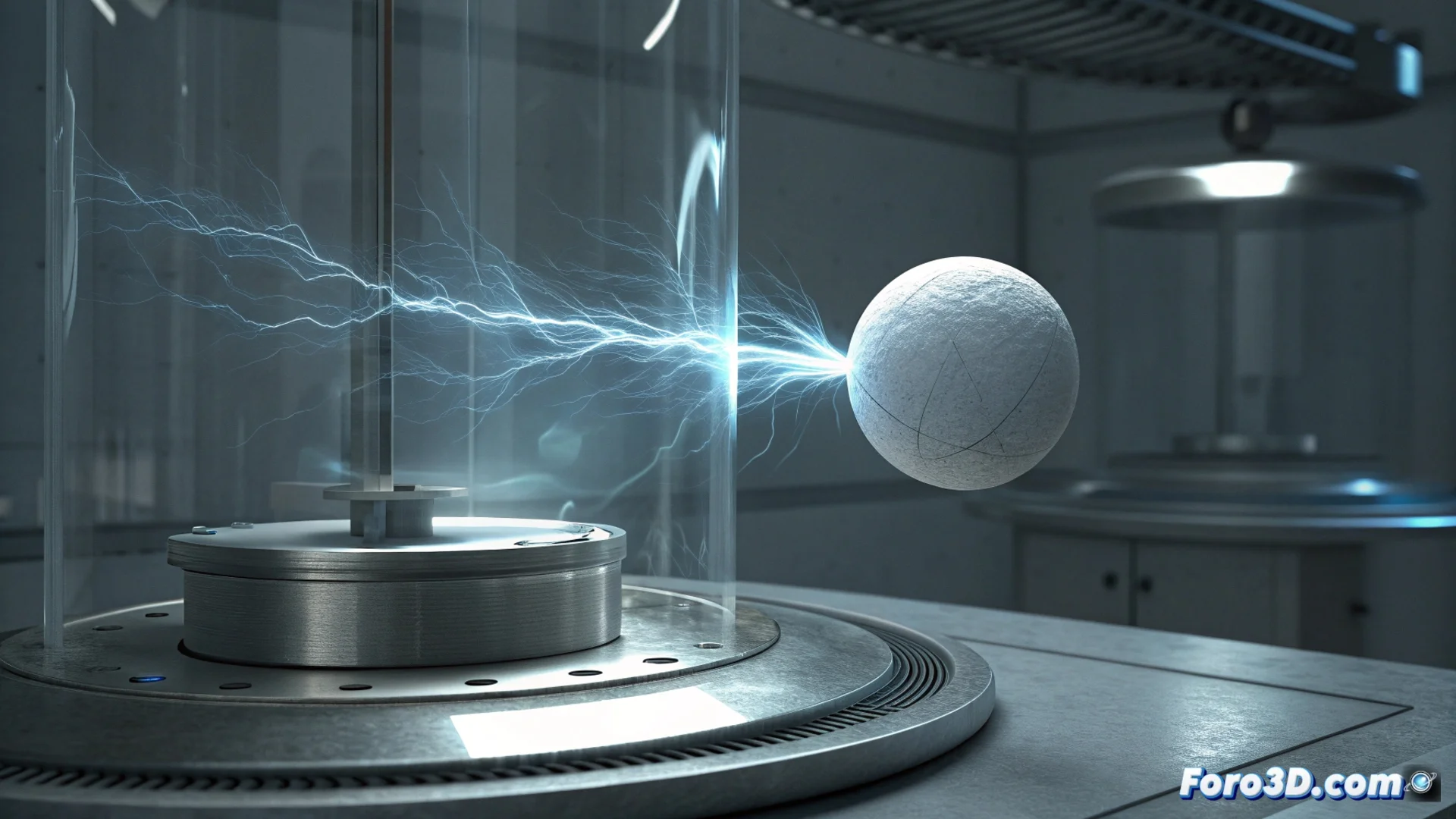
Object Levitation is Explained by Scientific Principles
Contrary to what is thought, making something float in the air is not a magic trick, but the result of applying physical laws precisely. The main objective is to overcome the force of gravity that ties us to the ground. Currently, the most effective methods to achieve this manipulate sound waves, magnetic forces, and electric fields. Each one generates a specific pressure or attraction that holds the object in a fixed point, although with very defined practical limitations. 🧲
Using Sound to Suspend Matter
Acoustic levitation is based on using ultrasound, which are sound waves that the human ear cannot perceive. Standing waves are generated with alternating zones of high and low acoustic pressure. When a small and light object, such as a water droplet, is placed in a minimum pressure node, the forces of the waves trap it and keep it in place. This system is very precise for manipulating particles in the laboratory.
Key limitations of this method:- It only works with materials of very low density and reduced size.
- The energy required to hold heavy objects becomes prohibitive.
- It is ideal for experiments with liquids or foam particles.
Science can suspend a foam ball with sound, but your gaming tower will still need a good desk.
Magnetic and Electric Forces in Action
Magnetism allows for more stable and powerful levitation, as demonstrated by famous high-speed trains. It uses the principle of repulsion between like magnetic poles. On the other hand, electromagnetic levitation employs electromagnets that are adjusted in real time to keep a metallic object in equilibrium. Electrostatics, in turn, uses high-voltage electric fields to interact with insulating materials.
Characteristics of these techniques:- They are more powerful than the acoustic method and can hold larger objects.
- They consume significant amounts of electrical energy.
- They generally require the object to have specific magnetic or conductive properties.
The Current State of the Technology
In summary, although the scientific principles to overcome gravity are clear and are successfully applied in specific niches, levitation technologies have important practical barriers. Acoustics is precise but weak, while magnetic and electric methods are powerful but demanding in energy and materials. For now, these tools are valuable in research and specialized transportation, but they are far from being a domestic solution for lifting heavy or complex objects. The future will depend on optimizing energy efficiency and overcoming material limitations. ⚡