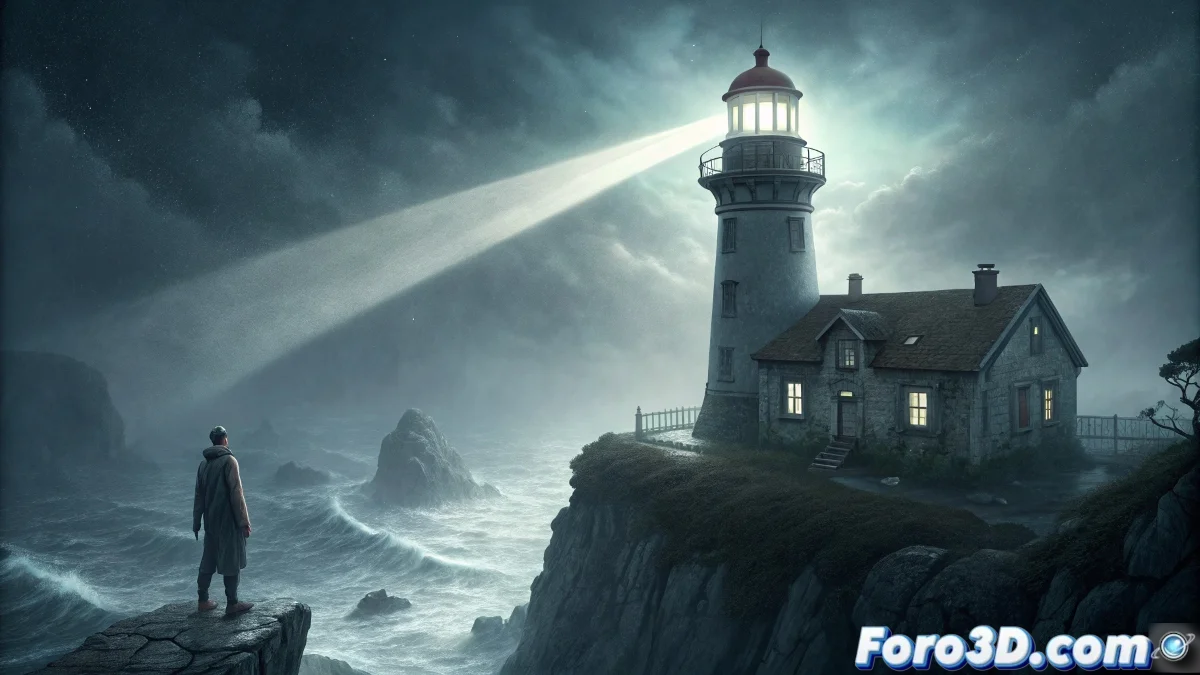
The Legend of the Lone Lighthouse Keeper and Its Representation in Parametric Modeling
Maritime legends have fascinated generations with their tales of mystery and tragedy, but few are as evocative as that of the lone lighthouse keeper whose melancholic melody lured ships to their doom. This narrative finds new life through parametric modeling in SolveSpace, allowing the oppressive and supernatural atmosphere that characterizes these stories to be visually recreated. 🌊
Psychological Origins of the Legend
The extreme isolation experienced by lighthouse keepers in remote locations provided the perfect breeding ground for the development of these supernatural narratives. During the 18th and 19th centuries, these watchmen could spend up to six months completely alone, facing not only absolute solitude but also extreme weather conditions that altered their perception of reality.
Key elements of the original tale:- Ghostly melodies that emerged during nights of dense fog
- Acoustic phenomena attributed to altered psychological states
- The belief that the music guided vessels toward hidden reefs
The sea not only hides secrets in its depths, but also in the minds of those who watch it from the shore.
Technical Implementation in SolveSpace
Recreating this legendary scene requires a methodical approach that begins with the initial project setup. Establishing metric units and an appropriate reference grid is essential to maintain dimensional accuracy throughout the entire modeling process.
Phases of parametric modeling:- Setup of separate groups for base, tower, and lantern
- Application of geometric constraints to maintain symmetries
- Creation of irregular surfaces to simulate rocky formations
Representation of Atmospheric Elements
Although SolveSpace lacks advanced rendering capabilities, it is possible to suggest atmospheric effects through creative techniques. Thick fog can be represented by overlapping semitransparent layers, while light beams are simulated using reference lines with precise angles. 🎭
Advanced visualization techniques:- Use of shading patterns for different materials
- Creation of concentric waves around underwater obstacles
- Export in formats that preserve parametric relationships
Cultural Legacy and Modern Applications
These traditional narratives continue to inspire artistic and technical creations, demonstrating how maritime folklore can merge with contemporary design technologies. Parametric modeling not only allows these legends to be preserved but also enables the exploration of new visual interpretations that keep their mysterious essence alive. ⚓