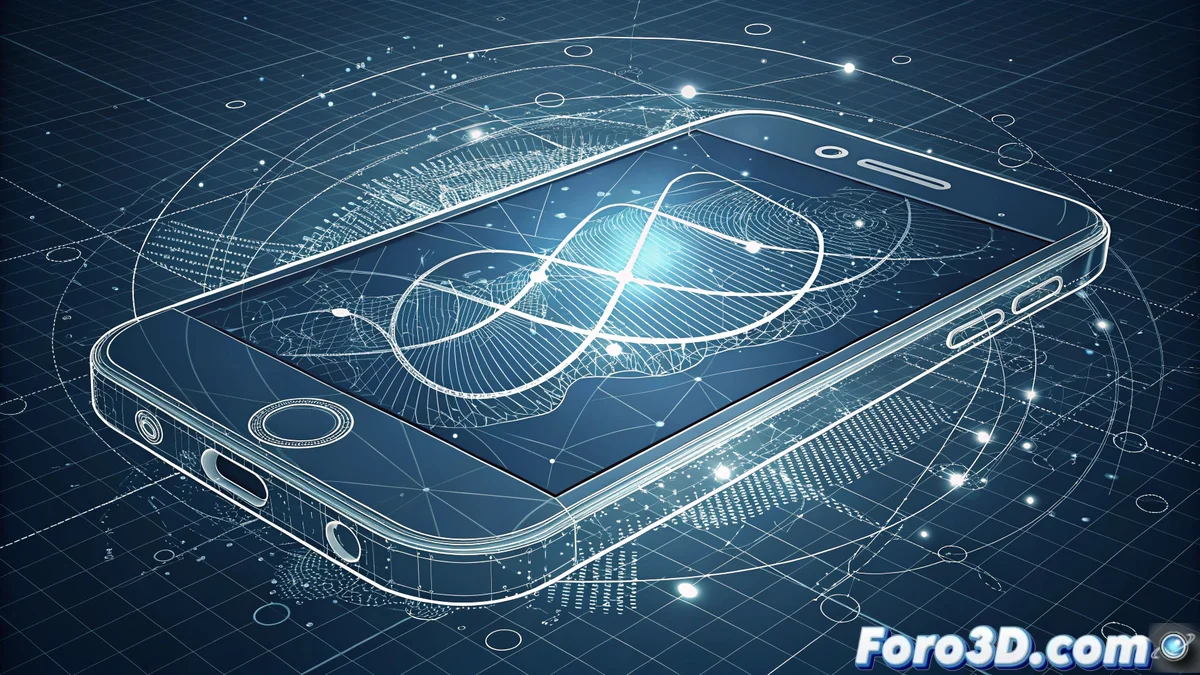
The Legend of the Phone That Receives Calls from Itself: Digital Myth and QCAD Tutorial
This fascinating urban legend emerged strongly in the early 21st century, establishing itself as a pillar of contemporary digital folklore. The story gained popularity alongside the global expansion of mobile telephony, channeling deep technological anxieties through a narrative that combines paranormal elements with modern scientific theories 📱⚡.
Origins and Evolution of the Phone Myth
The first documented records appeared in Japanese forums around 2005, where users described unsettling experiences with their devices. The core premise revolves around receiving an incoming call that displays one's own phone number, immediately generating a existential and temporal paradox. Over time, the myth enriched itself by incorporating concepts from quantum physics and multiverse theory, gaining greater credibility among digital communities 🌐.
Key elements in the evolution of the story:- Cultural adaptations on platforms like 2chan and Reddit that incorporated the critical detail of the 33-second duration
- Influence of cinematic and literary productions that standardized the concept of the imminent fatal event
- Development of online communities dedicated to analyzing supposedly real cases
This legend represents a contemporary manifestation of the doppelgänger in the digital age, where the other is myself from a near future.
Graphical Representation in QCAD: Capturing the Paradox
To visually materialize this intriguing concept, QCAD offers the perfect tools to create detailed technical representations. The process begins with a meticulous setup of the workspace, establishing specialized layers and precision parameters that facilitate the creation of symbolic elements and complex visual effects ✏️.
Initial Setup and Project Preparation:- Creation of a new document with units in millimeters and 10mm grid setup with 5mm snap
- Establishment of separate layers for structural components, electronic elements, and visual effects
- Definition of differentiated line widths: 0.50mm for main outlines and 0.25mm for internal details
Modeling Techniques and Special Effects
The modeling of the main structure uses rectangle and ellipse tools to create the mobile device outline. Boolean operations allow joining and trimming basic shapes to obtain the characteristic silhouette. To represent the temporal paradox, connection lines are drawn that self-reference, forming closed loops around the phone, symbolizing the circular nature of the phenomenon 🔄.
Lighting and Materials Process:- Application of radial gradients in electric blue tones to simulate paranormal activity
- Use of hatch tools with variable density patterns to create high-contrast areas
- Definition of materials using line textures: continuous for metallic surfaces and dashed for translucent components
Final Rendering and Reflections
The temporal distortion effects are created using spline tools to generate concentric waves emerging from the device. The paradoxical call is represented by curved arrows that depart and return to the same point, visually illustrating the concept of self-contact. Exporting in vector PDF format ensures maximum quality, while conversion to high-resolution raster images facilitates its use in presentations. This technical representation demonstrates that even the most elusive legends can be captured through precise drawing, although perhaps your future self has already completed this tutorial before you started it 🎨.