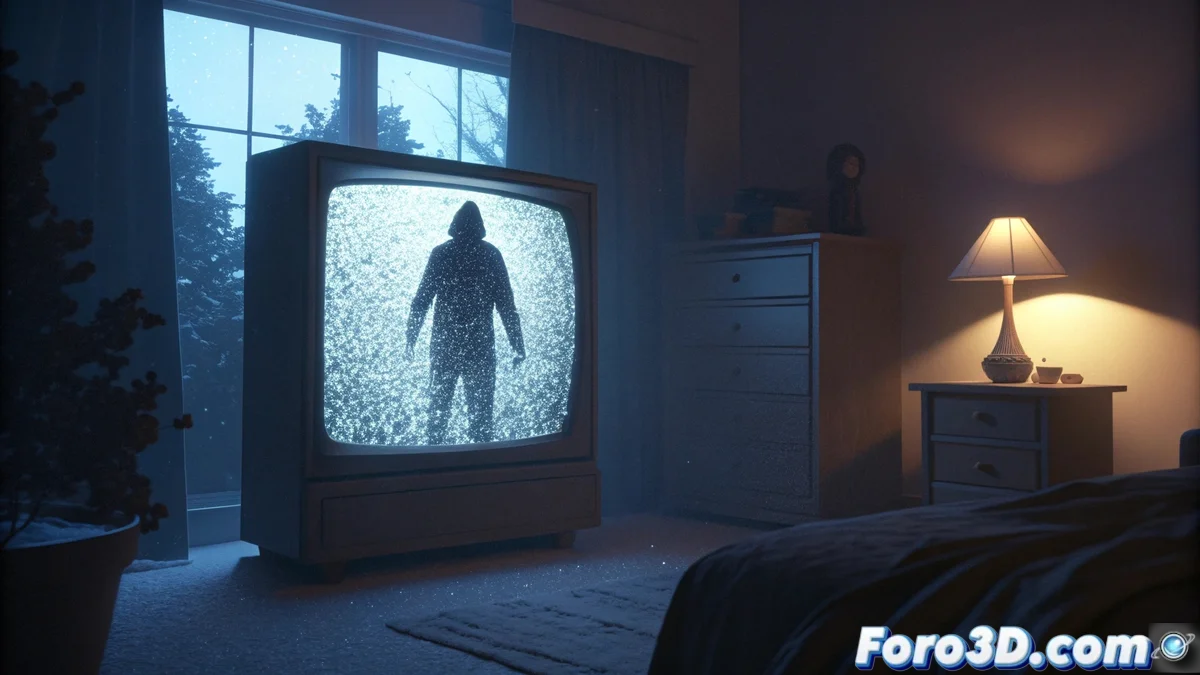
The Legend of the Message in Television Static and Its Voxel Representation
During the 1990s, when analog television reigned in homes, an unsettling urban legend emerged around static channels. Those who dared to manipulate the antenna in complete darkness could witness how the visual snow briefly organized, revealing phone numbers or addresses that led to supernatural encounters with entities trapped in television interference 📺👻.
Origins and Evolution of the Technological Myth
This folk narrative initially spread through oral stories in schools and primitive internet forums, adapting to each region while preserving its core: the antenna ritual and the appearance of the signal ghost. With the arrival of digital television, the legend took on a nostalgic character, transforming into a symbol of the technological mysteries of a vanishing era. The entity evolved from a simple apparition to a conscious being capable of transcending screens.
Key Elements of the Legend:- Antenna manipulation in total darkness to trigger the phenomenon
- Ephemeral messages formed by organized static patterns
- Supernatural consequences for those who followed the revealed instructions
Digital ghosts of static represent our collective anxiety toward technologies we don't fully understand.
Project Preparation in MagicaVoxel
To capture this nostalgic and technologically unsettling essence, we started a project in MagicaVoxel with dimensions of 126x126x126 voxels, providing ample space to develop a detailed composition. We configured the rendering in Pal8 with a limited palette of grays, electric blues, and deep blacks, reserving pure whites for the most intense static elements. The dark mode work environment optimizes visual contrast throughout the creative process 🌌.
Essential Initial Setup:- Ample dimensions for detailed composition without spatial restrictions
- Restricted color palette that evokes the 90s visual aesthetic
- Dark work environment for better perception of contrasts and tones
Modeling and Scene Structure
The voxel modeling process begins with the recreation of a characteristic 90s cathode-ray tube television, using dark gray voxels for the main casing. The screen is developed as a slightly curved plane with a black base, upon which the signal ghost figure will emerge, created with semitransparent voxels in electric blue and white tones. We complete the scene with simple environmental elements like a table, curtains, and a misadjusted television antenna, contextualizing the dark room where the paranormal phenomenon occurs 🕋.
Lighting and Materials System
We implemented a triple lighting system that includes a dim bluish light emanating from the television screen, very low ambient lighting simulating near-total darkness, and a directional spotlight that partially accentuates the spectral figure. We applied high emission materials to the voxels representing television static, creating the illusion that they generate their own light. Through the materials editor, we adjusted reflectivity and transparency, achieving the effect of a ghost composed of semitransparent static energy 💡.
Lighting Configuration:- Dim bluish light from the screen as the main atmospheric source
- Minimal ambient lighting to preserve the sense of darkness
- Strategic directional spotlight that selectively highlights the ghost
Special Effects and Final Rendering
We used the procedural noise tool to generate the static pattern on the television screen, combining white, black, and grays in a random arrangement. We created the effect of the message momentarily organizing using contrasting color voxels that vaguely form numbers or letters in a small section of the screen. We adjusted the depth of field parameters in the renderer to subtly blur the scene edges, focusing attention on the television and the spectral entity. We exported the final image in high resolution with ray tracing enabled, maximizing the visual impact of emissive materials and the overall atmosphere 🎨.
Visual Effects Techniques:- Procedural noise for authenticity in static patterns
- Contrasting voxels that simulate fleeting organized messages
- Adjusted depth of field to direct the viewer's attention
Cultural Legacy and Contemporary Adaptation
The message in the static channel represents a significant manifestation of contemporary technofolklore, reflecting social anxieties about privacy and media. This legend has influenced numerous film productions, television series, and video games that explore technological horror and supernatural media phenomena. It remains a standout example of how contemporary societies mythologize technology, transforming everyday artifacts like televisions into portals to the unknown. The narrative continues to adapt to new technologies, demonstrating the persistence of urban folklore in today's digital culture 🌐.