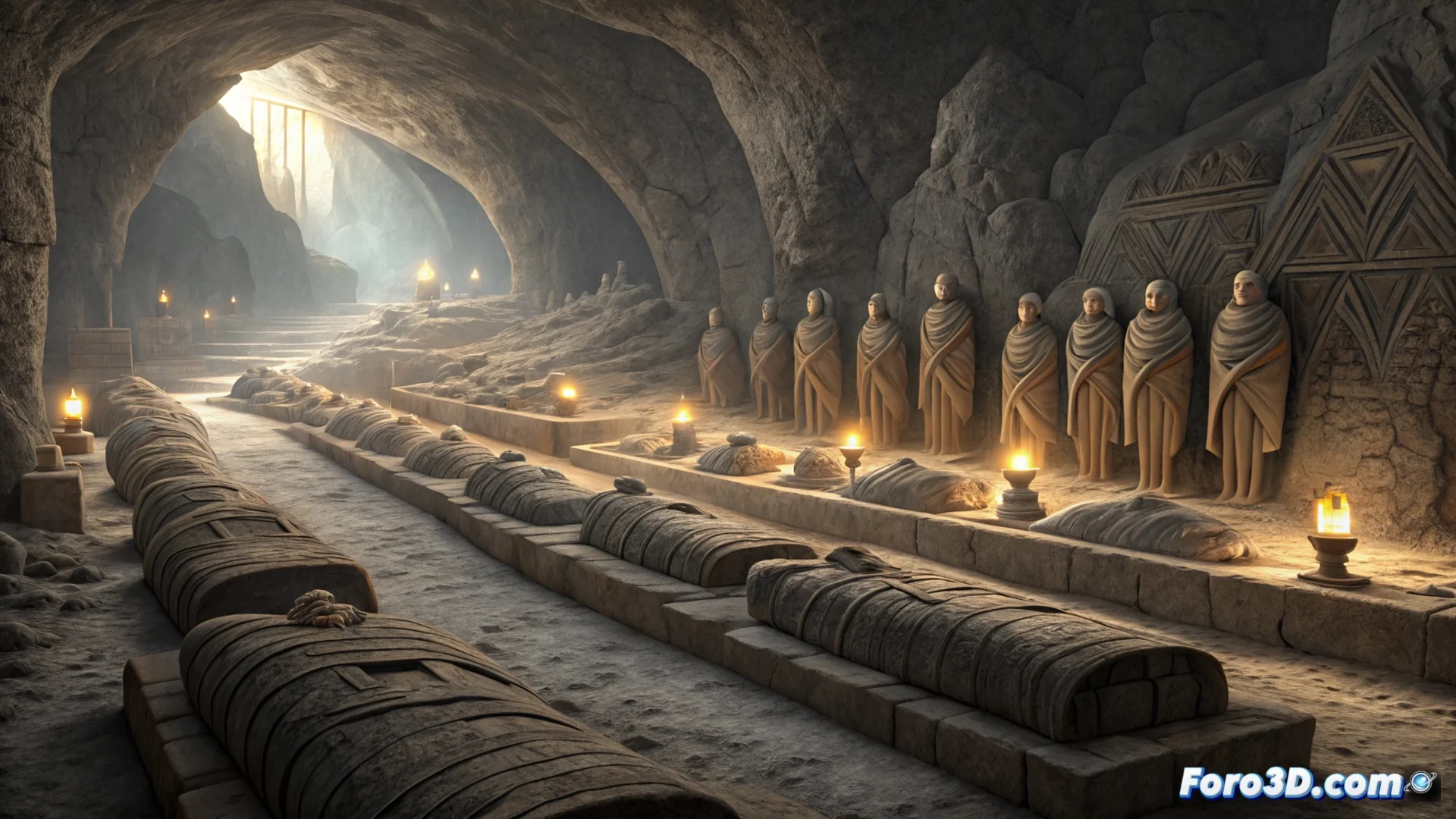
The Legend of the Cave of the Thousand Mummies in Gáldar
In the lands of northern Gran Canaria, oral tradition keeps a fascinating story alive. The inhabitants of Gáldar speak of a secret cave that the ancient Guanches protected with great zeal. This enclosure, described as inaccessible, would have served to mummify and bury the guanartemes, their kings, along with objects of value and ancestral wisdom. The tale suggests that it houses thousands of remains, a hidden royal pantheon, guarded by spirits that deter profaners. 🏔️
Historical Basis and Archaeological Explorations
This myth does not arise from nowhere. The ancient inhabitants of the Canary Islands did mummify their elites, a documented practice. Although a cavity with the epic magnitude described by the legend has never been found, explorations in the cliffs of Gáldar have discovered several aboriginal necropolises. Archaeologists believe that the tale probably agglutinates and magnifies knowledge about several real funerary sites in the area, creating in the collective memory a unique and definitive place.
Key Findings in the Area:- Discovery of aboriginal necropolises in cliffs, but none matches the legendary cave.
- Guanche mummification practices verified, although scattered in different locations.
- The legend functions as a cultural synthesis that idealizes a great unified royal pantheon.
The myth reflects the deep respect for ancestors and the collective desire to preserve their memory in the face of the conquest.
Significance as a Cultural and Identity Symbol
Beyond seeking its physical location, the Cave of the Thousand Mummies operates as a very powerful cultural symbol. It embodies the mystery of a people whose secrets vanished after the Castilian conquest. It represents the connection with a past perceived as glorious and the resistance of Guanche identity, which found refuge in the rugged geography and oral transmission. Therefore, it is not just about locating a material treasure, but about understanding an intangible legacy that modern Canarians still claim to understand their roots.
Dimensions of the Symbol:- It embodies cultural loss and resistance after the conquest of the islands.
- It represents an emotional and historical bond with an idealized aboriginal past.
- It motivates academic studies and popular interest in rescuing and understanding Guanche roots.
The Search and Its Impact
The obsession to find this mythical place has led adventurers to confuse bat caves with the royal chamber. These expeditions usually end with more fright than success, however contributing a new appreciation for the methods of formal archaeology. These experiences underscore how the legend, a mixture of history and desire, continues to motivate exploration and symbolically protecting the secrets still held by the cliffs of Gáldar. 🔦