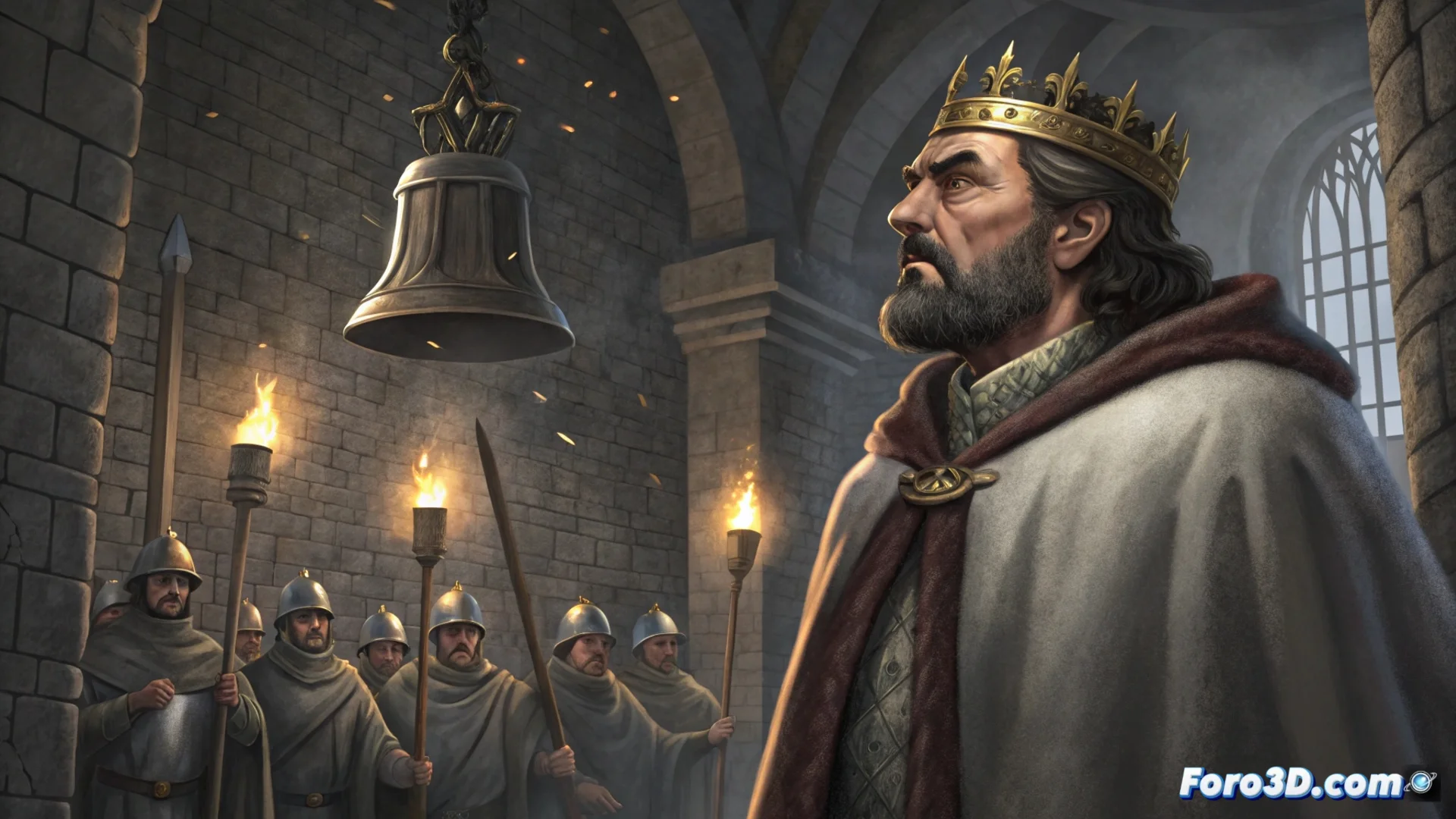
The Legend of the Bell of Huesca: A Royal Vengeance
The Kingdom of Aragon, under the command of Ramiro II, fractures due to the disobedience of its most powerful feudal lords. These act with total autonomy, eroding the authority of the crown and plunging the territory into instability. The monarch, determined to resolve this conflict, seeks a definitive method to suppress the insurrection and assert his dominion 👑.
A Silent Council and a Deadly Plan
Ramiro II sends an emissary to his former mentor, the abbot of San Ponce de Tomeras, to seek guidance. The response does not come in words, but in a symbolic act: the abbot leads the messenger to his garden and cuts off the tallest cabbages. The king interprets this gesture as direct instruction: he must eliminate those who stand out most for their treason. To do so, he summons all the rebel nobles to Huesca, promising to show them a bell whose sound will resonate throughout the kingdom 🔔.
The key elements of the deception:- The abbot's message is based on a visual metaphor about pruning what stands out.
- The promise of the bell acts as an irresistible bait for the nobles' curiosity.
- The city of Huesca is chosen as the perfect setting to execute the plan.
"He must eliminate those who stand out for their disloyalty."
The Execution of a Bloody Warning
The lords, intrigued, attend the appointment. The king orders them to enter a room one by one, where his guards seize and decapitate them. With the heads of the traitors, Ramiro II builds the bell he had promised: he arranges them in a circle and places the leader's head in the center, as the clapper. This macabre construction serves both as an act of vengeance and a brutal warning for any future challenge ⚔️.
Immediate consequences of the act:- Order is restored in the kingdom instantly and enduringly.
- Royal authority is consolidated after eliminating the strongest opposition.
- The legend of the bell is born as a tale about the price of rebellion.
The Echo of a Legend
This episode, known as the Legend of the Bell of Huesca, transcended as an extreme example of medieval realpolitik. The story concludes with an ironic note, suggesting that, since that event, in Huesca they prefer wristwatches over bells. The tale endures as a powerful metaphor about the use of terror to govern and the abrupt end of those who challenge established power 🕰️.