When the Renaissance genius finds rest in Gothic land
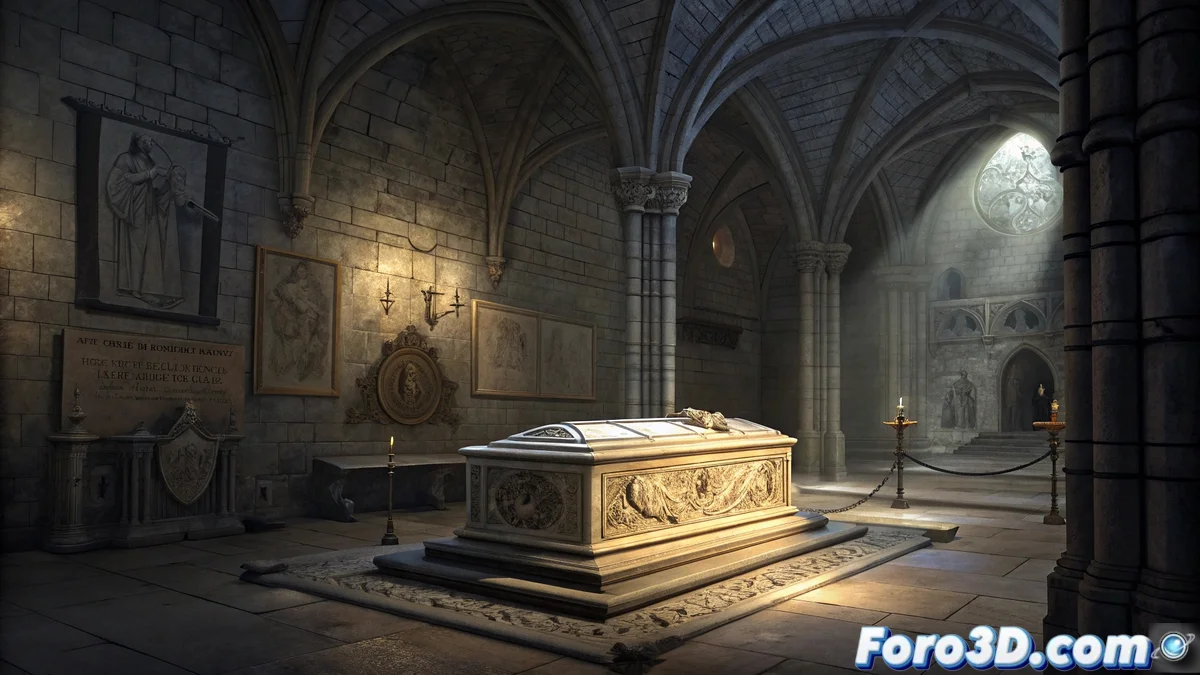
Among the most surprising legends surrounding Burgos Cathedral is the one suggesting that Leonardo da Vinci's remains might rest in its crypt. According to this theory, Francesco Melzi, disciple and heir of the Renaissance genius of Spanish descent, would have wanted to give him eternal rest in Spanish lands. Although it lacks solid historical foundation, this story adds a fascinating enigmatic air to the already mysterious Gothic temple, creating an imaginary crossroads between Italian Renaissance and medieval Spain. 🎨
Recreating an improbable historical encounter
Blender allows materializing this legend through a scene that combines the Gothic architecture of the cathedral with Renaissance elements that evoke Leonardo's figure. The artistic challenge consists of creating an atmosphere that is both solemn and mysterious, using lighting and materials to suggest this improbable but poetically attractive historical connection.
Key elements for a convincing recreation
Conveying the essence of this legend requires balancing architectural, symbolic, and atmospheric elements.
- Stylistic fusion: Burgalese Gothic with Renaissance details.
- Leonardesque symbology: References to the Vitruvian Man and other icons.
- Cryptic atmosphere: Dim lighting and dust volumes.
- Historical patina: Textures that show the passage of centuries.
Legends, even if not historically verifiable, enrich cultural heritage with layers of meaning.
Technical guide in Blender
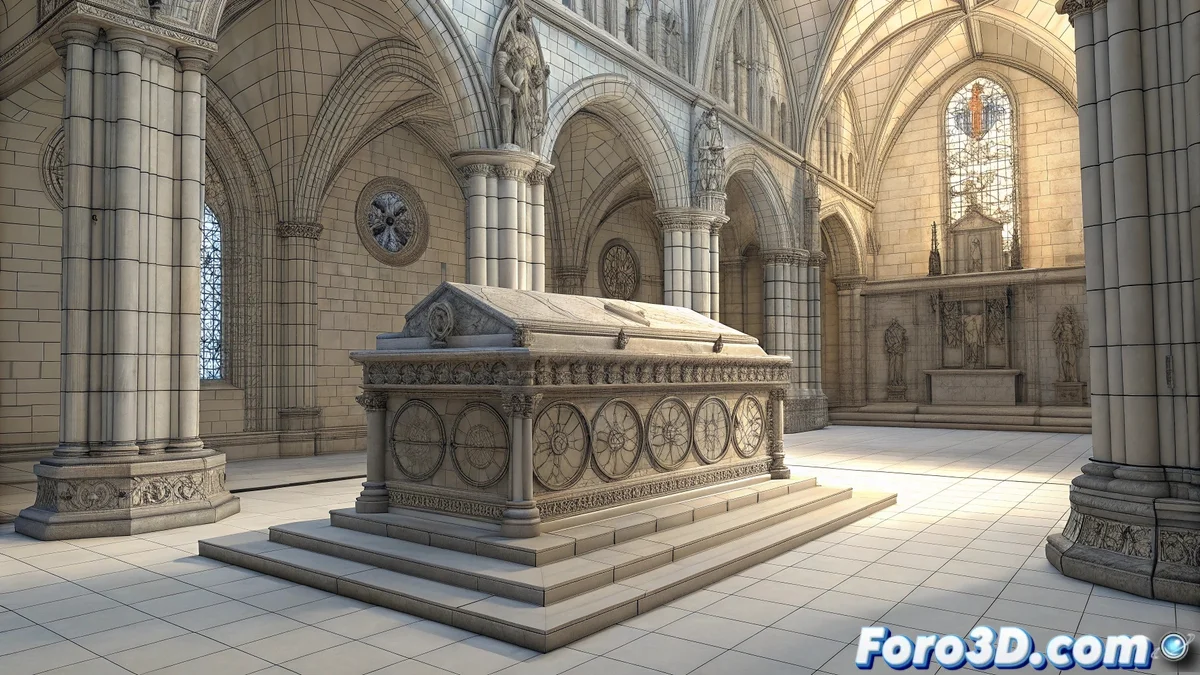
Start by meticulously organizing the project in Blender. Save the file as leonardo_cripta_burgos.blend and set up the appropriate scale units. Establish collections for each element: Arquitectura_Cripta, Sarcófago, Elementos_Renacentistas, Iluminacion, Atmosfera. This organization will be fundamental to maintaining control over the scene. ⚰️
Modeling the Gothic crypt
Recreate the characteristic architecture of medieval crypts using scaled and extruded cubes to form rib vaults and pointed arches. Add columns with simple capitals and niches in the walls that suggest other tombs. The scale must convey the solemnity and seclusion typical of a historical funerary space.
Creation of the Renaissance sarcophagus
Design a sarcophagus that combines Gothic and Renaissance elements, reflecting the transition between both styles. Incorporate reliefs that evoke Leonardesque motifs such as the Vitruvian Man, anatomical studies, or flying machine designs. The lid can show a stylized recumbent figure, maintaining a balance between artistic detail and historical verisimilitude.
Historical materials and textures
Apply aged limestone materials to the crypt walls, with roughness maps that simulate centuries of wear. For the sarcophagus, use a marble material with subtle veins and dim reflections. Add dust accumulations on horizontal surfaces and moss in less accessible areas to increase the sense of antiquity.
Dramatic and mysterious lighting
Set up a lighting system that plays with chiaroscuro characteristic of Renaissance paintings. Use warm point lights that simulate torches or candles, creating pools of light that leave areas in shadow. Add light volumes that capture floating dust beams, emphasizing the rarefied and mysterious atmosphere of the underground space. 🕯️
Symbolic and narrative elements
Incorporate discreetly references to Leonardo's work through secondary objects: a parchment roll with anatomical sketches, drawing tools, or even a stylized version of The Last Supper in a distant stained glass window. These elements must integrate naturally into the scene, as if they were part of the environment rather than obvious additions.
Render and final post-production
Use the Cycles engine to render, configuring high sampling to handle the complex light interactions in organic materials. In post-production, adjust the color curve towards sepia tones that evoke antiquity, apply subtle vignetting to direct attention to the sarcophagus, and add a depth of field effect that progressively blurs the crypt background.
If this legend were true, Leonardo would probably be fascinated by the irony of resting under Gothic architecture that he, as a Renaissance man, would have considered outdated. Though he might appreciate the drama of light filtering through the vaults. 😅