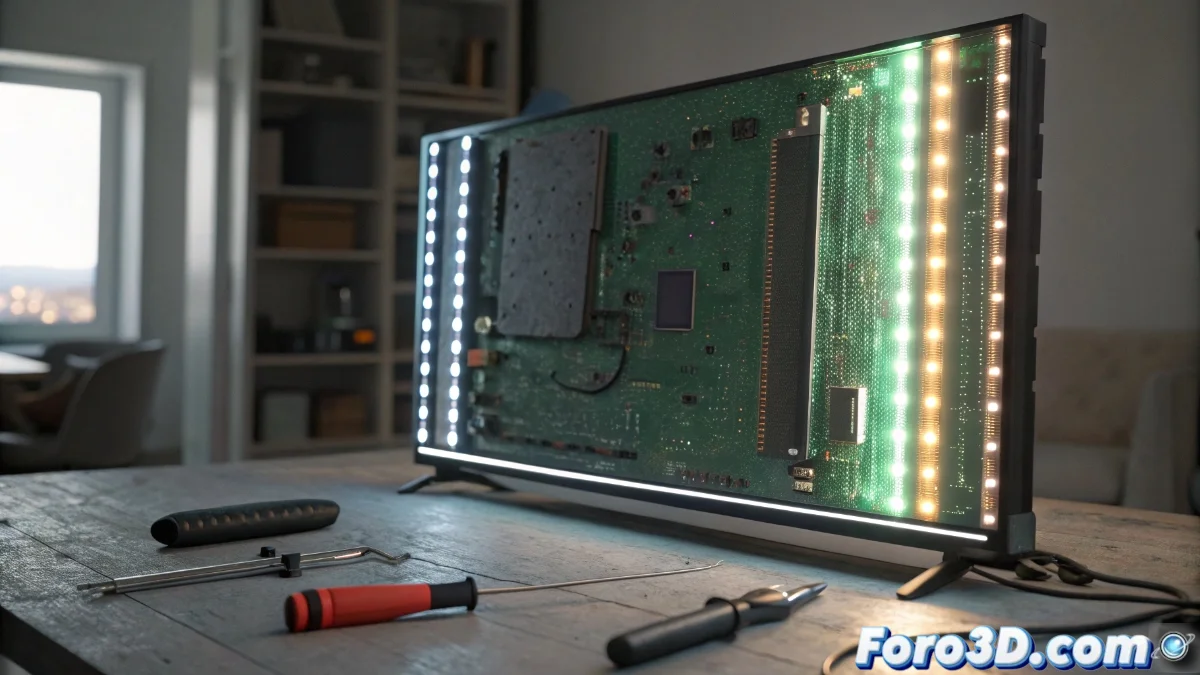
The LED Backlight Problem in Televisions from 2010 to 2018
LCD and LED televisions manufactured during the 2010-2018 period exhibit a recurrent issue in their backlighting systems, where the integrated LED strips experience loss of brightness or irregular shutdowns over time. This situation primarily arises from the use of low-quality LEDs and deficiencies in thermal dissipation, drastically reducing the device's lifespan to an average of 5-7 years. The inability for users to perform direct replacement forces them to resort to specialized technical services or complete equipment replacement, generating additional expenses and significant inconveniences. 📺
Technical Analysis of the Problem
The progressive degradation of the backlight constitutes one of the most common failures in these models. Chronic overheating due to insufficient ventilation systems accelerates the deterioration of the light-emitting diodes, while the quality of the components used at that time did not meet current durability standards.
Determining Factors in Degradation:- Use of inexpensive LEDs with low resistance to heat and on/off cycles
- Insufficient thermal dissipation design for the generated power
- Lack of standardization in connection and mounting systems
The strategy of designing to fail has proven more effective than designing to last, leaving many users with equipment whose performance does not meet initial expectations.
Evolution of Implemented Solutions
Manufacturers such as Samsung, LG, Sony, and Philips have introduced substantial improvements in their more recent models, incorporating more durable LEDs and optimized cooling systems. In premium ranges, replaceable backlight modules have even been developed that facilitate repairs and significantly extend the television's lifespan.
Implemented Technological Advances:- Implementation of LED diodes with better luminous and thermal efficiency
- Redesign of internal ventilation systems with more effective heat sinks
- Development of standardized modules that allow specific repairs
Consequences for Users and the Environment
The difficulty of repair in older televisions directly contributes to programmed functional obsolescence, where devices that could continue operating with a simple component replacement end up becoming electronic waste prematurely. This situation not only impacts consumers economically but also generates significant environmental damage due to the increase in electronic waste generation. Although the industry has progressed in component durability, the lack of standardization in repairable designs continues to represent a crucial challenge for the sustainability of consumer electronic products. 🌍