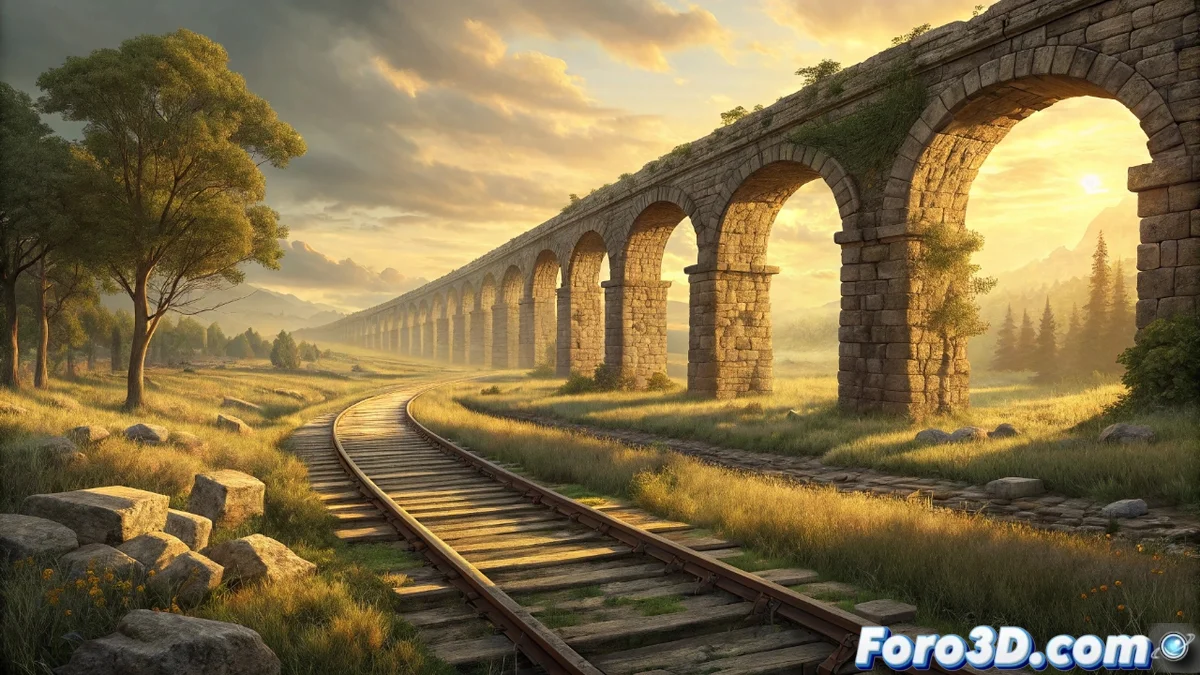
The La Perra Viaduct in Zamora: a railway bridge that never saw a train pass
In the province of Zamora stands the La Perra viaduct, a majestic stone construction that belonged to the abandoned Plasencia-Astorga railway project. Built at the end of the 19th century, this bridge encapsulates one of the most intriguing episodes in the history of railways in Spain, where the aspiration to connect regions clashed with economic and technical obstacles that ultimately halted the works. Its masonry arches remain intact as silent witnesses of what could have been, adding a touch of nostalgia to the rural Zamora setting 🏗️.
The history behind its construction
This viaduct is part of the ambitious Plasencia-Astorga line plan, designed to connect the northwest and southwest of Spain through the complex Zamora topography. The works began with great enthusiasm, applying traditional construction methods with stone from local quarries, but recurrent financial cuts and engineering challenges in difficult soils led to the progressive abandonment of the initiative. Although the La Perra bridge was largely completed, the tracks were never installed on its structures, leaving it ready for a train that never arrived 🚂.
Key aspects of the project:- Initial objective: to connect the northwest and southwest of the peninsula via a railway route
- Techniques used: traditional construction with masonry from local quarries
- Main problems: budget limitations and technical difficulties in rugged terrain
A structure that patiently awaits a train over a century late, symbolizing the truncated dreams of an era.
The contemporary legacy of the viaduct
Today, the bridge has become a tourist attraction for enthusiasts of industrial archaeology and photography, standing out for its excellent preservation despite disuse. Local authorities have implemented measures to signpost and preserve the monument, recognizing its value as a historical testimony to an era of great railway endeavors. Its silhouette dominates the valley where it is located, creating a poetic contrast between the robustness of its construction and the vulnerability of the human projects that designed it 📸.
Current characteristics:- Main attraction: tourist interest related to industrial archaeology and photography
- State of preservation: remarkable, despite having been abandoned
- Protection actions: signposting and care by local administrations
Final reflection on its meaning
It is ironic that this bridge, conceived to link destinations, has become an emblem of disconnection, where the only travelers that cross it are the birds that nest in its crevices and the hikers who capture its imposing emptiness. A building that waits with infinite patience for a train that is over a hundred years late, reminding us of the fragility of great human plans in the face of adversities 🕰️.