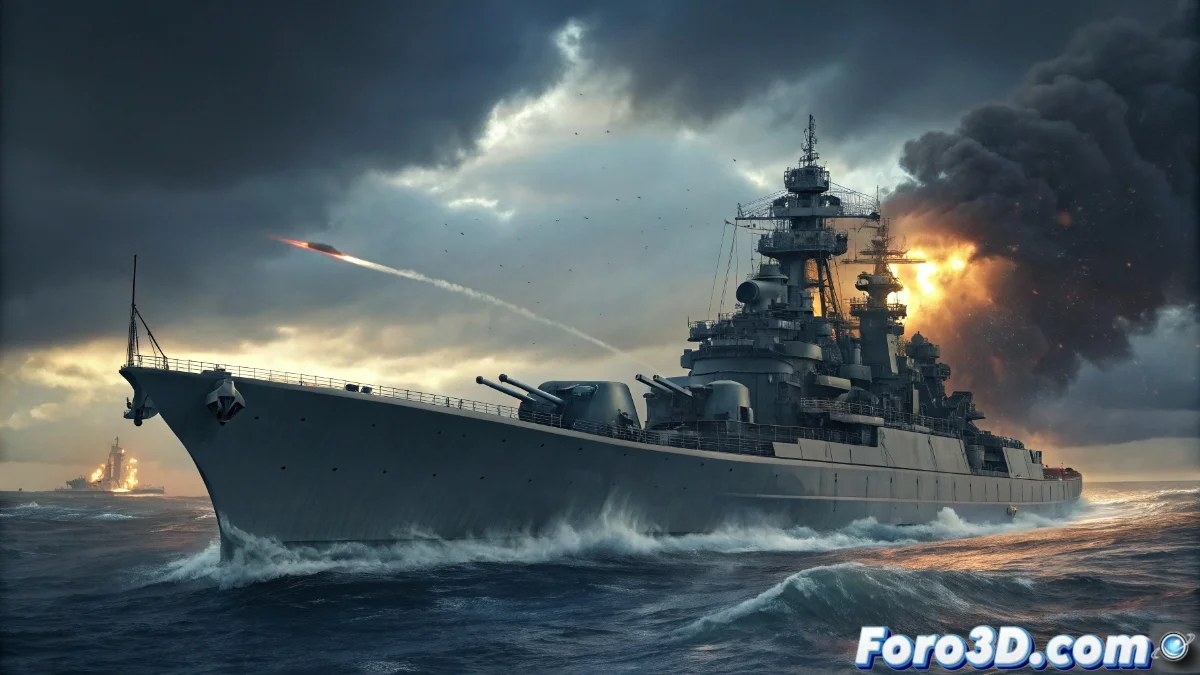
The Kirov-Class Nuclear Cruiser: Challenges and 3D Modeling Techniques
The Kirov-Class nuclear cruiser symbolizes the pinnacle of Soviet naval engineering, with colossal dimensions of 252 meters in length, 28.5 meters in beam, and 9.1 meters in draft. Its imposing superstructure integrates two nuclear reactors that ensure almost unlimited operational autonomy, creating a unique visual profile with multiple levels and interconnected combat systems. This design not only enhances its offensive capabilities but also poses fascinating challenges for 3D modeling due to its intricate geometries and complex scale relationships. 🚢
Stratified Armament Systems
The Kirov's armament is deployed in defensive and offensive layers, starting with the P-700 Granit cruise missiles, supersonic and housed in vertical launchers below deck, which constitute its main attack tool against naval targets. For air defense, it employs the S-300F Fort system, which provides long-range coverage through tracking radars and surface-to-air missiles, while short-range CIWS systems, such as the AK-630, offer final protection against immediate threats. Its arsenal is completed with torpedo tubes for anti-submarine warfare, all requiring meticulous representation in modeling to capture their location and spatial relationships. 💥
Key Armament Elements:- P-700 Granit missiles in vertical launchers for main naval attacks
- S-300F Fort system with radars and missiles for long-range air defense
- AK-630 CIWS systems as the last barrier against close threats
This sea colossus demonstrates that, in naval power, the Russians adopt the philosophy that more is more, to the point that its silhouette evokes a small floating city determined to redefine naval diplomacy.
Essential Considerations for Three-Dimensional Modeling
When developing the 3D model, it is vital to respect the proportions between the superstructure and the hull, paying special attention to the placement of radar antennas and sensor systems that define the ship's distinctive profile. Missile launchers must include their characteristic caps, and structural details such as weapon platforms and CIWS turrets require precise representation. Texturing must reflect diverse materials, from the metallic hull to radome surfaces, incorporating typical operational wear effects of these vessels. 🎨
Critical Aspects in Modeling:- Exact proportions between superstructure and hull to maintain authenticity
- Detailed antennas, sensors, and launchers with characteristic caps
- Texturing that simulates metallic materials, radomes, and operational wear
Final Reflections on This Naval Giant
The Kirov-Class nuclear cruiser is not only a testament to Soviet might but a stimulating challenge for 3D artists, where every detail, from armament systems to textures, contributes to capturing its intimidating essence. When tackling its modeling, technical precision must be balanced with creativity, remembering that this ship redefines the limits of naval design and digital representation. 🌊