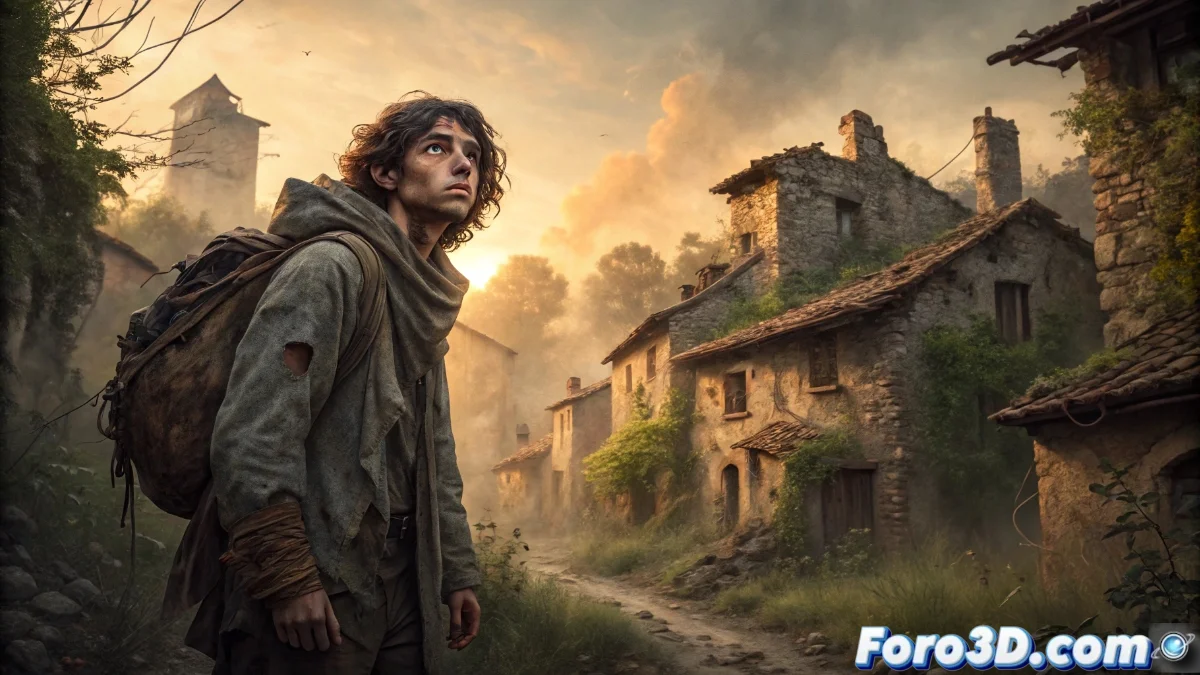
The Journey to Authenticity After Losing Everything
A young protagonist experiences a radical turn in his existence when a violent incident forces him to abruptly abandon his previous life. This desperate escape leads him to an abandoned village where he begins a profound process of personal reinvention, completely detached from everything he knew. The author develops this premise with touching realism that transports the reader directly into the harshness of the circumstances. 🏚️
The Awakening to a Genuine Existence
In this new environment devoid of modern comforts, the main character experiences a progressive revelation about the truly essential values. Through voluntary simplicity and direct connection with the natural world, he gradually frees himself from the chains of unbridled consumerism that once dominated his life. The narrative meticulously details how this process of material detachment transforms into genuine inner liberation.
Key aspects of the transformative process:- Rediscovery of basic needs and fundamental values
- Progressive detachment from superfluous material possessions
- Reconnection with natural rhythms and simple living
"To find true freedom, one must first lose everything and take refuge among ruins, as if progress has taken us so far from ourselves that we need to go back to zero to remember who we are."
Contemporary Society Under Critical Scrutiny
Santiago Lorenzo uses this touching story to develop a sharp social critique aimed at the hypocrisy of our time and its distorted values. The work establishes a constant contrast between the authenticity of simple living and the artificiality of the urban and consumerist world that the protagonist has chosen to abandon. This fundamental duality serves as the narrative engine that drives deep reflection on what it means to live with true fulfillment.
Central elements of the social critique:- Contrast between rural authenticity and urban artificiality
- Radical questioning of contemporary consumerism
- Reflection on prevailing social values
The Paradox of Progress and Personal Reunion
It is profoundly revealing to consider that to achieve authentic freedom, one must first lose all securities and take refuge among ruined structures, as if the so-called progress has distanced us so much from our essence that we require a complete reset to remember our true identity. This paradox forms the philosophical core of a work that invites us to reconsider our existential priorities. 🌄