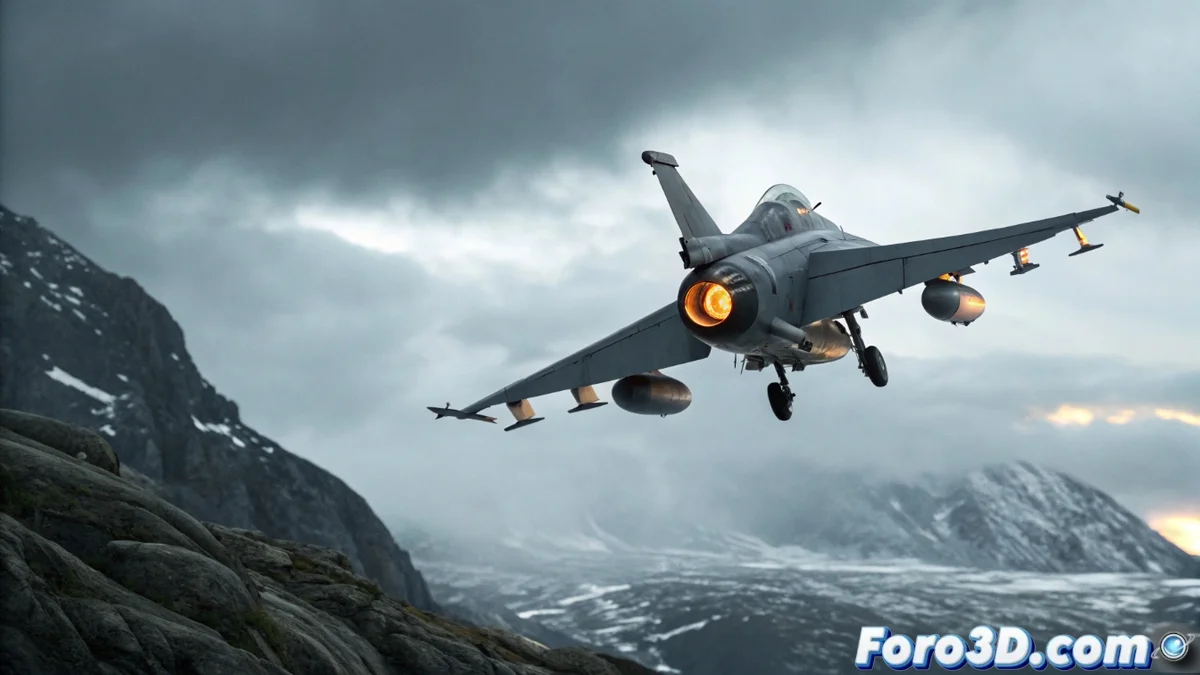
The JAS 39 Gripen: Complete Analysis of the Swedish Multirole Fighter
The JAS 39 Gripen represents the pinnacle of Swedish military aeronautical engineering, designed as a multifunction platform capable of adapting to various combat scenarios. Its architecture combines delta wings with canard surfaces, granting it exceptional agility in complex aerial maneuvers. 🛩️
Aerodynamic and Operational Configuration
The Gripen's unique configuration allows it to operate from semi-prepared runways and those of reduced length, thanks to its compact design and single engine. This feature facilitates its rapid deployment in diverse tactical environments, maintaining full capabilities for air superiority missions, reconnaissance, and ground attack.
Main Dimensional Characteristics:- Length varying between 14.1 and 15.2 meters depending on the specific version
- Wingspan of 8.4 meters with delta-canard configuration
- Total height of 4.5 meters with optimized lightweight structure
The delta-canard combination provides exceptional stability at low speeds and immediate response in dogfights
Weapons Systems and Combat Versatility
The weapons system integrates a 27 mm BK-27 cannon for close engagements, complemented by eight external hardpoints that support various missiles and guided bombs. This configuration enables the execution of interception missions, close air support, and suppression of enemy defenses with lethal precision.
Highlighted Operational Capabilities:- Air-to-air armament for beyond visual range combat
- Air-to-surface missiles for neutralizing ground targets
- Precision-guided bombs for surgical operations
Strategic and Operational Considerations
Although technologically advanced, the Gripen shares conceptual similarities with high-performance sports cars that demand significant resources, where operational fuel translates into continuous defense budget. Its design maintains an efficient profile on the battlefield, balancing offensive capabilities with logistical sustainability. ⚔️