A Window to the Cosmic Dawn
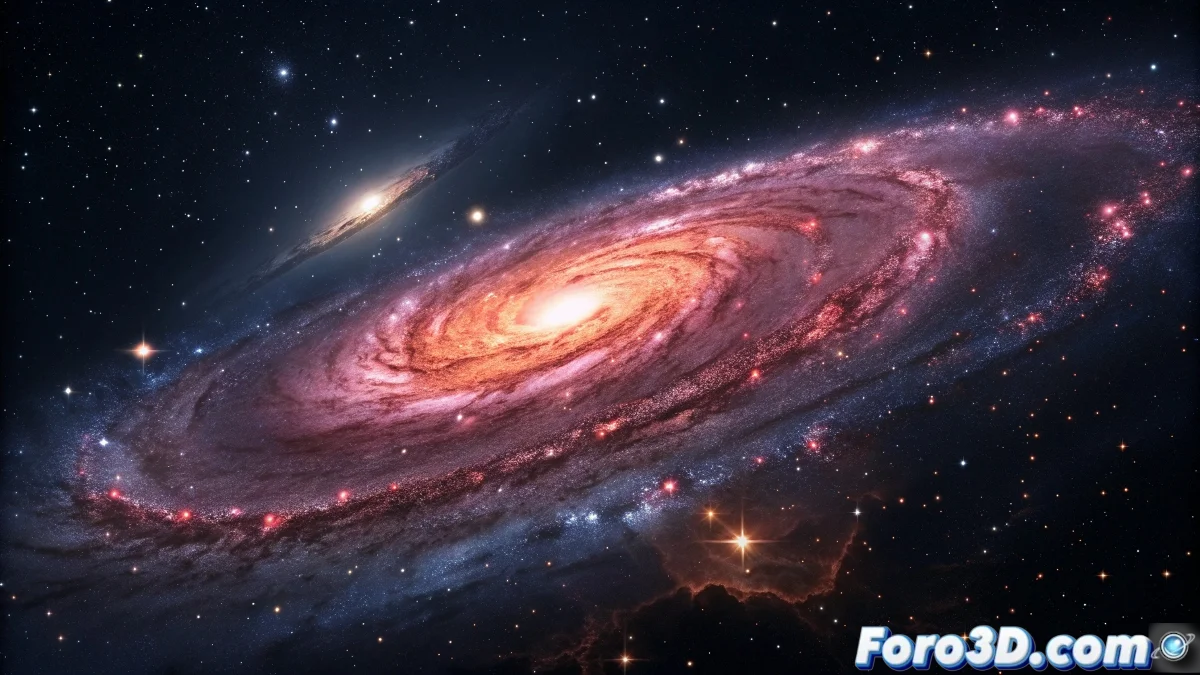
The James Webb Space Telescope has once again exceeded all expectations, capturing the image of a galaxy that existed when the universe was merely a 200-million-year-old cosmic baby. 🌌 This discovery is not just a distance record; it is a journey through time that allows us to witness directly the processes that shaped the early cosmos. Observing these first galaxies is crucial to understanding how the primordial soup of particles after the Big Bang turned into the complex structures we see today.
The Technology That Makes the Impossible Possible
The James Webb's feat is possible thanks to its incredible sensitivity to infrared. The light from such distant and ancient objects has been stretched due to the expansion of the universe, shifting to infrared wavelengths that the Webb is designed to capture with unprecedented clarity. 🔭 Additionally, its large segmented mirror allows it to collect the faint light that has traveled for more than 13.5 billion years to reach us. Each photon is a messenger from an era lost in time.
This galaxy is a living fossil that tells us the story of our own origin.
Implications for Cosmology
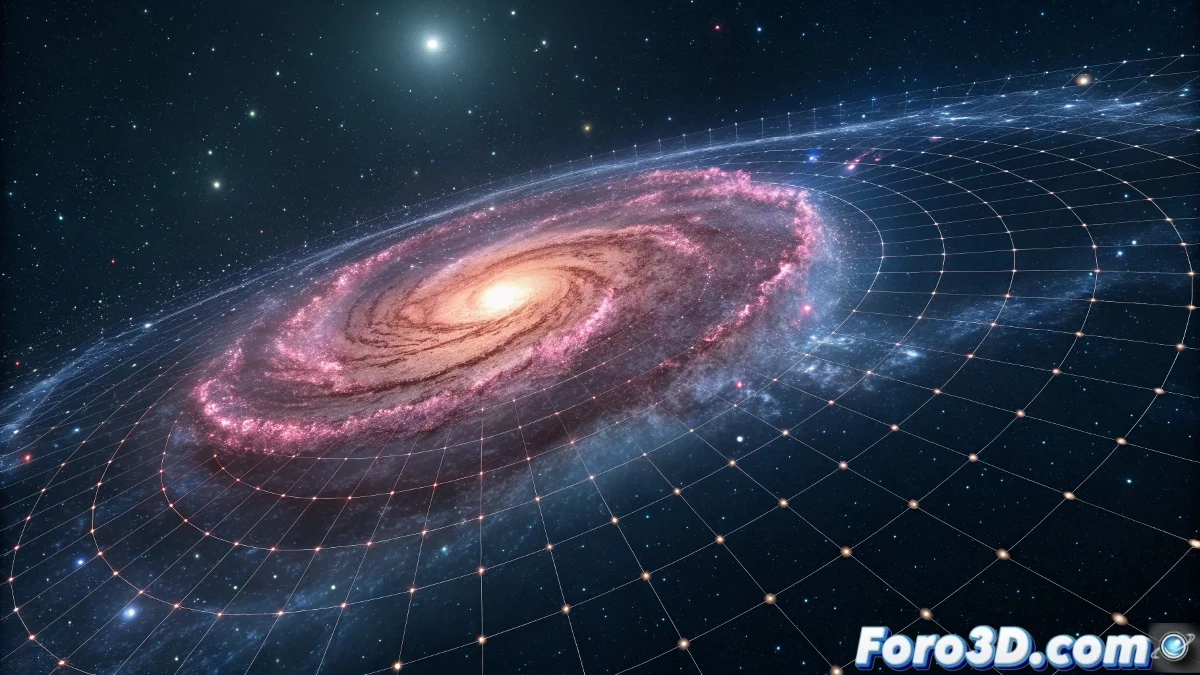
The study of such early galaxies helps astronomers confirm or refine cosmological models. Their size, brightness, and composition provide vital clues about how and when the first stars ignited (the epoch of reionization) and how they began to cluster to form the first galactic structures. 🧩 Each new discovery of this kind is a fundamental piece in the puzzle of universe evolution, challenging our theories and expanding our knowledge.
- Star formation: Reveals the rate at which stars formed in the young universe.
- Galactic evolution: Helps understand how small protogalaxies merged to form the large galaxies we see today.
- Matter distribution: Provides data on dark matter in the early stages.
Recreating the Nascent Cosmos in 3D
To visualize this finding, tools like Cinema 4D are ideal. Using particle systems and emitters, the collapsing gas and dust cloud can be simulated to form the first stars. 💫 The key lies in materials with self-illumination (luminance) and glow effects to simulate the intense brightness of young stars. A render with Redshift or Octane can capture the ethereal beauty of a forming galaxy, with colors dominated by the light of massive and hot stars.
It is a humble reminder that we are made of stardust, and that thanks to marvels like the James Webb, we can begin to understand our own cosmic recipe. ✨ That said, understanding it doesn't mean we can replicate it in the kitchen.