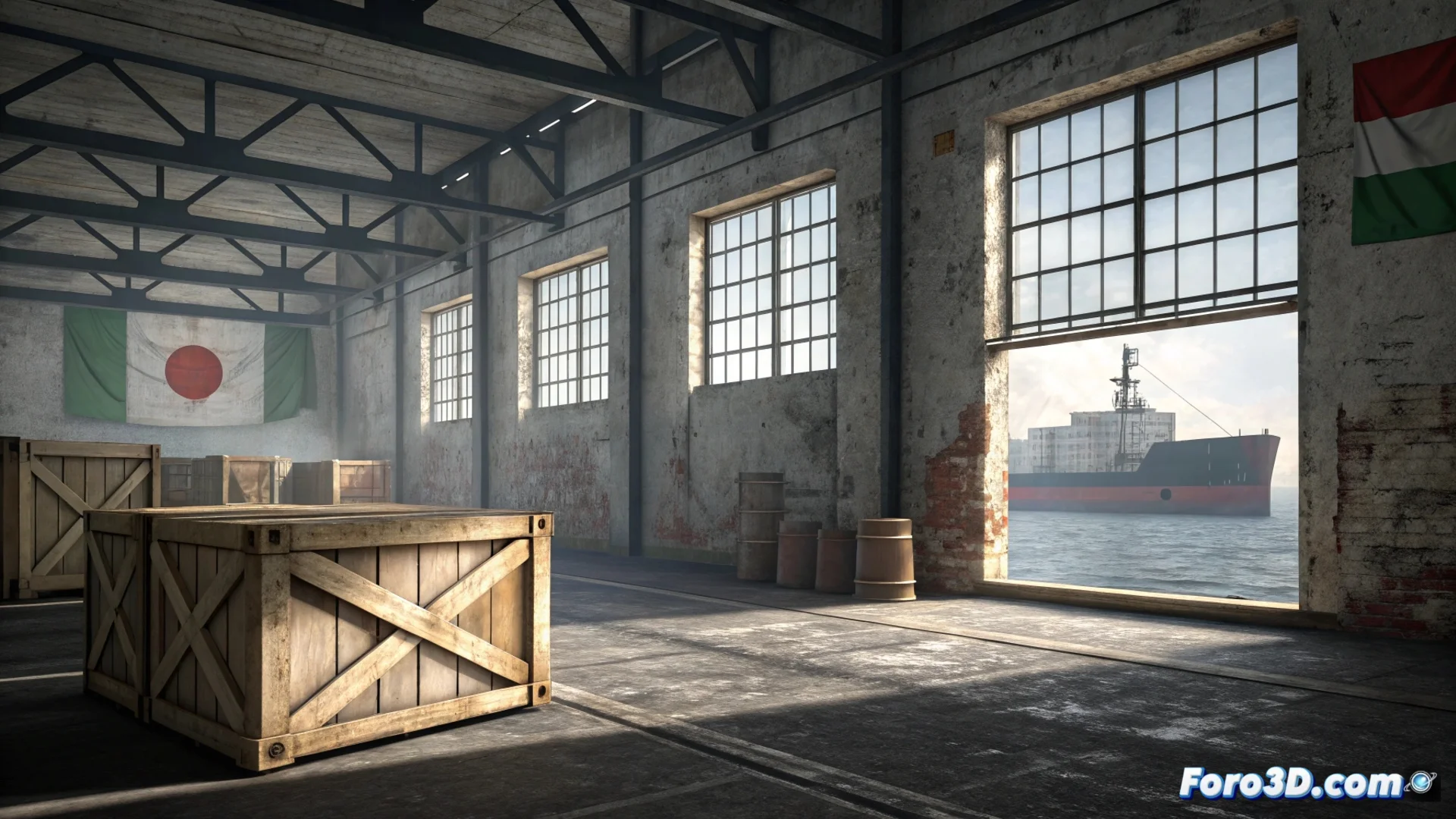
The Italian Industry Moves Factories Outside the European Union
To reduce costs and maintain its competitiveness, numerous Italian companies are moving their production plants to nations outside the community bloc. This strategy responds to the pressure to compete in markets where the final price is decisive. Traditional sectors such as textiles, footwear, and mechanical components are leading this change. 🏭
Preferred Destinations and Their Economic Attractions
Investment flows are channeled mainly towards three regions: the North Africa, non-EU Eastern Europe, and Southeast Asia. Countries like Tunisia, Morocco, Serbia, Ukraine, Vietnam, and Bangladesh have become poles of attraction. They offer a powerful combination: abundant low-cost labor, tax incentives for foreign companies, and industrial land at reduced prices. This allows companies to manufacture with wider margins or adjust their prices without sacrificing profitability.
Main advantages for companies:- Access to labor with wages significantly lower than Italian standards.
- Tax benefits and subsidies that reduce initial investment.
- Fewer bureaucratic procedures and less stringent environmental or labor regulations.
It's not that Made in Italy disappears, but sometimes only the final label is sewn in Italy, after a long sea journey.
Consequences for the Production Model in Italy
This process generates intense debate in the country. An immediate consequence is the loss of jobs in regions with a long manufacturing tradition, which erodes the local production fabric and specialized knowledge. However, many firms that outsource manufacturing choose to keep in Italian territory the phases considered of higher added value, such as design, research and development (R&D), and marketing.
Effects of the restructuring:- Weaken the local manufacturing base and technical know-how in certain areas.
- Concentrate in Italy the activities of innovation, marketing, and brand management.
- Redefine the geography of manufacturing while the branding identity remains associated with the country.
The Future of Made in Italy
The Italian industry is reconfiguring. The model transforms from comprehensive production in the country to one that coordinates a global supply chain. The Made in Italy label evolves to represent not only the place of manufacture, but above all, the design, quality, and brand heritage. The challenge will be to balance global efficiency with the preservation of local human and technological capital. 🇮🇹