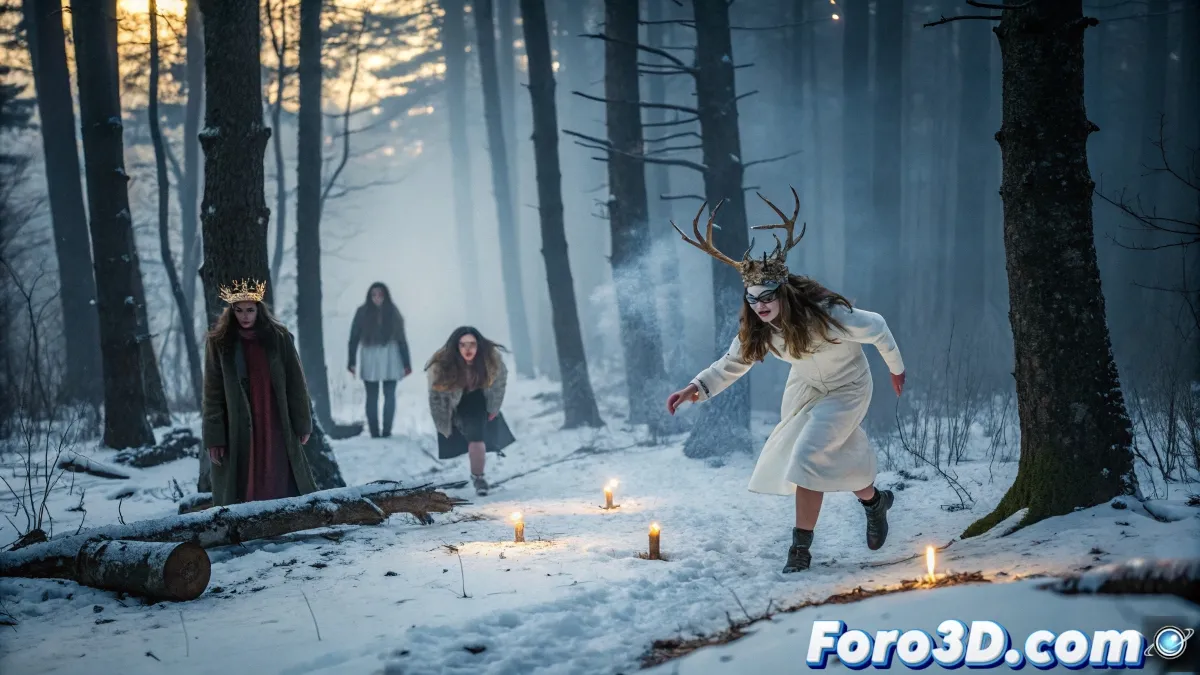
The Shadows Haunting the Yellowjackets
The narrative of Yellowjackets weaves a complex tapestry about the scars left by extreme survival. Through two intertwined timelines, the series exposes how decisions made in youth can irreversibly shape the future. What begins as a story of teenage athletes lost in the wilderness transforms into a psychological study on the limits of human morality.
The Power Play in the Forest
Among the snowy pines, group dynamics become distorted, creating a dangerous hierarchy. Lottie emerges as a spiritual figure, but her leadership is built upon carefully crafted lies. The incident with the animals reveals patterns of manipulation that call into question the entire mythology created in isolation.
"When fear rules, rationality becomes the first victim"

Key Points of the Third Season
- The Ritual Sacrifice: Mari becomes the missing link connecting to the series' initial mystery
- The Radio of Hope: Natalie represents the last connection to sanity and civilization
- Family Secrets: Lottie's death exposes unresolved generational tensions
The Downward Spiral in the Present
The adult versions of the characters demonstrate that physically escaping the woods does not mean psychological liberation. Taissa and Shauna symbolically revert to their worst selves, while Misty weaves her web of intrigue. The series poses an uncomfortable question: can these characters redeem themselves, or are they doomed to repeat their mistakes?
Notable Narrative Elements
- The parallel between past and present hunts
- The use of symbolic objects (the radio, the masks, the white clothing)
- The progressive dehumanization of the main characters
- The echoes of trauma manifesting in unpredictable ways
As this season concludes, it becomes clear that the real danger was never in the forest, but in what the protagonists discovered about themselves. The anticipation for the fourth season centers on a fundamental question: will rescue truly mean salvation, or will it simply relocate the horror to a new setting?