When Destruction Requires Delicacy
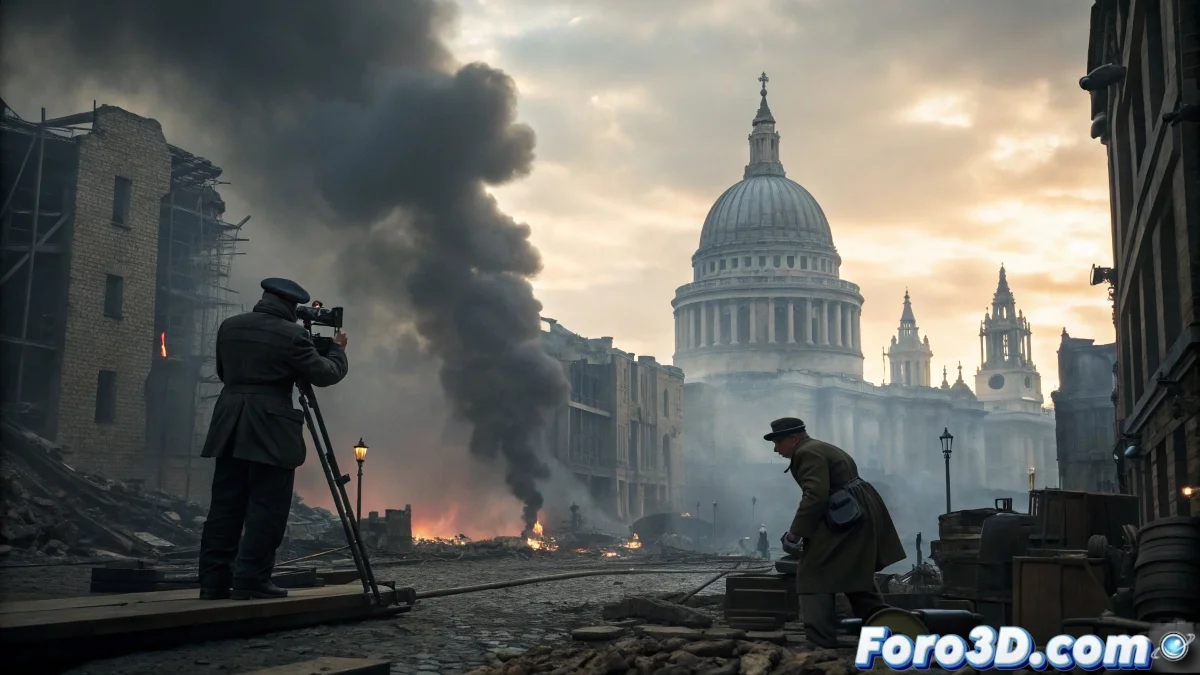
In Blitz, Steve McQueen's new film, Cinesite faced a unique challenge: recreating bombed London with the precision of a historian and the sensitivity of a poet. The over 140 visual effects they developed do not seek to impress, but to immerse us in the perspective of a child watching his world collapse. 🏚️👦
"Every digital brick had to feel as real as the fear in our protagonist's eyes" - Cinesite VFX Supervisor
The Architecture of Memory
The Cinesite team implemented a meticulous workflow:
- Historical research from period photographs and plans
- Architectural modeling with millimeter precision in Maya
- Houdini for realistic physics smoke and fire simulations
- Nuke for invisible integration with real footage
Effects That Are Felt But Not Seen
Key elements included:
- Digital reconstructions of iconic buildings
- Atmospheric smoke that follows real wind patterns
- Debris with precise historical aging
- Lighting that replicates blackout lamps
As one artist commented: "We worked months on a building that appears for 3 seconds... but if anyone notices it, we've failed".
The City as an Emotional Character
Cinesite developed special techniques for:
- Maintaining a low perspective (child's view)
- Creating destruction with emotional narrative
- Integrating digital elements with real actors
- Preserving the period cinematic texture
The Real Challenge: Subtract to Add
What makes this work exceptional is what it does not do:
- No excessive digital pyrotechnics
- No impossible angles that break the perspective
- No effects that distract from the human drama
- No loss of the organic texture of real footage
As McQueen aptly summarized: "We wanted the audience to feel the war, not admire our effects". And in that, Cinesite achieved something rare: VFX so good they are invisible, but so powerful they are unforgettable. When the technology disappears and only the emotion remains, you know the job is well done... even if no one else knows it was there. 🎥