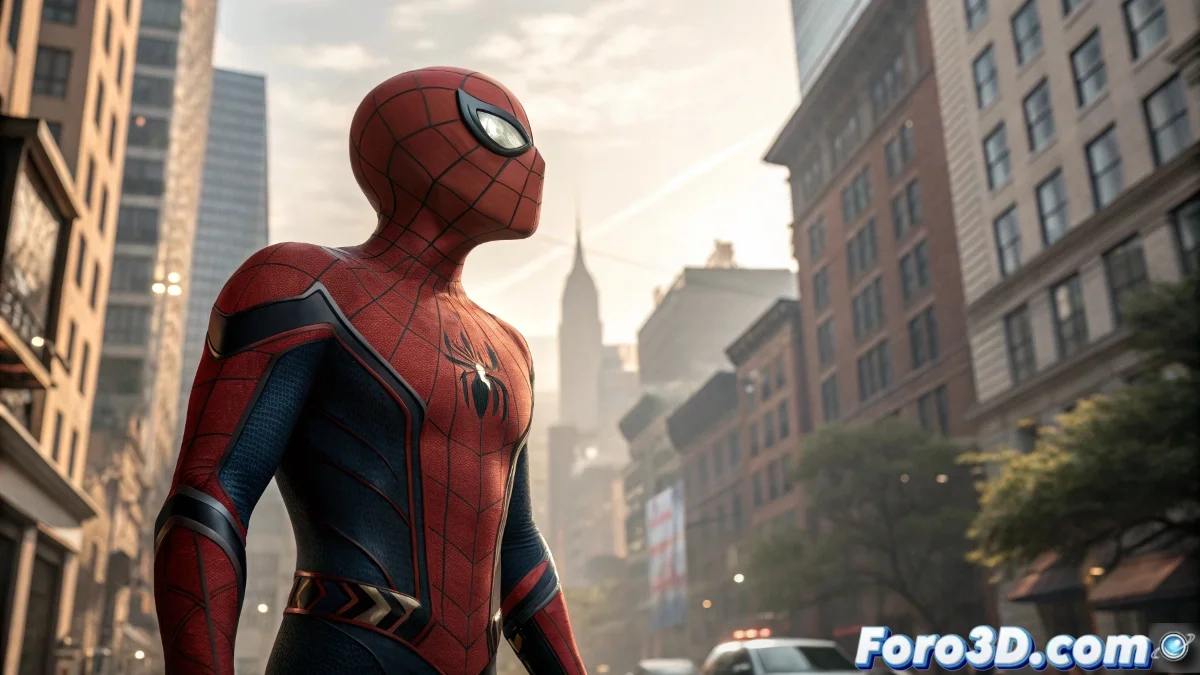
When the best effects are the ones you don't see
In Spider-Man: No Way Home, Cinesite proved that saving the multiverse requires both eye-catching effects and discreet digital magic 🕷️✨. While the audience cheered for the three Spider-Men, the team worked to ensure that every last digital brick fell with cinematic precision.
New York: the true (digital) star of the movie
Cinesite's menu included:
- Entire cities generated by computer - because renting all of Manhattan would be more expensive than Iron Man's suit
- Destruction simulations in Houdini where every piece of debris had its own tragic story
- Portal side effects - because even collapsing realities need lighting details
The most discreet cameo: that digital Spider-Man who ordered a coffee in a shot and almost made it into the final version.
The art of making you believe
The best-kept secrets included:
- Digital doubles that moved better than some humans after their third coffee
- Photogrammetric textures so realistic that even NY rats were fooled
- Integration in Nuke so perfect that even J. Jonah Jameson would approve
The result was so convincing that some viewers swore they saw the real Spidey... although they were probably all three at once 🤯.
Lessons for multiverse artists
This project teaches that:
- A good digital environment must hold up as well as Spider-Man's suit
- Side effects are the DNA of visual credibility
- Even superheroes need digital doubles (and sometimes coffee)
So the next time you see Spider-Man swinging between skyscrapers, remember: there's a 90% chance that building is digital, a 70% chance that shadow was adjusted in post-production, and a 100% chance that the VFX artists needed therapy after rendering so much multiversal chaos 🏙️🕸️.