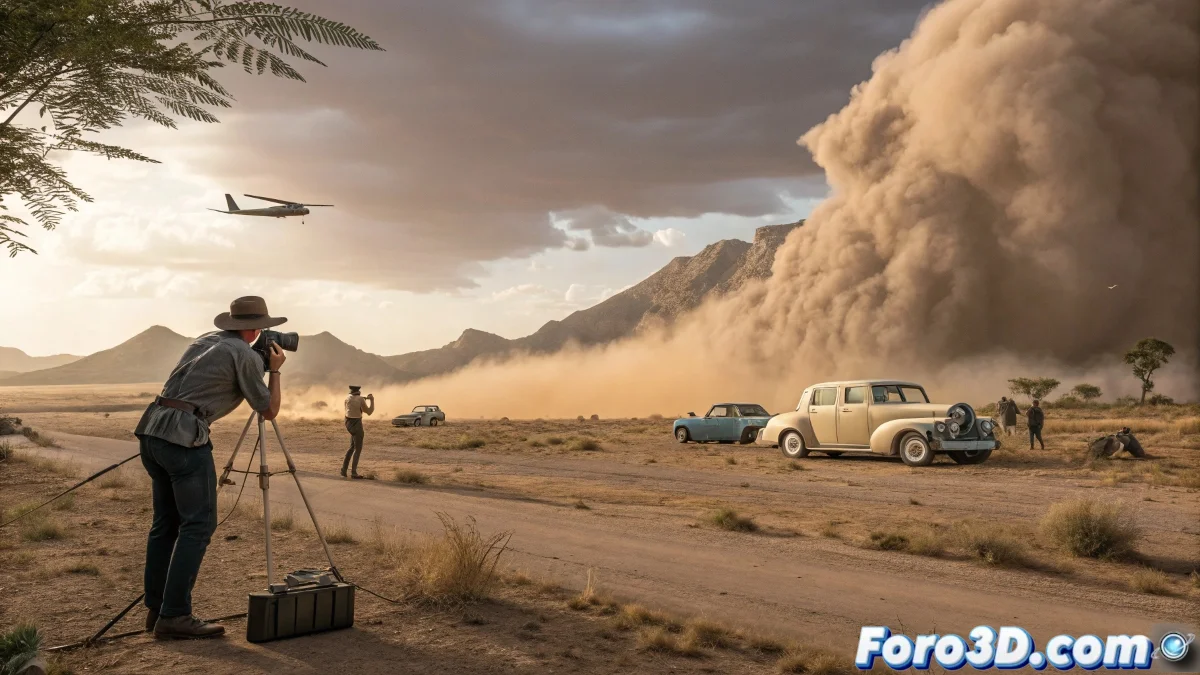
The Art of Hiding Pixels in the Full 20th Century
If there's anything harder than convincing a client that yes, that render is already finished, it's creating visual effects that go unnoticed. In 1923, the prequel to Yellowstone, the BeloFX team proved that spectacular doesn't always mean giant explosions 🎇, but meticulous details that even the sharpest viewer wouldn't notice.
Here there are no aliens or spaceships, just dust, snow, and the occasional digital horse that behaves better than the real ones.
Houdini and Nuke, the Anonymous Heroes
To achieve that historical authenticity, the artists turned to tools like Houdini for environmental simulations (dust storms, snowfalls) and Nuke to integrate digital elements into real shots. Because, let's be honest, filming in 1923 would be complicated… and expensive. 💸
- Landscape Recreation: They removed cell phone antennas and other modern sins.
- Period Vehicles: Modeled in Maya and integrated with matchmoving.
- Digital Weather: Because nature doesn't always cooperate with the schedule.
When Africa and Europe Are One Render Away
Did you know that some exotic locations were recreated digitally to avoid trips? Yes, even the most epic safari can be born on a computer. 🖥️ And the best part: no mosquitoes included. The battles, though brief, combined practical effects with digital ones, because nothing screams low budget like extras running in slow motion.
The real challenge wasn't making a plane fly, but making it look like a 1923 Lockheed and not a 3D model downloaded from the internet at 3 AM. 😅
In the end, if something fails, there's always the consolation: the horse moved, it's not the render's fault. 🐎